Artificial intelligence is capitalism's final destination
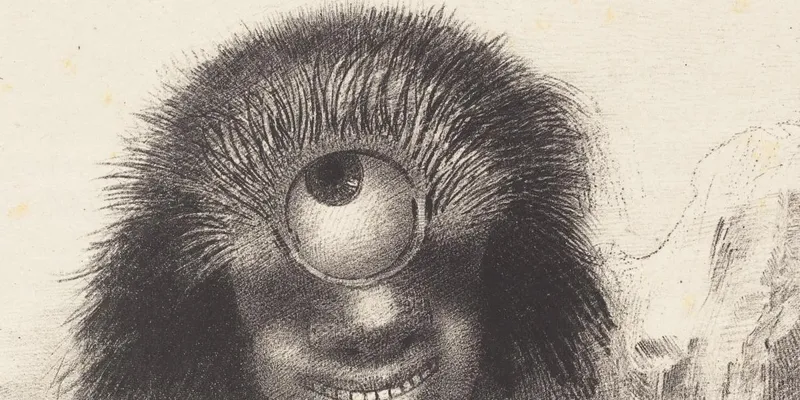
Arundhati Roy’s 15 October 2026 essay argues that artificial intelligence is concentrating economic and political power while damaging human creativity, work, language and social trust. She says generative AI has unsettled education and publishing by making authorship harder to verify, and she describes Anthropic’s use of her books without permission to train large language models; she received a proposed class-action settlement offering several thousand dollars per title. Roy contrasts AI-industry warnings of existential risk with whistleblowers’ concerns about military uses, environmental costs, labour exploitation and algorithmic bias. She cites Meredith Whittaker’s 2019 resignation from Google over machine-vision work for US drones and Timnit Gebru’s 2020 firing after research on large language models’ environmental and social harms. Roy argues that major AI companies’ calls for regulation could entrench dominant firms by tying them more closely to state security systems and limiting smaller competitors. Roy also warns that data centres require large amounts of land, water and energy, citing planned facilities in Visakhapatnam, India, including a $15 billion Google hub. She says low-paid workers provide data and perform work that can train systems intended to automate their jobs. Her essay calls AI-driven extraction of cultural works, human data and natural resources a new form of colonisation and urges resistance rather than relying only on regulation.
equator.org
25 min
13h ago

The turbulent AI era is here
A Gates Notes post titled “The turbulent AI era is here” was submitted by LVB and received a score of 52 points with 14 comments. The available information does not provide details about the post’s arguments, technologies, people, events, or claims.
gatesnotes.com
1 min
8/26/2026

Bill Gates: The turbulent AI era is here
Bill Gates has characterized the current period as a turbulent AI era requiring critical choices. His remarks appeared in a Gates Notes post titled “A turbulent AI era and critical choices to make,” within a series focused on making AI work for everyone. The post was submitted to a discussion site by user ilamont, where it received 135 points and 202 comments. The available source text provides no further details about Gates’s proposed choices, AI policies, technical claims, or recommendations.
gatesnotes.com
1 min
8/26/2026
Omarchy development practices lead to predictable security issues
HappyFellow.dev criticized Omarchy 4.0, a Linux distribution project promoted by David Heinemeier Hansson, arguing that users should not run it on machines where security matters. The post alleges that the release contained security flaws including bash injection through video titles and a notification mechanism that could allow arbitrary bash commands to run. It says these flaws stem from unsafe handling of untrusted input and from using AI-generated bash scripts to process such input without sufficient review. The author contends that starting from insecure shell scripts cannot produce a reasonably secure system through later fixes. The post acknowledges that all software projects have security vulnerabilities but argues that Omarchy’s reported issues were predictable and reflect development practices that do not prioritize security. It contrasts that view with Omarchy’s security-team announcements and recent point release, which reportedly listed numerous resolved issues. The author characterizes DHH’s promotion of Omarchy as strong marketing but says its security messaging is misleading, and predicts that some companies may prohibit its use. The stated concern is that users may underestimate the risks of installing Omarchy because the project does not, in the author’s view, clearly communicate its security limitations.
blog.happyfellow.dev
2 min
8/26/2026

France's tax agency got hacked (in French)
La Direction générale des finances publiques (DGFiP) a confirmé qu’une intrusion a entraîné la fuite d’un fichier de 678 000 entrées concernant des particuliers et des professionnels. Amélie Verdier, directrice générale des finances publiques, a indiqué le 14 août que les données comprenaient notamment les noms, prénoms, quotient familial, revenu fiscal de référence et taux de prélèvement à la source. FrenchBreaches a relevé dans l’échantillon revendiqué par le pirate des adresses, numéros de téléphone, courriels et nombres de personnes à charge. La DGFiP avait interrompu l’accès fin juin, sans détecter alors l’exfiltration, qui n’a été identifiée qu’après la mise en vente des données le 12 août. Le même pirate a revendiqué une seconde attaque contre un serveur professionnel de données cadastrales, menée fin juillet et confirmée par l’administration. Il affirme avoir obtenu 252 149 lignes représentant plus de deux millions de personnes et avoir contourné l’authentification multifacteur; ces détails n’ont pas tous été confirmés publiquement. La DGFiP affirme que le site impots.gouv.fr et les espaces des usagers n’ont pas été compromis et avoir désactivé les comptes concernés ainsi que d’autres accès sensibles par précaution. L’incident s’inscrit dans une série de compromissions d’administrations françaises. La France n’avait toujours pas transposé la directive européenne NIS2 en août 2026, alors que son échéance était fixée à octobre 2024 et que la Commission européenne l’a renvoyée devant la Cour de justice de l’Union européenne en juillet 2026.
cybernetica.fr
37 min
8/25/2026

Anti-AI fonts are useless and harmful
Anti-AI fonts that scramble or obfuscate text aim to make web content harder for AI systems to read, but Yaros argues that they are ineffective and harmful. Fonts that alter the text itself create accessibility problems because screen readers and related tools parse the scrambled characters. An accessible alternative would require machine-readable metadata, which Yaros says raises the unresolved problem of distinguishing disabled users from AI systems and could lead to centralized identity verification, privacy risks, and lists of disabled people. Yaros says public demonstrations of anti-AI fonts and related techniques can help AI companies train multimodal models to bypass them, turning new designs into benchmarks for overcoming the protections. The post argues that any information visible to humans can ultimately be parsed by machines, while motion-graphics and video-based obfuscation methods are impractical for routine website use. Widespread obfuscation could require computationally expensive tools to read web content and encourage copy-protection systems, paywalls, censorship, and other access controls. Yaros contends that publicly available information will remain accessible to people and systems authorized to access it, and that the web should remain based on plaintext and open access to information.
blog.yaros.ae
3 min
8/20/2026
Anthropic's War on open source AI
Anthropic wants the public to see one thing: the careful lab, the safety lab, the grown-up in the room trying to keep frontier AI from running off a cliff. However, the pattern around Anthropic does not look like caution by itself. It looks like a company wrapping a business model in moral language, then using that language to justify opaque model behavior, anti-competitive access rules, regulator...
twitter.com
33 min
8/17/2026

The Case Against Formal Verification, 50 Years Later
Interest in software verification has surged, with a notable increase in Google Trends searches for formal verification and formal methods over the past two years. Many engineers are now learning Lean and exploring new specification languages, indicating a growing excitement around the topic.
ivan-gavran.github.io
8 min
8/16/2026


Going Dark, and the era of law enforcement hacking
Concerns are rising about the implications of AI in various fields, particularly in terms of security and privacy. The potential for AI to create significant challenges is prompting discussions among experts in the industry.
blog.cryptographyengineering.com
7 min
8/14/2026
Artificial intelligence is capitalism's final destination
Arundhati Roy’s 15 October 2026 essay argues that artificial intelligence is concentrating economic and political power while damaging human creativity, work, language and social trust. She says generative AI has unsettled education and publishing by making authorship harder to verify, and she describes Anthropic’s use of her books without permission to train large language models; she received a proposed class-action settlement offering several thousand dollars per title. Roy contrasts AI-industry warnings of existential risk with whistleblowers’ concerns about military uses, environmental costs, labour exploitation and algorithmic bias. She cites Meredith Whittaker’s 2019 resignation from Google over machine-vision work for US drones and Timnit Gebru’s 2020 firing after research on large language models’ environmental and social harms. Roy argues that major AI companies’ calls for regulation could entrench dominant firms by tying them more closely to state security systems and limiting smaller competitors. Roy also warns that data centres require large amounts of land, water and energy, citing planned facilities in Visakhapatnam, India, including a $15 billion Google hub. She says low-paid workers provide data and perform work that can train systems intended to automate their jobs. Her essay calls AI-driven extraction of cultural works, human data and natural resources a new form of colonisation and urges resistance rather than relying only on regulation.
equator.org
25 min
13h ago
Bill Gates: The turbulent AI era is here
Bill Gates has characterized the current period as a turbulent AI era requiring critical choices. His remarks appeared in a Gates Notes post titled “A turbulent AI era and critical choices to make,” within a series focused on making AI work for everyone. The post was submitted to a discussion site by user ilamont, where it received 135 points and 202 comments. The available source text provides no further details about Gates’s proposed choices, AI policies, technical claims, or recommendations.
gatesnotes.com
1 min
8/26/2026
France's tax agency got hacked (in French)
La Direction générale des finances publiques (DGFiP) a confirmé qu’une intrusion a entraîné la fuite d’un fichier de 678 000 entrées concernant des particuliers et des professionnels. Amélie Verdier, directrice générale des finances publiques, a indiqué le 14 août que les données comprenaient notamment les noms, prénoms, quotient familial, revenu fiscal de référence et taux de prélèvement à la source. FrenchBreaches a relevé dans l’échantillon revendiqué par le pirate des adresses, numéros de téléphone, courriels et nombres de personnes à charge. La DGFiP avait interrompu l’accès fin juin, sans détecter alors l’exfiltration, qui n’a été identifiée qu’après la mise en vente des données le 12 août. Le même pirate a revendiqué une seconde attaque contre un serveur professionnel de données cadastrales, menée fin juillet et confirmée par l’administration. Il affirme avoir obtenu 252 149 lignes représentant plus de deux millions de personnes et avoir contourné l’authentification multifacteur; ces détails n’ont pas tous été confirmés publiquement. La DGFiP affirme que le site impots.gouv.fr et les espaces des usagers n’ont pas été compromis et avoir désactivé les comptes concernés ainsi que d’autres accès sensibles par précaution. L’incident s’inscrit dans une série de compromissions d’administrations françaises. La France n’avait toujours pas transposé la directive européenne NIS2 en août 2026, alors que son échéance était fixée à octobre 2024 et que la Commission européenne l’a renvoyée devant la Cour de justice de l’Union européenne en juillet 2026.
cybernetica.fr
37 min
8/25/2026
Anthropic's War on open source AI
Anthropic wants the public to see one thing: the careful lab, the safety lab, the grown-up in the room trying to keep frontier AI from running off a cliff. However, the pattern around Anthropic does not look like caution by itself. It looks like a company wrapping a business model in moral language, then using that language to justify opaque model behavior, anti-competitive access rules, regulator...
twitter.com
33 min
8/17/2026
The turbulent AI era is here
A Gates Notes post titled “The turbulent AI era is here” was submitted by LVB and received a score of 52 points with 14 comments. The available information does not provide details about the post’s arguments, technologies, people, events, or claims.
gatesnotes.com
1 min
8/26/2026
Omarchy development practices lead to predictable security issues
HappyFellow.dev criticized Omarchy 4.0, a Linux distribution project promoted by David Heinemeier Hansson, arguing that users should not run it on machines where security matters. The post alleges that the release contained security flaws including bash injection through video titles and a notification mechanism that could allow arbitrary bash commands to run. It says these flaws stem from unsafe handling of untrusted input and from using AI-generated bash scripts to process such input without sufficient review. The author contends that starting from insecure shell scripts cannot produce a reasonably secure system through later fixes. The post acknowledges that all software projects have security vulnerabilities but argues that Omarchy’s reported issues were predictable and reflect development practices that do not prioritize security. It contrasts that view with Omarchy’s security-team announcements and recent point release, which reportedly listed numerous resolved issues. The author characterizes DHH’s promotion of Omarchy as strong marketing but says its security messaging is misleading, and predicts that some companies may prohibit its use. The stated concern is that users may underestimate the risks of installing Omarchy because the project does not, in the author’s view, clearly communicate its security limitations.
blog.happyfellow.dev
2 min
8/26/2026
Anti-AI fonts are useless and harmful
Anti-AI fonts that scramble or obfuscate text aim to make web content harder for AI systems to read, but Yaros argues that they are ineffective and harmful. Fonts that alter the text itself create accessibility problems because screen readers and related tools parse the scrambled characters. An accessible alternative would require machine-readable metadata, which Yaros says raises the unresolved problem of distinguishing disabled users from AI systems and could lead to centralized identity verification, privacy risks, and lists of disabled people. Yaros says public demonstrations of anti-AI fonts and related techniques can help AI companies train multimodal models to bypass them, turning new designs into benchmarks for overcoming the protections. The post argues that any information visible to humans can ultimately be parsed by machines, while motion-graphics and video-based obfuscation methods are impractical for routine website use. Widespread obfuscation could require computationally expensive tools to read web content and encourage copy-protection systems, paywalls, censorship, and other access controls. Yaros contends that publicly available information will remain accessible to people and systems authorized to access it, and that the web should remain based on plaintext and open access to information.
blog.yaros.ae
3 min
8/20/2026
The Case Against Formal Verification, 50 Years Later
Interest in software verification has surged, with a notable increase in Google Trends searches for formal verification and formal methods over the past two years. Many engineers are now learning Lean and exploring new specification languages, indicating a growing excitement around the topic.
ivan-gavran.github.io
8 min
8/16/2026
Going Dark, and the era of law enforcement hacking
Concerns are rising about the implications of AI in various fields, particularly in terms of security and privacy. The potential for AI to create significant challenges is prompting discussions among experts in the industry.
blog.cryptographyengineering.com
7 min
8/14/2026
Artificial intelligence is capitalism's final destination
Arundhati Roy’s 15 October 2026 essay argues that artificial intelligence is concentrating economic and political power while damaging human creativity, work, language and social trust. She says generative AI has unsettled education and publishing by making authorship harder to verify, and she describes Anthropic’s use of her books without permission to train large language models; she received a proposed class-action settlement offering several thousand dollars per title. Roy contrasts AI-industry warnings of existential risk with whistleblowers’ concerns about military uses, environmental costs, labour exploitation and algorithmic bias. She cites Meredith Whittaker’s 2019 resignation from Google over machine-vision work for US drones and Timnit Gebru’s 2020 firing after research on large language models’ environmental and social harms. Roy argues that major AI companies’ calls for regulation could entrench dominant firms by tying them more closely to state security systems and limiting smaller competitors. Roy also warns that data centres require large amounts of land, water and energy, citing planned facilities in Visakhapatnam, India, including a $15 billion Google hub. She says low-paid workers provide data and perform work that can train systems intended to automate their jobs. Her essay calls AI-driven extraction of cultural works, human data and natural resources a new form of colonisation and urges resistance rather than relying only on regulation.
equator.org
25 min
13h ago
Omarchy development practices lead to predictable security issues
HappyFellow.dev criticized Omarchy 4.0, a Linux distribution project promoted by David Heinemeier Hansson, arguing that users should not run it on machines where security matters. The post alleges that the release contained security flaws including bash injection through video titles and a notification mechanism that could allow arbitrary bash commands to run. It says these flaws stem from unsafe handling of untrusted input and from using AI-generated bash scripts to process such input without sufficient review. The author contends that starting from insecure shell scripts cannot produce a reasonably secure system through later fixes. The post acknowledges that all software projects have security vulnerabilities but argues that Omarchy’s reported issues were predictable and reflect development practices that do not prioritize security. It contrasts that view with Omarchy’s security-team announcements and recent point release, which reportedly listed numerous resolved issues. The author characterizes DHH’s promotion of Omarchy as strong marketing but says its security messaging is misleading, and predicts that some companies may prohibit its use. The stated concern is that users may underestimate the risks of installing Omarchy because the project does not, in the author’s view, clearly communicate its security limitations.
blog.happyfellow.dev
2 min
8/26/2026
Anthropic's War on open source AI
Anthropic wants the public to see one thing: the careful lab, the safety lab, the grown-up in the room trying to keep frontier AI from running off a cliff. However, the pattern around Anthropic does not look like caution by itself. It looks like a company wrapping a business model in moral language, then using that language to justify opaque model behavior, anti-competitive access rules, regulator...
twitter.com
33 min
8/17/2026
Going Dark, and the era of law enforcement hacking
Concerns are rising about the implications of AI in various fields, particularly in terms of security and privacy. The potential for AI to create significant challenges is prompting discussions among experts in the industry.
blog.cryptographyengineering.com
7 min
8/14/2026
The turbulent AI era is here
A Gates Notes post titled “The turbulent AI era is here” was submitted by LVB and received a score of 52 points with 14 comments. The available information does not provide details about the post’s arguments, technologies, people, events, or claims.
gatesnotes.com
1 min
8/26/2026
France's tax agency got hacked (in French)
La Direction générale des finances publiques (DGFiP) a confirmé qu’une intrusion a entraîné la fuite d’un fichier de 678 000 entrées concernant des particuliers et des professionnels. Amélie Verdier, directrice générale des finances publiques, a indiqué le 14 août que les données comprenaient notamment les noms, prénoms, quotient familial, revenu fiscal de référence et taux de prélèvement à la source. FrenchBreaches a relevé dans l’échantillon revendiqué par le pirate des adresses, numéros de téléphone, courriels et nombres de personnes à charge. La DGFiP avait interrompu l’accès fin juin, sans détecter alors l’exfiltration, qui n’a été identifiée qu’après la mise en vente des données le 12 août. Le même pirate a revendiqué une seconde attaque contre un serveur professionnel de données cadastrales, menée fin juillet et confirmée par l’administration. Il affirme avoir obtenu 252 149 lignes représentant plus de deux millions de personnes et avoir contourné l’authentification multifacteur; ces détails n’ont pas tous été confirmés publiquement. La DGFiP affirme que le site impots.gouv.fr et les espaces des usagers n’ont pas été compromis et avoir désactivé les comptes concernés ainsi que d’autres accès sensibles par précaution. L’incident s’inscrit dans une série de compromissions d’administrations françaises. La France n’avait toujours pas transposé la directive européenne NIS2 en août 2026, alors que son échéance était fixée à octobre 2024 et que la Commission européenne l’a renvoyée devant la Cour de justice de l’Union européenne en juillet 2026.
cybernetica.fr
37 min
8/25/2026
The Case Against Formal Verification, 50 Years Later
Interest in software verification has surged, with a notable increase in Google Trends searches for formal verification and formal methods over the past two years. Many engineers are now learning Lean and exploring new specification languages, indicating a growing excitement around the topic.
ivan-gavran.github.io
8 min
8/16/2026
Bill Gates: The turbulent AI era is here
Bill Gates has characterized the current period as a turbulent AI era requiring critical choices. His remarks appeared in a Gates Notes post titled “A turbulent AI era and critical choices to make,” within a series focused on making AI work for everyone. The post was submitted to a discussion site by user ilamont, where it received 135 points and 202 comments. The available source text provides no further details about Gates’s proposed choices, AI policies, technical claims, or recommendations.
gatesnotes.com
1 min
8/26/2026
Anti-AI fonts are useless and harmful
Anti-AI fonts that scramble or obfuscate text aim to make web content harder for AI systems to read, but Yaros argues that they are ineffective and harmful. Fonts that alter the text itself create accessibility problems because screen readers and related tools parse the scrambled characters. An accessible alternative would require machine-readable metadata, which Yaros says raises the unresolved problem of distinguishing disabled users from AI systems and could lead to centralized identity verification, privacy risks, and lists of disabled people. Yaros says public demonstrations of anti-AI fonts and related techniques can help AI companies train multimodal models to bypass them, turning new designs into benchmarks for overcoming the protections. The post argues that any information visible to humans can ultimately be parsed by machines, while motion-graphics and video-based obfuscation methods are impractical for routine website use. Widespread obfuscation could require computationally expensive tools to read web content and encourage copy-protection systems, paywalls, censorship, and other access controls. Yaros contends that publicly available information will remain accessible to people and systems authorized to access it, and that the web should remain based on plaintext and open access to information.
blog.yaros.ae
3 min
8/20/2026