
Text AI watermarks will always be trivial to remove
The European Union AI Act, enforceable in August 2026, mandates that AI outputs must be detectable as artificially generated through watermarking. LLM providers will need to implement a hidden signature to identify AI-generated content to comply with this requirement.
seangoedecke.com
11 min
8/13/2026
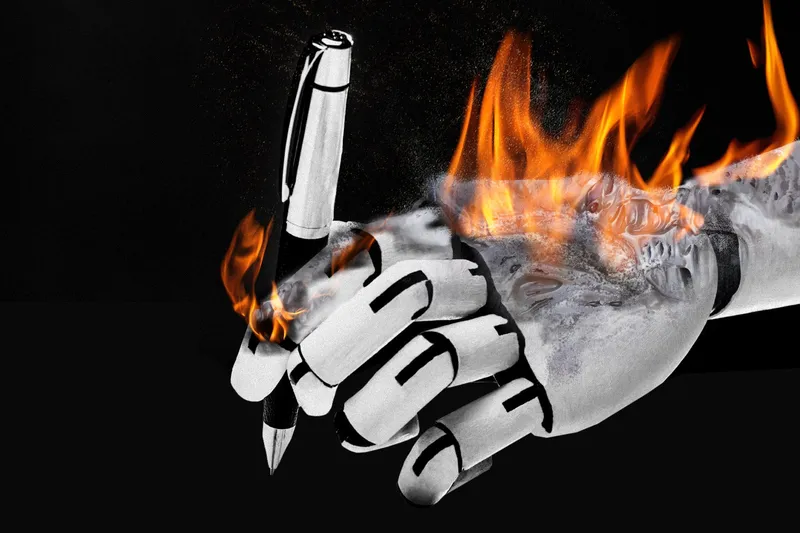
OpenAI says its new model GPT-2 is too dangerous to release (2019)
OpenAI developed a new text-generation model, GPT-2, capable of producing coherent and versatile prose from prompts. Due to safety and security concerns, OpenAI has opted not to release the full algorithm, instead providing a smaller version and withholding data sets and training codes.
slate.com
9 min
4/8/2026
Text AI watermarks will always be trivial to remove
The European Union AI Act, enforceable in August 2026, mandates that AI outputs must be detectable as artificially generated through watermarking. LLM providers will need to implement a hidden signature to identify AI-generated content to comply with this requirement.
seangoedecke.com
11 min
8/13/2026
OpenAI says its new model GPT-2 is too dangerous to release (2019)
OpenAI developed a new text-generation model, GPT-2, capable of producing coherent and versatile prose from prompts. Due to safety and security concerns, OpenAI has opted not to release the full algorithm, instead providing a smaller version and withholding data sets and training codes.
slate.com
9 min
4/8/2026
Text AI watermarks will always be trivial to remove
The European Union AI Act, enforceable in August 2026, mandates that AI outputs must be detectable as artificially generated through watermarking. LLM providers will need to implement a hidden signature to identify AI-generated content to comply with this requirement.
seangoedecke.com
11 min
8/13/2026
OpenAI says its new model GPT-2 is too dangerous to release (2019)
OpenAI developed a new text-generation model, GPT-2, capable of producing coherent and versatile prose from prompts. Due to safety and security concerns, OpenAI has opted not to release the full algorithm, instead providing a smaller version and withholding data sets and training codes.
slate.com
9 min
4/8/2026
No more articles to load