
fx :Tiny, open, native coding agent.
fx is a tiny, open coding agent implemented as a minimal command-line interface in Zig. It is designed for native operation and aims to support research use and embedding within larger systems. The project emphasizes a small implementation footprint and integration into broader software environments rather than a standalone graphical interface. Its stated focus is coding-agent functionality delivered through a Zig-based CLI.
fx.sh
1 min
8/18/2026
How Compaction Works in Pi
Compaction in Pi occurs during long coding sessions to manage memory and context. Large language models (LLMs) have limited context windows due to the constraints of their transformer architecture, affecting the amount of input they can process.
earendil.com
5 min
8/13/2026
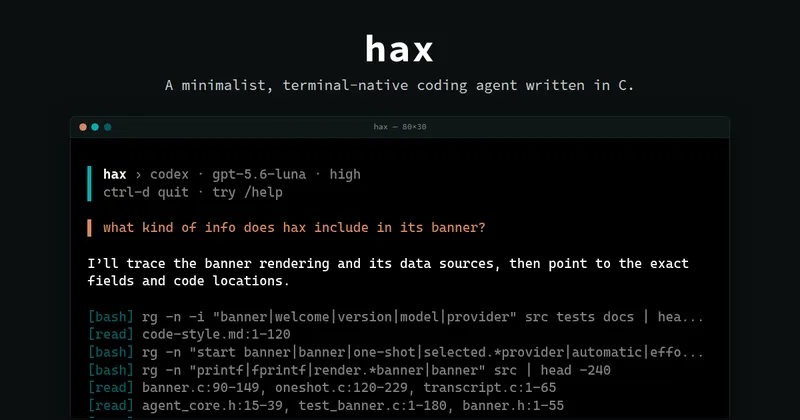
Hax – a minimalist, terminal-native coding agent written in C
hax is a lightweight terminal-native coding agent designed as a single native C binary with minimal dependencies, consuming only a few megabytes of memory. It automatically discovers local model capabilities without requiring custom provider configurations and streams Markdown and live tool output formatted for terminal display.
usehax.dev
2 min
8/12/2026
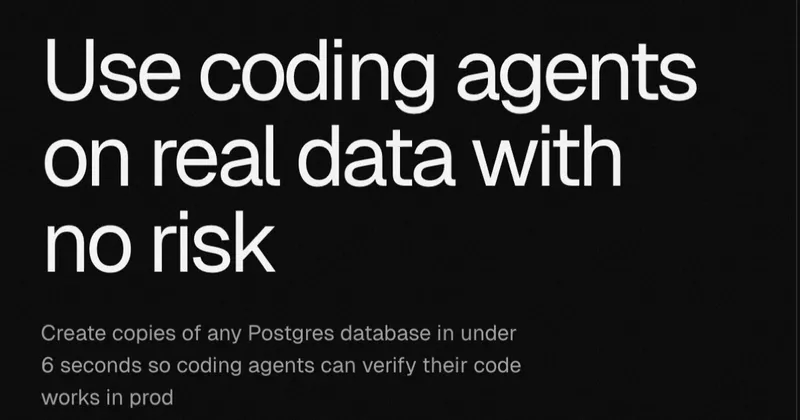
Launch HN: Ardent (YC P26) – Postgres sandboxes in seconds with zero migration
Ardent enables coding agents to test database code on a 1:1 copy of production PostgreSQL without impacting the live environment. Clones are isolated, load in six seconds, scale automatically, and do not duplicate storage, ensuring zero management is required.
tryardent.com
1 min
5/13/2026
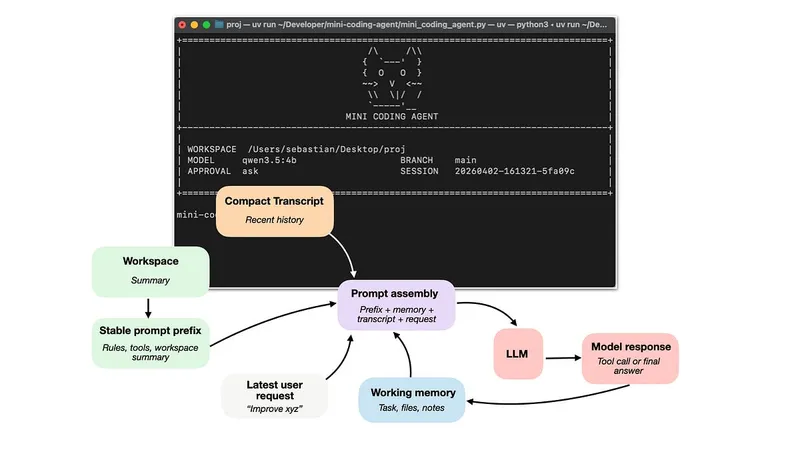
Components of a Coding Agent
Coding agents utilize tools, memory, and repository context to enhance the functionality of large language models (LLMs). They are designed to integrate various components effectively, improving practical applications in coding tasks.
magazine.sebastianraschka.com
16 min
4/4/2026


Agentic Engineering Patterns
Agentic engineering patterns provide strategies for optimizing interactions with coding agents such as Claude Code and OpenAI Codex. Key areas include principles for effective use, testing and quality assurance, code comprehension, and annotated prompts.
simonwillison.net
1 min
3/4/2026

Pi – a minimal terminal coding harness
Pi is a minimal terminal coding harness that can be adapted to various workflows and extended with TypeScript extensions, skills, prompt templates, and themes. It operates in four modes: interactive, print/JSON, RPC, and SDK, and allows users to build custom solutions or install packages for specific needs.
pi.dev
3 min
2/24/2026
fx :Tiny, open, native coding agent.
fx is a tiny, open coding agent implemented as a minimal command-line interface in Zig. It is designed for native operation and aims to support research use and embedding within larger systems. The project emphasizes a small implementation footprint and integration into broader software environments rather than a standalone graphical interface. Its stated focus is coding-agent functionality delivered through a Zig-based CLI.
fx.sh
1 min
8/18/2026
Hax – a minimalist, terminal-native coding agent written in C
hax is a lightweight terminal-native coding agent designed as a single native C binary with minimal dependencies, consuming only a few megabytes of memory. It automatically discovers local model capabilities without requiring custom provider configurations and streams Markdown and live tool output formatted for terminal display.
usehax.dev
2 min
8/12/2026
Components of a Coding Agent
Coding agents utilize tools, memory, and repository context to enhance the functionality of large language models (LLMs). They are designed to integrate various components effectively, improving practical applications in coding tasks.
magazine.sebastianraschka.com
16 min
4/4/2026
Chrome DevTools MCP
The Chrome DevTools MCP server now allows coding agents to connect directly to active browser sessions. This enhancement enables coding agents to reuse existing sessions, eliminating the need for additional sign-ins to address issues.
developer.chrome.com
4 min
3/15/2026
Pi – a minimal terminal coding harness
Pi is a minimal terminal coding harness that can be adapted to various workflows and extended with TypeScript extensions, skills, prompt templates, and themes. It operates in four modes: interactive, print/JSON, RPC, and SDK, and allows users to build custom solutions or install packages for specific needs.
pi.dev
3 min
2/24/2026
How Compaction Works in Pi
Compaction in Pi occurs during long coding sessions to manage memory and context. Large language models (LLMs) have limited context windows due to the constraints of their transformer architecture, affecting the amount of input they can process.
earendil.com
5 min
8/13/2026
Launch HN: Ardent (YC P26) – Postgres sandboxes in seconds with zero migration
Ardent enables coding agents to test database code on a 1:1 copy of production PostgreSQL without impacting the live environment. Clones are isolated, load in six seconds, scale automatically, and do not duplicate storage, ensuring zero management is required.
tryardent.com
1 min
5/13/2026
What is agentic engineering?
Agentic engineering involves developing software with the help of coding agents that can write and execute code. Examples of coding agents include Claude Code, OpenAI Codex, and Gemini CLI.
simonwillison.net
3 min
3/16/2026
Agentic Engineering Patterns
Agentic engineering patterns provide strategies for optimizing interactions with coding agents such as Claude Code and OpenAI Codex. Key areas include principles for effective use, testing and quality assurance, code comprehension, and annotated prompts.
simonwillison.net
1 min
3/4/2026
fx :Tiny, open, native coding agent.
fx is a tiny, open coding agent implemented as a minimal command-line interface in Zig. It is designed for native operation and aims to support research use and embedding within larger systems. The project emphasizes a small implementation footprint and integration into broader software environments rather than a standalone graphical interface. Its stated focus is coding-agent functionality delivered through a Zig-based CLI.
fx.sh
1 min
8/18/2026
Launch HN: Ardent (YC P26) – Postgres sandboxes in seconds with zero migration
Ardent enables coding agents to test database code on a 1:1 copy of production PostgreSQL without impacting the live environment. Clones are isolated, load in six seconds, scale automatically, and do not duplicate storage, ensuring zero management is required.
tryardent.com
1 min
5/13/2026
How Compaction Works in Pi
Compaction in Pi occurs during long coding sessions to manage memory and context. Large language models (LLMs) have limited context windows due to the constraints of their transformer architecture, affecting the amount of input they can process.
earendil.com
5 min
8/13/2026
Components of a Coding Agent
Coding agents utilize tools, memory, and repository context to enhance the functionality of large language models (LLMs). They are designed to integrate various components effectively, improving practical applications in coding tasks.
magazine.sebastianraschka.com
16 min
4/4/2026
Agentic Engineering Patterns
Agentic engineering patterns provide strategies for optimizing interactions with coding agents such as Claude Code and OpenAI Codex. Key areas include principles for effective use, testing and quality assurance, code comprehension, and annotated prompts.
simonwillison.net
1 min
3/4/2026
Hax – a minimalist, terminal-native coding agent written in C
hax is a lightweight terminal-native coding agent designed as a single native C binary with minimal dependencies, consuming only a few megabytes of memory. It automatically discovers local model capabilities without requiring custom provider configurations and streams Markdown and live tool output formatted for terminal display.
usehax.dev
2 min
8/12/2026
What is agentic engineering?
Agentic engineering involves developing software with the help of coding agents that can write and execute code. Examples of coding agents include Claude Code, OpenAI Codex, and Gemini CLI.
simonwillison.net
3 min
3/16/2026
Pi – a minimal terminal coding harness
Pi is a minimal terminal coding harness that can be adapted to various workflows and extended with TypeScript extensions, skills, prompt templates, and themes. It operates in four modes: interactive, print/JSON, RPC, and SDK, and allows users to build custom solutions or install packages for specific needs.
pi.dev
3 min
2/24/2026
No more articles to load