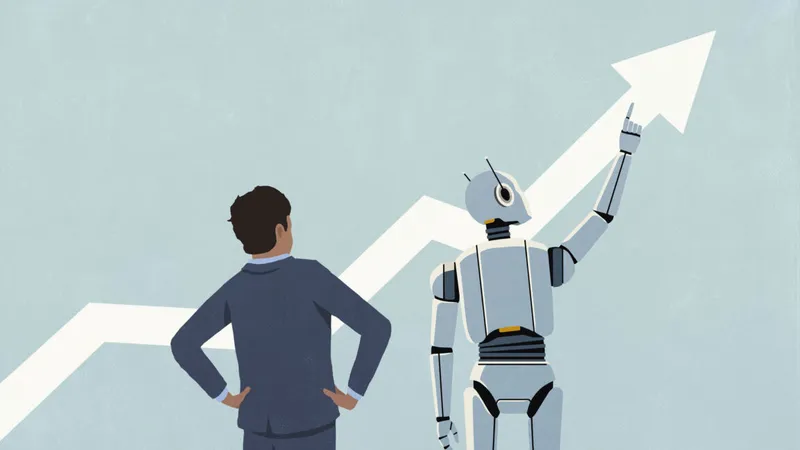
AI is hitting entry-level jobs hardest, Stanford study finds
Updated Stanford University research finds that employment for workers ages 22 to 25 in occupations most exposed to AI is 19 percent below employment among peers in less AI-exposed fields. The gap was 13 percent in the prior year’s analysis, indicating that the entry-level employment trend identified by the researchers has persisted and widened. The findings concern some fields rather than the entire labor market; older workers have appeared largely unaffected so far, according to the researchers. The August 2026 edition of “Canaries in the Coal Mine? Six Facts about the Recent Employment Effects of Artificial Intelligence” revises a paper published the previous year using newer data and refined statistics. The Stanford economists analyzed a large subsample of anonymized, high-frequency payroll data aggregated by HR-management company ADP. They classified occupations by AI exposure using a previously established gauge of potential labor-market effects and the Anthropic Economic Index, which measures how workers in different occupations use Anthropic’s Claude model in their daily work. Google published a comparable occupational analysis based on Gemini usage in the previous month.
arstechnica.com
1 min
8/25/2026
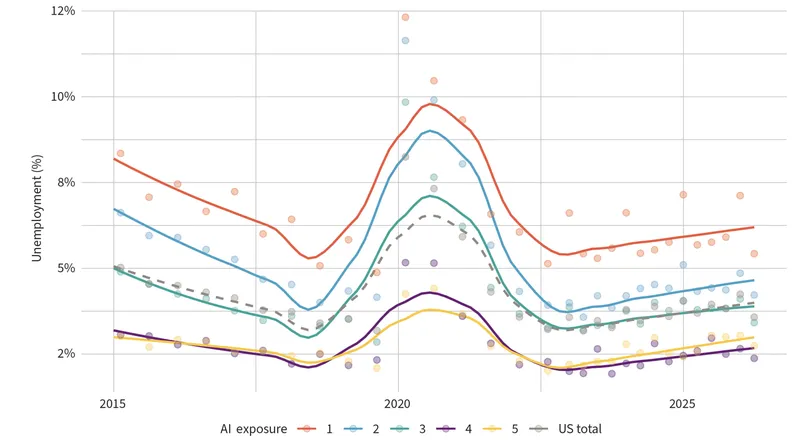
What is happening to jobs? Separating AI hype from reality
AI's overall impact on employment is expected to be small, although it may contribute to challenges faced by new graduates. While AI has generally positive effects on worker productivity, its adoption across the economy is uneven.
siepr.stanford.edu
20 min
7/25/2026

Ethics Is the Skill That Matters Most Now
Human skills such as writing, coding, and design are becoming commoditized as machines perform these tasks faster and more efficiently. Ethical judgment is increasingly recognized as the most critical skill in navigating the capabilities of AI, which serves as a powerful amplifier of human actions.
agonora.com
6 min
7/22/2026
Software Is Becoming Marketing
Software products and jobs are undergoing significant changes due to AI advancements, leading to mass layoffs in major companies like Block, Atlassian, Salesforce, and Snapchat. In the Czech Republic, local insurance group Direct announced a reduction of one-third of its workforce, with the CEO stating that the time for experimenting with AI has ended.
terezatizkova.com
7 min
6/27/2026
Is AI causing a repeat of Front end's Lost Decade?
AI is transforming programming jobs, particularly for frontend developers, by introducing deskilling and higher levels of abstraction. Historical changes, such as the use of code snippets from Stack Overflow, are being echoed in the current landscape influenced by AI advancements.
mastrojs.github.io
13 min
5/29/2026

Palantir CEO says AI 'will destroy' humanities jobs, but there will be 'more than enough jobs' for people with vocational training
Palantir CEO Alex Karp stated that AI will eliminate jobs in the humanities sector. He emphasized that there will still be ample job opportunities for individuals with vocational training.
fortune.com
4 min
4/12/2026

Americans Recognize AI as a Wealth Inequality Machine, Polls Find
Polling by Blue Rose Research reveals that Americans increasingly view AI as a contributor to wealth inequality. Voters are becoming more concerned about the implications of AI technology, contrasting with corporate enthusiasm for its potential to reduce labor costs.
gizmodo.com
3 min
3/18/2026
AI is hitting entry-level jobs hardest, Stanford study finds
Updated Stanford University research finds that employment for workers ages 22 to 25 in occupations most exposed to AI is 19 percent below employment among peers in less AI-exposed fields. The gap was 13 percent in the prior year’s analysis, indicating that the entry-level employment trend identified by the researchers has persisted and widened. The findings concern some fields rather than the entire labor market; older workers have appeared largely unaffected so far, according to the researchers. The August 2026 edition of “Canaries in the Coal Mine? Six Facts about the Recent Employment Effects of Artificial Intelligence” revises a paper published the previous year using newer data and refined statistics. The Stanford economists analyzed a large subsample of anonymized, high-frequency payroll data aggregated by HR-management company ADP. They classified occupations by AI exposure using a previously established gauge of potential labor-market effects and the Anthropic Economic Index, which measures how workers in different occupations use Anthropic’s Claude model in their daily work. Google published a comparable occupational analysis based on Gemini usage in the previous month.
arstechnica.com
1 min
8/25/2026
Ethics Is the Skill That Matters Most Now
Human skills such as writing, coding, and design are becoming commoditized as machines perform these tasks faster and more efficiently. Ethical judgment is increasingly recognized as the most critical skill in navigating the capabilities of AI, which serves as a powerful amplifier of human actions.
agonora.com
6 min
7/22/2026
Is AI causing a repeat of Front end's Lost Decade?
AI is transforming programming jobs, particularly for frontend developers, by introducing deskilling and higher levels of abstraction. Historical changes, such as the use of code snippets from Stack Overflow, are being echoed in the current landscape influenced by AI advancements.
mastrojs.github.io
13 min
5/29/2026
Americans Recognize AI as a Wealth Inequality Machine, Polls Find
Polling by Blue Rose Research reveals that Americans increasingly view AI as a contributor to wealth inequality. Voters are becoming more concerned about the implications of AI technology, contrasting with corporate enthusiasm for its potential to reduce labor costs.
gizmodo.com
3 min
3/18/2026
What is happening to jobs? Separating AI hype from reality
AI's overall impact on employment is expected to be small, although it may contribute to challenges faced by new graduates. While AI has generally positive effects on worker productivity, its adoption across the economy is uneven.
siepr.stanford.edu
20 min
7/25/2026
Software Is Becoming Marketing
Software products and jobs are undergoing significant changes due to AI advancements, leading to mass layoffs in major companies like Block, Atlassian, Salesforce, and Snapchat. In the Czech Republic, local insurance group Direct announced a reduction of one-third of its workforce, with the CEO stating that the time for experimenting with AI has ended.
terezatizkova.com
7 min
6/27/2026
Palantir CEO says AI 'will destroy' humanities jobs, but there will be 'more than enough jobs' for people with vocational training
Palantir CEO Alex Karp stated that AI will eliminate jobs in the humanities sector. He emphasized that there will still be ample job opportunities for individuals with vocational training.
fortune.com
4 min
4/12/2026
AI is hitting entry-level jobs hardest, Stanford study finds
Updated Stanford University research finds that employment for workers ages 22 to 25 in occupations most exposed to AI is 19 percent below employment among peers in less AI-exposed fields. The gap was 13 percent in the prior year’s analysis, indicating that the entry-level employment trend identified by the researchers has persisted and widened. The findings concern some fields rather than the entire labor market; older workers have appeared largely unaffected so far, according to the researchers. The August 2026 edition of “Canaries in the Coal Mine? Six Facts about the Recent Employment Effects of Artificial Intelligence” revises a paper published the previous year using newer data and refined statistics. The Stanford economists analyzed a large subsample of anonymized, high-frequency payroll data aggregated by HR-management company ADP. They classified occupations by AI exposure using a previously established gauge of potential labor-market effects and the Anthropic Economic Index, which measures how workers in different occupations use Anthropic’s Claude model in their daily work. Google published a comparable occupational analysis based on Gemini usage in the previous month.
arstechnica.com
1 min
8/25/2026
Software Is Becoming Marketing
Software products and jobs are undergoing significant changes due to AI advancements, leading to mass layoffs in major companies like Block, Atlassian, Salesforce, and Snapchat. In the Czech Republic, local insurance group Direct announced a reduction of one-third of its workforce, with the CEO stating that the time for experimenting with AI has ended.
terezatizkova.com
7 min
6/27/2026
Americans Recognize AI as a Wealth Inequality Machine, Polls Find
Polling by Blue Rose Research reveals that Americans increasingly view AI as a contributor to wealth inequality. Voters are becoming more concerned about the implications of AI technology, contrasting with corporate enthusiasm for its potential to reduce labor costs.
gizmodo.com
3 min
3/18/2026
What is happening to jobs? Separating AI hype from reality
AI's overall impact on employment is expected to be small, although it may contribute to challenges faced by new graduates. While AI has generally positive effects on worker productivity, its adoption across the economy is uneven.
siepr.stanford.edu
20 min
7/25/2026
Is AI causing a repeat of Front end's Lost Decade?
AI is transforming programming jobs, particularly for frontend developers, by introducing deskilling and higher levels of abstraction. Historical changes, such as the use of code snippets from Stack Overflow, are being echoed in the current landscape influenced by AI advancements.
mastrojs.github.io
13 min
5/29/2026
Ethics Is the Skill That Matters Most Now
Human skills such as writing, coding, and design are becoming commoditized as machines perform these tasks faster and more efficiently. Ethical judgment is increasingly recognized as the most critical skill in navigating the capabilities of AI, which serves as a powerful amplifier of human actions.
agonora.com
6 min
7/22/2026
Palantir CEO says AI 'will destroy' humanities jobs, but there will be 'more than enough jobs' for people with vocational training
Palantir CEO Alex Karp stated that AI will eliminate jobs in the humanities sector. He emphasized that there will still be ample job opportunities for individuals with vocational training.
fortune.com
4 min
4/12/2026
No more articles to load