
What AI developers could learn from Charles Bukowski?
AI developers can draw inspiration from Charles Bukowski's perspective on patience and the importance of waiting for the right moment to act. Emphasizing the need for creativity and alternative pursuits during periods of inactivity can enhance innovation in AI development.
galjot.si
3 min
9h ago

It's not empowering to hand off the details
AI enthusiasm often stems from a desire to manifest ideas without delving into intricate details. However, achieving quality and innovation requires a deep understanding and meticulous attention to the complexities involved.
davidnicholaswilliams.com
1 min
2d ago
Stop saying that AI is just a tool and it only matters how it is used
AI should not be simplistically categorized as just a tool, as this perspective limits understanding of its complexities and implications. A more nuanced view of tools is necessary for mature discussions about AI's role and impact in society.
frank.computer
12 min
7/16/2026
The Tower Keeps Rising
Vibecoded software experiences unexpected changes, leading to reflections on the themes of unity and chaos in Bruegel’s “The Tower of Babel.” The narrative connects technological progress with the importance of communication and collaboration.
lucumr.pocoo.org
4 min
7/14/2026
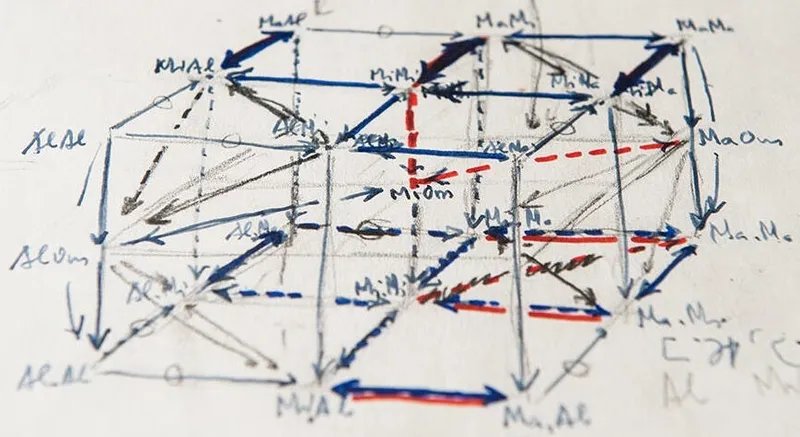
The Fall of the Theorem Economy
The theorem economy is facing challenges as AI technologies evolve, potentially diminishing the role of traditional mathematical proofs. Bill Thurston emphasizes that the essence of mathematics lies in clarity and understanding rather than merely accumulating theorems.
davidbessis.substack.com
53 min
7/2/2026

Artificial intelligence is not conscious – Ted Chiang
Artificial intelligence, including models like Claude from Anthropic, is not conscious. Anthropic released a document titled "Claude’s constitution," which outlines the operational guidelines and ethical considerations for its AI model.
theatlantic.com
29 min
6/3/2026

The people who actually want AI to replace humanity
“I want AI to be a tool that allows human flourishing!” exclaimed Brad Carson, a former member of Congress. “There is an option out there where AI is just a tool for us.” The people who actually want AI to replace humanity We need to create a new humanism before the “AI successionists” win. This is a normal thing to say in most circles. But Carson was speaking at an invite-only symposium dedicated...
vox.com
32 min
5/31/2026

The Abstraction Fallacy: Why AI can simulate but not instantiate consciousness
Computational functionalism posits that subjective experience arises solely from abstract causal topology, independent of the physical substrate. The Abstraction Fallacy critiques this view, asserting it misrepresents the relationship between physics and information.
deepmind.google
1 min
4/29/2026

What AI developers could learn from Charles Bukowski?
AI developers can draw inspiration from Charles Bukowski's perspective on patience and the importance of waiting for the right moment to act. Emphasizing the need for creativity and alternative pursuits during periods of inactivity can enhance innovation in AI development.
galjot.si
3 min
9h ago
Stop saying that AI is just a tool and it only matters how it is used
AI should not be simplistically categorized as just a tool, as this perspective limits understanding of its complexities and implications. A more nuanced view of tools is necessary for mature discussions about AI's role and impact in society.
frank.computer
12 min
7/16/2026
The Fall of the Theorem Economy
The theorem economy is facing challenges as AI technologies evolve, potentially diminishing the role of traditional mathematical proofs. Bill Thurston emphasizes that the essence of mathematics lies in clarity and understanding rather than merely accumulating theorems.
davidbessis.substack.com
53 min
7/2/2026
The people who actually want AI to replace humanity
“I want AI to be a tool that allows human flourishing!” exclaimed Brad Carson, a former member of Congress. “There is an option out there where AI is just a tool for us.” The people who actually want AI to replace humanity We need to create a new humanism before the “AI successionists” win. This is a normal thing to say in most circles. But Carson was speaking at an invite-only symposium dedicated...
vox.com
32 min
5/31/2026
The Abstraction Fallacy: Why AI can simulate but not instantiate consciousness
Computational functionalism posits that subjective experience arises solely from abstract causal topology, independent of the physical substrate. The Abstraction Fallacy critiques this view, asserting it misrepresents the relationship between physics and information.
deepmind.google
1 min
4/29/2026
It's not empowering to hand off the details
AI enthusiasm often stems from a desire to manifest ideas without delving into intricate details. However, achieving quality and innovation requires a deep understanding and meticulous attention to the complexities involved.
davidnicholaswilliams.com
1 min
2d ago
The Tower Keeps Rising
Vibecoded software experiences unexpected changes, leading to reflections on the themes of unity and chaos in Bruegel’s “The Tower of Babel.” The narrative connects technological progress with the importance of communication and collaboration.
lucumr.pocoo.org
4 min
7/14/2026
Artificial intelligence is not conscious – Ted Chiang
Artificial intelligence, including models like Claude from Anthropic, is not conscious. Anthropic released a document titled "Claude’s constitution," which outlines the operational guidelines and ethical considerations for its AI model.
theatlantic.com
29 min
6/3/2026
Knitting bullshit
Harry Frankfurt defines "bullshit" as an utterance that lacks a connection to truth and shows indifference to reality. The concept is explored in the context of knitting and its related discourse.
katedaviesdesigns.com
14 min
5/6/2026
What AI developers could learn from Charles Bukowski?
AI developers can draw inspiration from Charles Bukowski's perspective on patience and the importance of waiting for the right moment to act. Emphasizing the need for creativity and alternative pursuits during periods of inactivity can enhance innovation in AI development.
galjot.si
3 min
9h ago
The Tower Keeps Rising
Vibecoded software experiences unexpected changes, leading to reflections on the themes of unity and chaos in Bruegel’s “The Tower of Babel.” The narrative connects technological progress with the importance of communication and collaboration.
lucumr.pocoo.org
4 min
7/14/2026
The people who actually want AI to replace humanity
“I want AI to be a tool that allows human flourishing!” exclaimed Brad Carson, a former member of Congress. “There is an option out there where AI is just a tool for us.” The people who actually want AI to replace humanity We need to create a new humanism before the “AI successionists” win. This is a normal thing to say in most circles. But Carson was speaking at an invite-only symposium dedicated...
vox.com
32 min
5/31/2026
It's not empowering to hand off the details
AI enthusiasm often stems from a desire to manifest ideas without delving into intricate details. However, achieving quality and innovation requires a deep understanding and meticulous attention to the complexities involved.
davidnicholaswilliams.com
1 min
2d ago
The Fall of the Theorem Economy
The theorem economy is facing challenges as AI technologies evolve, potentially diminishing the role of traditional mathematical proofs. Bill Thurston emphasizes that the essence of mathematics lies in clarity and understanding rather than merely accumulating theorems.
davidbessis.substack.com
53 min
7/2/2026
Stop saying that AI is just a tool and it only matters how it is used
AI should not be simplistically categorized as just a tool, as this perspective limits understanding of its complexities and implications. A more nuanced view of tools is necessary for mature discussions about AI's role and impact in society.
frank.computer
12 min
7/16/2026
Artificial intelligence is not conscious – Ted Chiang
Artificial intelligence, including models like Claude from Anthropic, is not conscious. Anthropic released a document titled "Claude’s constitution," which outlines the operational guidelines and ethical considerations for its AI model.
theatlantic.com
29 min
6/3/2026
The Abstraction Fallacy: Why AI can simulate but not instantiate consciousness
Computational functionalism posits that subjective experience arises solely from abstract causal topology, independent of the physical substrate. The Abstraction Fallacy critiques this view, asserting it misrepresents the relationship between physics and information.
deepmind.google
1 min
4/29/2026