Emacs 31.1 will release on 8/24
GNU Emacs’ HISTORY file records the editor’s evolution from EMACS, a set of macros for the TECO text editor that became operational in late 1976, to the GNU implementation begun in 1984. EMACS drew inspiration from earlier work including Stanford’s E editor and older TECO macro sets. Early GNU Emacs development occurred without version-control systems and was distributed on half-inch, nine-track, 1600-bpi magnetic tape reels; documentation describes surviving details from that period as sketchy. GNU Emacs was rebuilt for GNU and GNU-like systems with a full-featured Lisp at its core. Versions 1.0 through 1.12 were released in early 1985, while version 13 became the initial public release and was announced on Usenet on March 20, 1985. The release record lists stable versions from Emacs 13 through Emacs 31.1, dated August 24, 2026. Recent releases include Emacs 29.1 on July 30, 2023; 29.4 on June 22, 2024; 30.1 on February 23, 2025; and 30.2 on August 14, 2025. Emacs 28.3 is dated February 17, 2023 but marked as not actually released. GNU Emacs is free software under version 3 or later of the GNU General Public License.
github.com
6 min
8/21/2026
Human vs. AI – Diff-based line-level provenance for text under agentic editing
GitHub repository eighttrigrams/us-vs-them provides line-level provenance for text under agentic editing, identifying authorship based on version history rather than file markup. It can be utilized as a library or command-line interface (CLI) tool.
github.com
2 min
8/10/2026
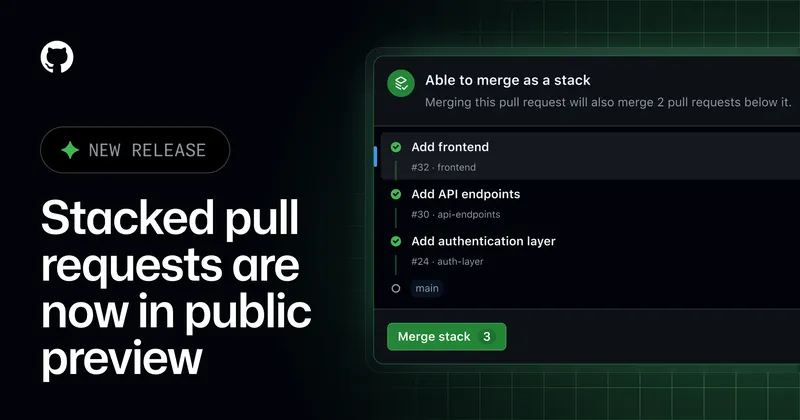
Stacked PRs are now live on GitHub
Stacked pull requests are now in public preview on GitHub, allowing users to break large changes into smaller, reviewable pull requests. This feature enables independent review of each pull request in a series, facilitating easier merging of changes with a single action.
github.blog
3 min
7/30/2026

Perforce charges $500 for training training videos.. and it's AI narrated
Perforce offers a course on Helix Core User Basics, designed to teach users fundamental skills in version control and collaboration. The course provides practical training on using Helix Core for managing source code and digital assets.
training.perforce.com
1 min
7/19/2026

Weave: Merging based on language structure and not lines
Weave is an entity-level semantic merge driver for Git that allows two agents to edit different functions in the same file without causing merge conflicts. When configured, Weave can automatically merge changes by recognizing distinct entities, resulting in clean merges even when overlapping lines are present.
ataraxy-labs.github.io
1 min
6/14/2026
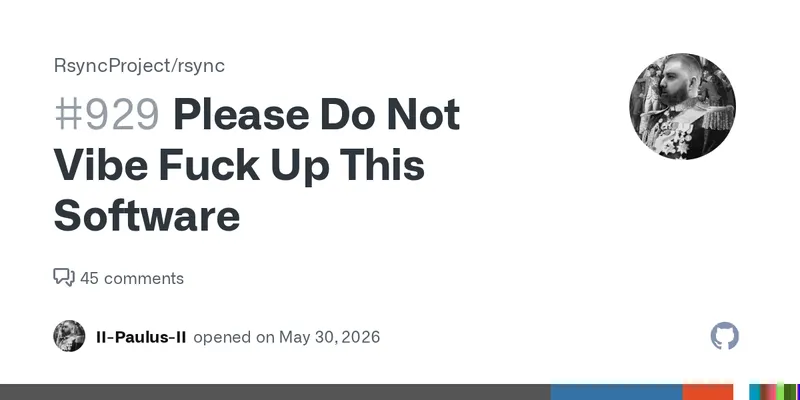
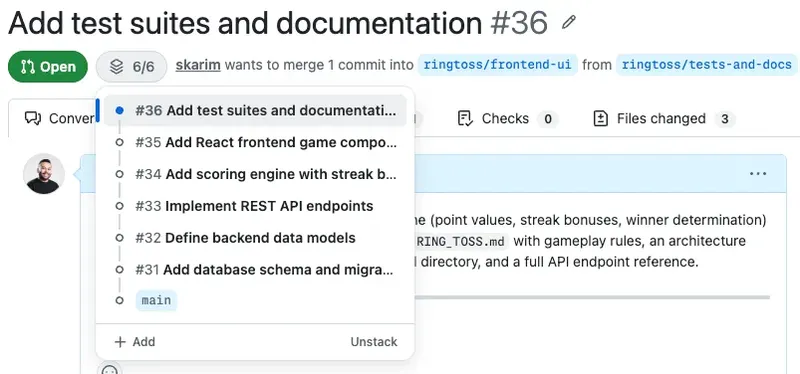
GitHub Stacked PRs
GitHub's Stacked PRs feature allows users to arrange pull requests in an ordered stack, enabling the merging of all stacked PRs with a single click. Each pull request represents a focused layer of changes, which can be reviewed independently before being merged together.
github.github.com
2 min
4/14/2026
The Missing Semester of Your CS Education – Revised for 2026
The Missing Semester of Your CS Education focuses on essential skills often overlooked in traditional computer science curricula, such as command-line mastery, advanced text editor usage, and effective version control. The course aims to equip students with practical tool proficiency to enhance their productivity in software development.
missing.csail.mit.edu
2 min
2/23/2026

Evolving Git for the Next Decade
Git has become the dominant version-control system over the past two decades, widely used by developers and open-source projects. Patrick Steinhardt addressed Git's shortcomings and proposed improvements to enhance its functionality for the next decade at FOSDEM 2026.
lwn.net
15 min
2/14/2026
Emacs 31.1 will release on 8/24
GNU Emacs’ HISTORY file records the editor’s evolution from EMACS, a set of macros for the TECO text editor that became operational in late 1976, to the GNU implementation begun in 1984. EMACS drew inspiration from earlier work including Stanford’s E editor and older TECO macro sets. Early GNU Emacs development occurred without version-control systems and was distributed on half-inch, nine-track, 1600-bpi magnetic tape reels; documentation describes surviving details from that period as sketchy. GNU Emacs was rebuilt for GNU and GNU-like systems with a full-featured Lisp at its core. Versions 1.0 through 1.12 were released in early 1985, while version 13 became the initial public release and was announced on Usenet on March 20, 1985. The release record lists stable versions from Emacs 13 through Emacs 31.1, dated August 24, 2026. Recent releases include Emacs 29.1 on July 30, 2023; 29.4 on June 22, 2024; 30.1 on February 23, 2025; and 30.2 on August 14, 2025. Emacs 28.3 is dated February 17, 2023 but marked as not actually released. GNU Emacs is free software under version 3 or later of the GNU General Public License.
github.com
6 min
8/21/2026
Stacked PRs are now live on GitHub
Stacked pull requests are now in public preview on GitHub, allowing users to break large changes into smaller, reviewable pull requests. This feature enables independent review of each pull request in a series, facilitating easier merging of changes with a single action.
github.blog
3 min
7/30/2026
Weave: Merging based on language structure and not lines
Weave is an entity-level semantic merge driver for Git that allows two agents to edit different functions in the same file without causing merge conflicts. When configured, Weave can automatically merge changes by recognizing distinct entities, resulting in clean merges even when overlapping lines are present.
ataraxy-labs.github.io
1 min
6/14/2026
GitHub Stacked PRs
GitHub's Stacked PRs feature allows users to arrange pull requests in an ordered stack, enabling the merging of all stacked PRs with a single click. Each pull request represents a focused layer of changes, which can be reviewed independently before being merged together.
github.github.com
2 min
4/14/2026
The Missing Semester of Your CS Education – Revised for 2026
The Missing Semester of Your CS Education focuses on essential skills often overlooked in traditional computer science curricula, such as command-line mastery, advanced text editor usage, and effective version control. The course aims to equip students with practical tool proficiency to enhance their productivity in software development.
missing.csail.mit.edu
2 min
2/23/2026
Human vs. AI – Diff-based line-level provenance for text under agentic editing
GitHub repository eighttrigrams/us-vs-them provides line-level provenance for text under agentic editing, identifying authorship based on version history rather than file markup. It can be utilized as a library or command-line interface (CLI) tool.
github.com
2 min
8/10/2026
Perforce charges $500 for training training videos.. and it's AI narrated
Perforce offers a course on Helix Core User Basics, designed to teach users fundamental skills in version control and collaboration. The course provides practical training on using Helix Core for managing source code and digital assets.
training.perforce.com
1 min
7/19/2026
Please Do Not Vibe Fuck Up This Software – Rsync
A discussion on GitHub addresses issues related to software behavior and user interactions with Rsync. Contributors emphasize the importance of maintaining software integrity and avoiding unintended disruptions.
github.com
1 min
5/31/2026
It's time to move your docs in the repo
Storing documentation in the same repository as code allows for better version control and synchronization with code changes. Utilizing Git for documentation management simplifies updates and collaboration among multiple contributors.
dein.fr
6 min
3/14/2026
Evolving Git for the Next Decade
Git has become the dominant version-control system over the past two decades, widely used by developers and open-source projects. Patrick Steinhardt addressed Git's shortcomings and proposed improvements to enhance its functionality for the next decade at FOSDEM 2026.
lwn.net
15 min
2/14/2026
Emacs 31.1 will release on 8/24
GNU Emacs’ HISTORY file records the editor’s evolution from EMACS, a set of macros for the TECO text editor that became operational in late 1976, to the GNU implementation begun in 1984. EMACS drew inspiration from earlier work including Stanford’s E editor and older TECO macro sets. Early GNU Emacs development occurred without version-control systems and was distributed on half-inch, nine-track, 1600-bpi magnetic tape reels; documentation describes surviving details from that period as sketchy. GNU Emacs was rebuilt for GNU and GNU-like systems with a full-featured Lisp at its core. Versions 1.0 through 1.12 were released in early 1985, while version 13 became the initial public release and was announced on Usenet on March 20, 1985. The release record lists stable versions from Emacs 13 through Emacs 31.1, dated August 24, 2026. Recent releases include Emacs 29.1 on July 30, 2023; 29.4 on June 22, 2024; 30.1 on February 23, 2025; and 30.2 on August 14, 2025. Emacs 28.3 is dated February 17, 2023 but marked as not actually released. GNU Emacs is free software under version 3 or later of the GNU General Public License.
github.com
6 min
8/21/2026
Perforce charges $500 for training training videos.. and it's AI narrated
Perforce offers a course on Helix Core User Basics, designed to teach users fundamental skills in version control and collaboration. The course provides practical training on using Helix Core for managing source code and digital assets.
training.perforce.com
1 min
7/19/2026
GitHub Stacked PRs
GitHub's Stacked PRs feature allows users to arrange pull requests in an ordered stack, enabling the merging of all stacked PRs with a single click. Each pull request represents a focused layer of changes, which can be reviewed independently before being merged together.
github.github.com
2 min
4/14/2026
Evolving Git for the Next Decade
Git has become the dominant version-control system over the past two decades, widely used by developers and open-source projects. Patrick Steinhardt addressed Git's shortcomings and proposed improvements to enhance its functionality for the next decade at FOSDEM 2026.
lwn.net
15 min
2/14/2026
Human vs. AI – Diff-based line-level provenance for text under agentic editing
GitHub repository eighttrigrams/us-vs-them provides line-level provenance for text under agentic editing, identifying authorship based on version history rather than file markup. It can be utilized as a library or command-line interface (CLI) tool.
github.com
2 min
8/10/2026
Weave: Merging based on language structure and not lines
Weave is an entity-level semantic merge driver for Git that allows two agents to edit different functions in the same file without causing merge conflicts. When configured, Weave can automatically merge changes by recognizing distinct entities, resulting in clean merges even when overlapping lines are present.
ataraxy-labs.github.io
1 min
6/14/2026
Stacked PRs are now live on GitHub
Stacked pull requests are now in public preview on GitHub, allowing users to break large changes into smaller, reviewable pull requests. This feature enables independent review of each pull request in a series, facilitating easier merging of changes with a single action.
github.blog
3 min
7/30/2026
Please Do Not Vibe Fuck Up This Software – Rsync
A discussion on GitHub addresses issues related to software behavior and user interactions with Rsync. Contributors emphasize the importance of maintaining software integrity and avoiding unintended disruptions.
github.com
1 min
5/31/2026
The Missing Semester of Your CS Education – Revised for 2026
The Missing Semester of Your CS Education focuses on essential skills often overlooked in traditional computer science curricula, such as command-line mastery, advanced text editor usage, and effective version control. The course aims to equip students with practical tool proficiency to enhance their productivity in software development.
missing.csail.mit.edu
2 min
2/23/2026
No more articles to load