Alternatives to Animal Testing Are Finally Taking Off
spectrum.ieee.org
October 19, 2026
14 min read
60/100
Summary
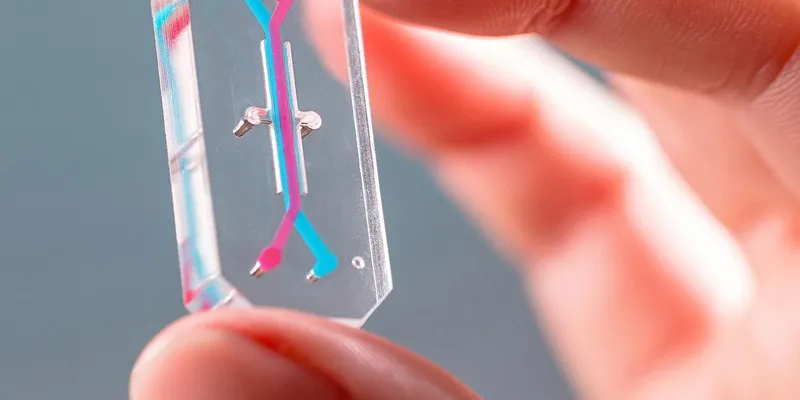
Nonanimal methods for drug development and toxicity testing now include human organoids, organs-on-chips, computational models, and AI systems that analyze experimental data. Harvard’s 2010 lung-on-a-chip study used human cells in microfluidic channels and simulated breathing motions; it showed that tissue movement affected uptake of silica nanoparticles. Multi-organ chip systems can link as many as 10 organs, although they do not reproduce human physiology perfectly. U.S. law explicitly authorized nonanimal methods in preclinical drug studies through the FDA Modernization Act 2.0 in late 2022. The FDA said in 2025 that it would seek to make animal studies the exception rather than the norm in drug-safety testing. In September 2026, the agency issued a proposed rule replacing “animal tests” with “nonclinical tests” in drug-development regulations, recognizing validated human-cell systems, organs-on-chips, and computer models when appropriate. NIH announced in 2025 that applicants studying animal models would also need to incorporate nonanimal research. Validation, standardization, cost, data access, and scientific training remain barriers. Emulate reported that its liver-on-a-chip identified about seven-eighths of drugs that passed animal testing but later proved toxic to human livers. Oxford University and Janssen researchers reported that computational heart-cell simulations identified compounds causing a dangerous arrhythmia with 89 percent accuracy, versus 75 percent for animal studies. Many methods still lack rigorous head-to-head evidence across intended uses.
Key Takeaways
- Organoids, organs-on-chips, computational simulations, and AI-assisted analysis are being developed as nonanimal methods for drug testing and toxicology.
- The FDA Modernization Act 2.0, enacted in late 2022, explicitly authorized nonanimal methods for preclinical drug studies.
- A September 2026 FDA proposed rule would replace references to “animal tests” with “nonclinical tests” in drug-development regulations.
- Emulate reported that its liver-on-a-chip flagged about seven out of eight drugs that passed animal trials but later proved toxic to human livers.
- Broader adoption of nonanimal methods requires reproducible commercial systems, standardized procedures, clinical validation, accessible comparison data, and researcher training.
What the discussion said
The thread treated organ-on-chip and organoid systems less as a clean ethical victory than as a question of whether they predict human biology better than animals do. Several commenters argued that the real indictment of animal testing is scientific: mouse results routinely fail to translate, so human-relevant tissue models could reduce both animal suffering and expensive false leads. The most optimistic readers saw regulators beginning to request chip-based evidence as the practical turning point; the technology has existed for years, but pharmaceutical adoption lagged while approval rules privileged animal studies. Skepticism focused on limits and incentives. Some argued that drugs are inherently uncertain even in human trials, so abandoning animal experiments could mean missing treatments that save lives. Others noted that supposedly animal-free organoid workflows may still rely on mouse-derived matrices, and that differing international regulators will force parallel animal and non-animal evidence for years. The discussion also widened to AI: virtual-cell research was presented as the more ambitious route to simulating biology, while one critic warned that language-model-style computational substitutes may drift even farther from the living systems medicines must ultimately treat. A sarcastic aside captured another fear: cheaper discovery tools could expand the candidate-drug pipeline enough to preserve, rather than eliminate, animal testing.
Where opinion split
The sharp dispute is whether replacing animal studies with human tissue chips and computational models improves medical progress or merely trades biological realism for a cleaner-looking proxy. Supporters say mice are poor stand-ins for humans and that better human-relevant models can cut false positives as well as cruelty. Critics say uncertain testing is unavoidable, potentially life-saving therapies warrant every available method, and increasingly abstract AI models may worsen the gap from actual biology.
Coverage & discussions
Hacker News · spectrum.ieee.org
Community discussions
Community Sentiment
Positives
- Human organ chips could attack the central scientific failure of animal studies: promising mouse results that collapse when treatments reach people.
- Regulatory interest in chip-based evidence is seen as the lever that could finally move pharma from niche demonstrations to routine human-relevant testing.
- Virtual-cell research excites commenters because a sufficiently faithful biological simulation could make disease and drug modeling far more scalable than animal experiments.
- Replacing weak animal proxies with models built from human biology offers a rare alignment of better prediction, lower development waste, and less animal harm.
Concerns
- Animal-free branding is incomplete when many organoid systems still depend on matrices harvested through mouse-host tumor workflows.
- Fragmented regulators may require animal studies alongside chips for years, blunting both the ethical and efficiency gains of alternative models.
- Cheaper, higher-throughput discovery could trigger a rebound in animal demand if vastly more candidate treatments still need downstream validation.
- Critics fear LLM-like computational biology may become another distant proxy, compounding rather than solving the mismatch between lab models and living patients.
Related Articles

The Sloppification of Peptides
Aug 23, 2026

Moderna reports first positive Phase 3 for mRNA neoantigen therapy in melanoma
Aug 19, 2026
Company Offering '100% Human-Written, Never AI' Medical Research Is 100% AI
Aug 12, 2026

Mozilla: The state of open source AI
Jul 17, 2026
Samsung Health app threatens data deletion if users opt out AI training
Jul 13, 2026