An AI coding agent, used to write code, needs to reduce your maintenance costs
jamesshore.com
May 10, 2026
6 min read
🔥🔥🔥🔥🔥
64/100
Summary
AI coding agents must significantly reduce maintenance costs in proportion to productivity gains. Achieving twice the coding speed should ideally result in halving maintenance costs, while tripling productivity should lead to one-third of the original costs.
Key Takeaways
- AI coding agents must significantly reduce maintenance costs to ensure long-term productivity; otherwise, increased speed can lead to unsustainable practices.
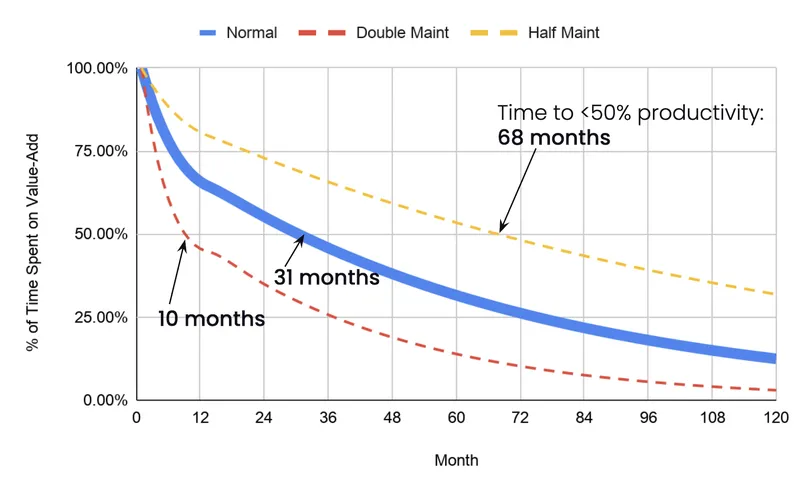
- For every month spent writing code, developers may spend 10 days on maintenance in the first year and 5 days each subsequent year, leading to diminishing productivity over time.
- Companies often face a decline in productivity around 5-9 years due to rising maintenance costs, which can result in teams being unable to complete new tasks.
- The effectiveness of an AI coding framework is contingent upon its ability to balance increased output with manageable maintenance demands.
Coverage & discussions
Hacker News · jamesshore.com
Community discussions
Community Sentiment
Positives
- AI tools like Claude significantly streamline code maintenance, allowing developers to focus on feature development while reducing response times and improving efficiency.
- The use of AI in managing legacy code has made modernization easier, eliminating dependencies and speeding up build processes, which enhances overall developer productivity.
- Integrating AI into testing processes can lead to better maintainability and a more enjoyable developer experience, as it allows for a focus on feature specifications rather than low-level implementation details.
Concerns
- Relying solely on AI for maintenance may overlook the importance of measuring the ratio of maintenance to feature development, which could misrepresent its effectiveness.
- Many companies fail to prioritize maintainability as a functional requirement, which can hinder long-term project success and the delivery of future features.