Report · twitter.com
Anthropic blocks users for anything touching training larger models
twitter.com
Source published October 31, 2026
Summary: 1 min read
63/100
Summary
Jiahao Shao accused Anthropic of wrongly flagging his account for “training a competitor” despite his claim that he never distilled Claude. Shao said rollouts used in his work came from a strong open-source model, while Claude was used only to submit jobs and run analysis. Shao said the restriction now blocks activity involving reinforcement fine-tuning, supervised fine-tuning, or training larger models. He also reported that Claude Opus 5.5 is downgraded to Opus 5 and that some sessions are terminated outright. Shao criticized Anthropic for treating paying users conducting research automation as adversaries while building models on broadly available data.
What the discussion said
The thread is less about a single blocked account than about whether Anthropic is quietly turning Claude into a tightly governed service that researchers and builders cannot safely depend on. Many commenters argue that professionals should treat Claude as a powerful but precarious vendor: maintain model fallbacks, keep workflows portable, and invest in local or open-weight options before opaque enforcement strands them mid-project. They see a company willing to exclude training-related use cases while moving toward higher-value enterprise work, and some frame that as both lock-in and hypocrisy given the industry’s contested use of public data. The evidence on what actually triggers enforcement is messy. Some readers think the reported case was likely amplified by accessing an unavailable service through a VPN, or by having Claude directly create or label training data. Others report using it extensively for novel attention research, BERT training, LoRA-based experimentation, and inference infrastructure without refusals. A few distinguish discussing model training from using Claude as a data-production component for a competing training pipeline. Still, reports of refusals around reinforcement learning and ordinary developer work make the guardrails feel unpredictable rather than narrowly targeted. Claude’s capability remains widely admired, but enthusiasm is tempered by fear that access can disappear without a transparent boundary or appeal process.
Where opinion split
The core dispute is whether Anthropic is reasonably preventing its service from feeding competing model-training pipelines or indiscriminately suppressing legitimate AI research. Defenders argue that VPN use, direct dataset generation, and labeling requests are obvious abuse signals, while ordinary technical discussion and development generally still work. Critics counter that comparable research requests have triggered blocks even outside restricted regions, so opaque classifiers turn a top-tier model into an unreliable dependency.
Coverage & discussions
Hacker News · twitter.com
Community discussions
Community Sentiment
Positives
- Claude is still regarded as an exceptional everyday model, strong enough that users actively seek a local substitute with comparable capability.
- Several practitioners report sustained success using Claude for advanced model work, including attention mechanisms, BERT training, LoRA workflows, optimized inference, and training-stack design.
- Some commenters see a defensible boundary at using a proprietary assistant to manufacture or label data for another model’s training pipeline, rather than merely discussing ML methods.
- The controversy is pushing interest toward portable workflows and local models, which could reduce dependence on any one hosted AI provider.
Concerns
- Opaque training-related enforcement makes Claude a risky foundation for serious ML work, because access may vanish without a clear technical rule or reliable recourse.
- Reports of refusals during reinforcement-learning experiments and other benign research suggest the safeguards can block legitimate AI development, not just dataset laundering.
- Critics see an uncomfortable asymmetry in restricting downstream model training while AI firms themselves rely on vast, disputed corpora gathered from the public web.
- The prospect of identity-gated cloud AI and eventual hardware-level restrictions fuels fears of a split between users with local compute and everyone locked into censored services.
Related Articles

Anthropic takes steps to block Claude from reverse-engineering video games
Oct 31, 2026

Anthropic's Claude AI blocks video game cloning and reverse-engineering
Oct 31, 2026

Anthropic Cracking Down on Video Game Rewrites
Oct 30, 2026

Anthropic’s IPO filing reveals its strategy for keeping enterprise customers hooked
Oct 26, 2026
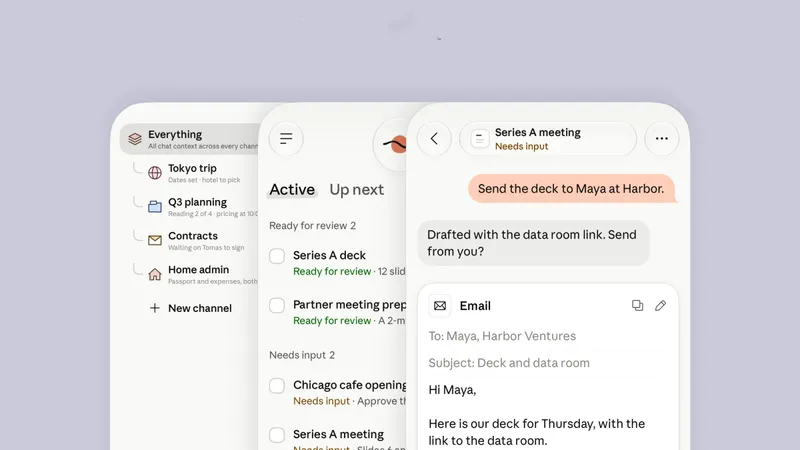
Claude Duet app is Anthropic’s bet on agents
Oct 22, 2026