ARC-AGI Leaderboard

arcprize.org
July 25, 2026
1 min read
🔥🔥🔥🔥🔥
56/100
Summary
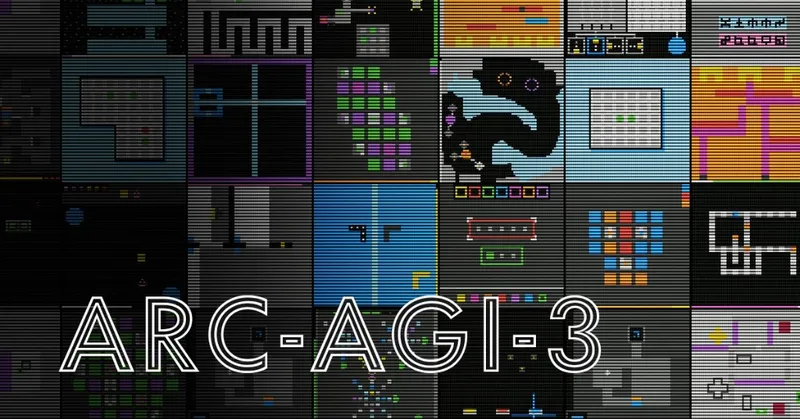
ARC-AGI-3 measures AI agents' ability to adapt to novel interactive environments, evolving from previous versions that focused on passive fluid intelligence. The leaderboard visualizes the relationship between cost-per-task and performance, emphasizing efficiency in problem-solving.
Key Takeaways
- ARC-AGI-3 challenges AI agents to adapt to novel interactive environments, moving beyond passive fluid intelligence measurements used in previous versions.
- The leaderboard visualizes the relationship between cost-per-task and performance, emphasizing the importance of efficiency in AI problem-solving.
- Kaggle Systems solutions on the leaderboard are designed for competition under strict computational constraints, showcasing efficient methods tailored for the ARC Prize.
- Only AI systems that required less than $10,000 to run are included in the leaderboard results.
Coverage & discussions
Hacker News · arcprize.org
Community discussions
Community Sentiment
Positives
- Opus 5 shows a remarkable leap in performance over its predecessor, making it a standout in the ARC AGI 3 leaderboard — users are genuinely impressed by its capabilities.
- Some users feel that Opus 5 represents a big step up in intelligence, especially when tackling complex tasks compared to Opus 4.5.
- The discussion highlights the evolving nature of AI benchmarks, suggesting that as models improve, the benchmarks must adapt to remain relevant.
Concerns
- Critics argue that despite the hype, AI models haven't meaningfully improved over the years, leaving users feeling stuck with outdated performance.
- The exclusion of harnesses from the benchmarks raises eyebrows, with many feeling it compromises the relevance and accuracy of the evaluations.
- Skepticism abounds regarding the validity of the benchmarks, with some commenters suggesting that the scoring may be influenced by the training data used.