Report · cyberplace.social
Backdoors in official Claude Code extensions

cyberplace.social
Source published October 30, 2026
Summary: 1 min read
70/100
Summary
Kevin Beaumont’s Mastodon page at cyberplace.social displays a notice that the Mastodon web application requires JavaScript to run. The page directs users who cannot enable JavaScript to native Mastodon apps available for their platform.
What the discussion said
Commenters focused less on Claude Code’s coding ability than on the sobering supply-chain lesson: an AI coding extension can execute with enough local privilege that a compromised update is effectively routine remote-code execution. Several readers noted that automatic extension updates make it hard to know whether merely having installed the tool months ago offers any protection; until a real incident report establishes the malicious version and release window, users cannot reliably infer their exposure. The suggestion that some marketplaces delay auto-updates offered a narrow piece of possible luck, not confidence. The thread also tried to untangle a crucial attribution question. Participants distinguished the extension distributed through Open VSX and Cursor from builds on Microsoft’s Visual Studio Code marketplace, while noting that removals and screenshots made the scope unclear. This matters because an extension branded around a frontier AI tool can inherit users’ trust even when a third-party marketplace build is not actually authored or controlled by the model vendor. Readers were especially alarmed by reports of enterprise use and by the scale of potential installs, though one inflated installation claim was corrected sharply. The broad conclusion was that convenience-oriented AI developer tooling has normalized granting opaque software access to repositories, directories, and credentials, reviving the very execution-risk discipline developers often claim to follow.
Where opinion split
The sharp dispute is whether this was an official Anthropic-distributed Claude Code extension compromise or a malicious third-party package using Claude Code branding on particular registries. One side points to reports that Cursor says Anthropic did not develop the affected extension and that the official Microsoft Marketplace build was clean; the other notes conflicting marketplace evidence and removals, arguing that the incident scope remains unverified until a postmortem clarifies it.
Coverage & discussions
Hacker News · cyberplace.social
Community discussions
Community Sentiment
Positives
- Delayed eligibility for automatic updates may have spared some installations, showing that marketplace rollout windows can sometimes limit immediate exposure.
- Readers are demanding a precise release timeline and postmortem rather than guessing, the only credible path to determining which AI-tool users were actually exposed.
Concerns
- A compromised AI coding extension turns everyday repository access into potential remote-code execution, making the convenience of autonomous developer tooling a serious supply-chain liability.
- Automatic extension updates leave developers unable to assume an older installation stayed safe; without exact malicious-version dates, exposure is largely a matter of luck.
- Claude Code and Codex workflows normalize running opaque, highly privileged software against entire working directories, undermining the security caution developers apply to obvious script downloads.
- Unclear provenance across Open VSX, Cursor, and Microsoft’s marketplace lets trusted AI branding blur who built, signed, and secured the extension users installed.
Related Articles
Proton goes all in on using AI
Oct 29, 2026
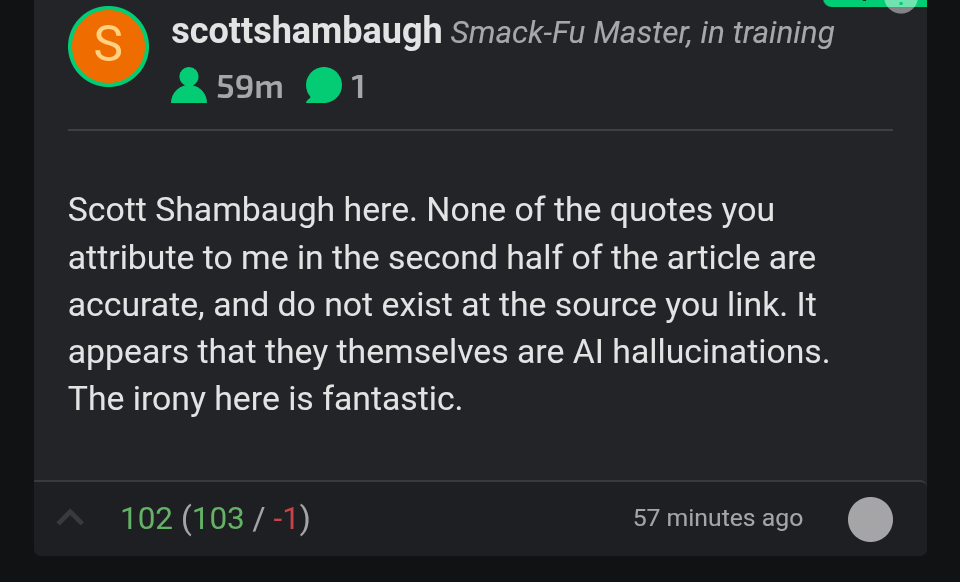
Ars Technica makes up quotes from Matplotlib maintainer; pulls story
Feb 14, 2026

The primary purpose of code review is to find code that will be hard to maintain
Jul 2, 2026

Windows 9x Subsystem for Linux
Apr 22, 2026

Hardware Attestation as Monopoly Enabler
May 10, 2026