China's open-weights AI strategy is winning

werd.io
July 20, 2026
4 min read
🔥🔥🔥🔥🔥
77/100
Summary
American AI is characterized by a closed and proprietary strategy, which is leading to a decline in its competitiveness. In contrast, China's open-weights AI strategy is gaining traction, positioning its companies as leaders in the global AI landscape.
Key Takeaways
- China's open-weights AI strategy is gaining dominance over America's closed and proprietary approach, which is viewed as unsustainable.
- AI models have minimal long-term technical incentives for vendor lock-in, allowing users to easily switch between different models.
- Chinese companies are leveraging their ability to release AI models openly, creating a more effective global ecosystem compared to American centralized services.
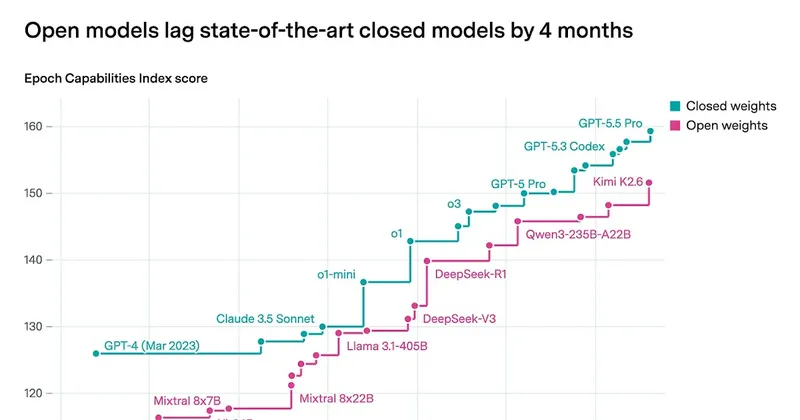
- The performance gap between US frontier models and Chinese models is closing, with new Chinese models emerging that claim to compete with leading American AI technologies.
Coverage & discussions
Hacker News · werd.io
Community discussions
Community Sentiment
Positives
- Open-weight models are set to dominate when affordable hardware catches up — this could democratize access to advanced AI for a wider range of developers and startups.
- There's a strong argument that open-source AI can lead to greater innovation and customization, which many commenters believe will ultimately benefit the community.
Concerns
- The claim that '80% of startups use Chinese models' feels misleading; many developers still rely on established US models like Claude and Codex for serious work.
- Concerns about the sustainability of giving away AI models for free loom large; how can such an approach cover the hefty training costs without a solid business model?
- The skepticism surrounding the effectiveness of Chinese open-weight models is palpable, especially with past failures like Meta's Llama — results matter more than strategy.
Related Articles
The arguments against open source AI are bad
Jul 23, 2026

Who's Afraid of Chinese Models?
Jul 20, 2026
It's not a fear of "AI communism"; it's a fear of competitive market capitalism
Aug 4, 2026
The US is winning the AI race where it matters most: commercialization
May 13, 2026

For Most of the World, Open-Source AI Is the Only Way Forward
Jun 24, 2026