Report · fortune.com
Cisco gives engineer unlimited AI tokens to rewrite legacy code
fortune.com
Source published October 30, 2026
Summary: 1 min read
56/100
Summary
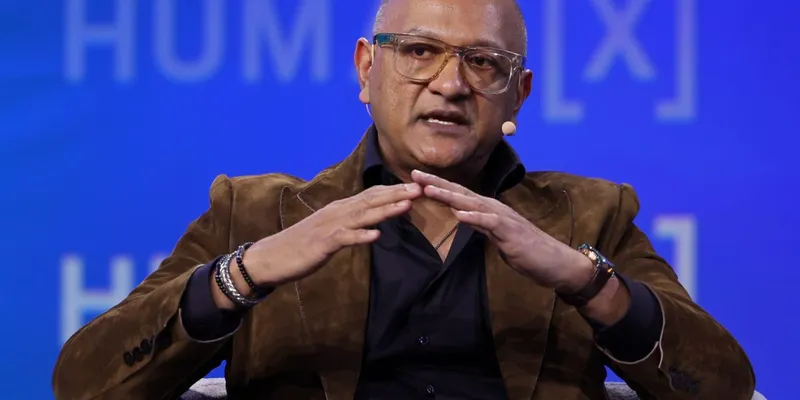
Cisco president and chief product officer Jeetu Patel has assigned Padmanabhan Krishnamurthy, a 27-year-old former startup founder, to test whether a two-person team can use AI to refactor the company’s legacy code. Krishnamurthy joined Cisco in 2025 when it acquired real-time translation startup EzDubs, which he co-founded in 2023. Patel said he gave Krishnamurthy unlimited AI tokens and four weeks to demonstrate the plan, with a goal of refactoring 98% of Cisco’s legacy code within 24 months. Patel said he found Krishnamurthy five levels below him in a role he considered unstrategic. He argues that early-career employees can challenge assumptions that experienced workers may not question, and said Cisco treats interns as reverse mentors rather than assigning them only routine work. Patel cited a Stanford scholarship student named Baya, who completed monthly AI-learning updates, earned a Cisco internship, and redesigned an unspecified system that experienced employees had not solved. Patel said his team is divided roughly equally among experienced Cisco operators, outside systems thinkers, and entrepreneurial founders, CEOs, and AI-native engineers. Thrive Capital founder Josh Kushner, Tastewise CEO Alon Chen, and investor Will.i.am also said they seek younger talent for fresh perspectives and familiarity with AI.
Key Takeaways
- Cisco has given Padmanabhan Krishnamurthy four weeks to test whether a two-person, AI-enabled team can refactor its legacy code, targeting 98% of that code within 24 months.
- Krishnamurthy, 27, joined Cisco after its 2025 acquisition of EzDubs, the real-time translation startup he co-founded in 2023.
- Jeetu Patel said Cisco gives interns and early-career employees strategic work and uses them as reverse mentors to challenge established thinking.
- Patel said Cisco combines experienced internal operators, external systems thinkers, and AI-native entrepreneurial engineers in roughly equal proportions on his team.
- Josh Kushner, Alon Chen, and Will.i.am said they value younger workers or innovators for unconventional thinking and familiarity with emerging technology.
What the discussion said
Commenters spent less time marveling at unlimited AI tokens than asking what Cisco is actually trying to achieve by rewriting nearly all of a mature networking stack. Without a concrete target such as portability, feature parity, simpler maintenance, or measurable performance gains, the effort reads to many as AI theater dressed up as modernization. The worry is not merely that generated code will be buggy: old production networking software embodies decades of undocumented interoperability quirks, field fixes, hardware workarounds, and edge cases that tests rarely capture. A cleaner AI-generated implementation could therefore fail precisely where real networks are least forgiving. A smaller optimistic camp sees unusually good conditions for agentic development. Networking code has specifications, measurable throughput and latency goals, and at least some potential for regression comparison against existing behavior. One reader described an AI-assisted modernization of an orphaned embedded codebase completed cheaply and quickly, while another argued that rapidly improving models could make an initial feature-complete rewrite progressively viable. Even those sympathetic to AI generally insisted that validation, simulation, and domain expertise—not token volume—determine whether this is engineering or a costly outage generator. Cisco’s history of defects amplified the cynicism: some joked that AI may struggle to make the product worse, while others saw that as exactly the danger.
Where opinion split
The central fight is whether AI can safely modernize a sprawling network operating system. Optimists argue that formal protocols, measurable objectives, automated comparisons, and cheap code generation make legacy embedded software a prime agentic-development target. Skeptics counter that real interoperability behavior is only partly specified and cannot be exhaustively simulated, so a rewrite risks replacing stable accumulated knowledge with invisible failures.
Coverage & discussions
Hacker News · fortune.com
Community discussions
Community Sentiment
Positives
- Protocol-heavy embedded code offers AI unusually concrete targets: specifications, latency and throughput metrics, and old-versus-new behavioral checks can turn agents into useful modernization tools.
- One reported AI-assisted embedded-system rewrite replaced knowledge stranded with retired maintainers in months for modest token spend, suggesting a real escape hatch for abandoned codebases.
- Several readers expect stronger future models to accelerate refactoring, test creation, and investigation of opaque low-level drivers where human comprehension is slow and expensive.
Concerns
- Unlimited tokens do not reveal why a 98% rewrite is needed; without a defined outcome, AI-led refactoring looks like a prestige project rather than a disciplined engineering plan.
- Network software carries decades of undocumented vendor quirks and production fixes, so an AI can produce elegant code that silently breaks interoperability in the field.
- Functional equivalence is far harder than comparing outputs in a lab: weird interdependent network behavior and incomplete simulations leave the most damaging regressions undetected.
- Giving a young engineer AI tooling cannot substitute for the domain history needed to distinguish obsolete code from deliberate safeguards, inviting both inherited and newly generated defects.
Related Articles

IBM tripling entry-level jobs after finding the limits of AI adoption
Feb 13, 2026

Hunger beats tenure: Advice for junior engineers
Oct 27, 2026
The More Young People Use AI, the More They Hate It
Apr 30, 2026

If you stop hiring juniors, your senior engineers own you
Apr 26, 2026

Reid Hoffman says SpaceX 'not an AI company', xAI 'complete train wreck'
Jun 24, 2026