Report · gist.github.com
Claude Code burns ~15–20% of your tokens on a 3-word status line

gist.github.com
Source published October 29, 2026
Summary: 2 min read
69/100
Summary
Flamerix AI published an MIT-licensed Bun preload script that suppresses Claude Code’s background-agent status-summary requests without modifying the Claude Code binary. The script targets a timer callback identified through its source text and prevents it from being armed, while leaving other timers unchanged. Claude Code otherwise sends each background agent’s full transcript to a model, usually Opus, about every 30 seconds and asks for a three-to-five-word description of its latest action; the result updates only the agent panel status line. Flamerix AI’s OpenTelemetry measurements found requests labeled agent_summary represented 16.4% of Claude Code’s estimated spend and 19.7% of API requests before the hook, versus zero after it. It said four independent measurements collected elsewhere reported 18–26% of spend. These calls used roughly 9,000 input tokens per output token, with 96% of the measured spending attributed to Opus. On subscriptions, the claimed impact is reduced rate-limit headroom rather than a direct invoice charge. The preload was tested on Linux with Claude Code versions 2.1.257 through 2.1.312. Flamerix AI said summaries have been enabled by default for interactive background agents since version 2.1.232 in August 2026. The visible trade-off is that per-agent status text stops updating; background agents, subagents, forked skills, and background sessions continue operating, according to the project.
Key Takeaways
- Flamerix AI’s Bun preload suppresses Claude Code agent_summary timer calls, which generate short status labels for background agents’ panel entries.
- Flamerix AI measured agent_summary requests at 16.4% of estimated Claude Code spend and 19.7% of API requests before installing the hook; its telemetry showed zero such requests afterward.
- Claude Code’s agent-summary calls reportedly resend an agent’s full transcript about every 30 seconds and typically use Opus to produce a three-to-five-word status description.
- The script was tested on Linux across Claude Code 2.1.257–2.1.312, but updates can break its callback-text matching and restore summaries silently.
- Suppressing agent summaries stops per-agent panel status updates, while Flamerix AI reported that background agents and subagents continued to run normally.
What the discussion said
The thread focused less on the tiny status message itself than on what it reveals about Claude Code’s accounting model: repeated context passes, short cache lifetimes, aggressive compaction, and a harness that users cannot fully control. Several readers argued that cached transcript reads should make the overhead cheap, but others stressed that even discounted reads compound when the same long context is replayed repeatedly. A five-minute cache window makes the cost especially sensitive to timing, so a seemingly harmless background update can become an expensive fresh prefill. The headline’s 15–20% figure did not survive scrutiny unchanged. One hands-on test found the behavior limited to subagents rather than ordinary workflows, with roughly 8% overhead in that user’s sessions; another reported only 3% across a broader deployment. Even so, commenters saw an unavoidable multi-percent burn as hard to defend when it cannot be disabled. Some noticed recent quota behavior improving, attributing it to more aggressive context compaction or an experiment, while others still reported subscriptions exhausting unusually fast. The sharpest criticism was institutional: an inference vendor that owns the coding harness benefits when its product sends more tokens. A minority still considers Opus uniquely useful for difficult delegation, but increasingly routes routine coding and review through leaner or competing tools.
Where opinion split
The core dispute is whether the status-line overhead is a costly systemic tax or a narrow, mostly cached implementation detail. Defenders say it primarily affects subagents, cached reads are cheap, and observed overhead can be only a few percent; critics answer that repeated long-context reads and cache expiry turn even discounted tokens into substantial quota loss, especially when users cannot opt out.
Coverage & discussions
Hacker News · gist.github.com
Community discussions
Community Sentiment
Positives
- Recent usage changes appear to have cut quota consumption sharply for at least some subscribers, suggesting compaction or cache handling can materially reduce Claude Code’s token tax.
- Hands-on checks indicate the disputed overhead may be confined to subagents rather than standard workflows, limiting the headline’s broadest interpretation.
- For unusually hard delegated coding tasks, some readers still find Opus stronger than the alternatives despite its inefficient token appetite.
Concerns
- A three-word background update can repeatedly replay long context, so discounted cache reads still accumulate into a meaningful share of a session’s quota.
- A cache lifetime around five minutes turns normal pauses and background-agent timing into unpredictable fresh-prefill charges, making spend hard to reason about.
- Reports range from roughly 3% to 8% overhead in real use, but commenters argue that any non-optional multi-percent token burn is unjustifiable bloat.
- Claude Code’s high quota consumption versus competing coding models fuels suspicion that a provider-owned harness is optimized for token revenue rather than user efficiency.
- Several users describe recurring product friction and inflated usage as enough reason to move everyday coding and review work to leaner competing tools.
Related Articles

Claudetop – htop for Claude Code sessions (see your AI spend in real-time)
Mar 14, 2026
Universal Claude.md – cut Claude output tokens
Mar 31, 2026
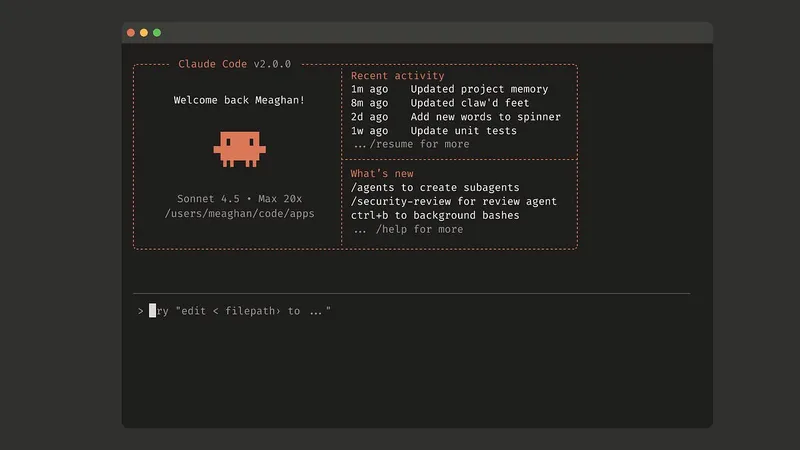
Claude Code – Everything You Can Configure That the Docs Don't Tell You
May 29, 2026
DeepClaude – Claude Code agent loop with DeepSeek V4 Pro, 17x cheaper
May 3, 2026

Claude Code as a Daily Driver: Claude.md, Skills, Subagents, Plugins, and MCPs
May 27, 2026