Report · fig.blue
Claude Duet is the first personal-assistant-type harness that feels useful
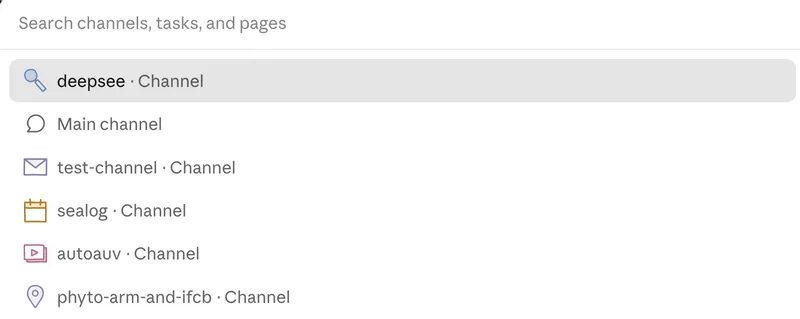
fig.blue
Source published October 29, 2026
Summary: 1 min read
53/100
Summary
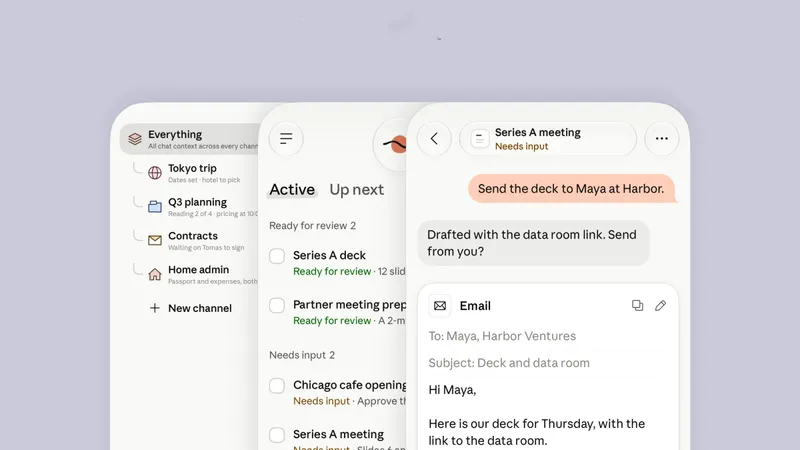
Duet, an Anthropic beta chatbot interface reportedly powered by Opus 5.5, organizes AI work into channels with separate contexts and access controls. The system is designed to respond quickly while managing background work, and it can create and organize channels to keep workstreams from being lost among separate chat sessions. A Cmd-K shortcut opens a channel list for rapid navigation, and channels can reference one another. GitHub repository access is restricted by channel, allowing related repositories to be assigned to a given workspace without exposing unrelated projects. Duet does not store credentials and discourages users from supplying them; it instead favors Anthropic’s existing connector ecosystem and may allow login through a Chrome session. Its hierarchy gives the top-level interface visibility across workstreams without low-level access, while channels and subthreads can receive progressively narrower access and code-sandbox scopes. Its desktop app can access permitted local hosts for tasks such as QA or deployment. The reviewer reports glitches during the beta, including running threads that are not visible and delegated repository permissions that sometimes fail to attach. Duet provides short responses and emoji reactions, but its voice interaction remains limited to speech-to-text compared with Dot, according to the reviewer.
Key Takeaways
- Duet is an Anthropic beta interface that organizes AI work into channels with distinct contexts and per-channel GitHub repository access.
- Duet stores no credentials and discourages users from providing them, favoring existing connectors and, when needed, login through a Chrome session.
- Duet uses a layered access model in which top-level workstream management has limited access, while channels, subthreads, sandboxes, and permitted local hosts receive more specific scopes.
- The reviewer encountered beta issues including invisible active threads and repository-access attachments that sometimes failed.
What the discussion said
Commenters treated Duet less as a breakthrough than as the newest entry in a rapidly converging consumer-agent race. Its fans say the combination of channel-based organization, terse responses, inspectable background tasks, and a strong Claude model finally makes delegation feel practical rather than theatrical. Several people contrasted it with assistants that botch browser tasks or feel useful only after endless fiddling. Others argued the harness is not the moat: capable builders can assemble a private equivalent, while competing products already offer similar workflows, voice capture, shell access, or more customization. The model underneath mattered more to some readers than the interface, with Claude’s apparent reliability presented as the decisive advantage over rivals. The thread’s hardest limit was trust. A genuinely useful assistant needs credentials, private context, web access, and the ability to act, but that combination creates a prompt-injection route to exposing sensitive data. Some readers accept that tradeoff by isolating agents behind separate email, GitHub, and payment identities, using them for research, coding, and monitoring rather than banking or travel purchases. Others see locked-down access as exactly why these systems cannot yet deliver the full personal-assistant promise. Privacy skepticism toward major providers also made self-hosting and custom harnesses appealing, though convenience-minded readers rejected spending their own time rebuilding commodity agent infrastructure.
Where opinion split
The central dispute is whether Duet’s polished harness and Claude backend are meaningfully ahead, or merely another easily copied agent wrapper. Supporters argue that reliable model behavior plus channels and concise task handling creates a qualitatively better daily tool; skeptics say rivals already provide the same basics, often with more control, and that skilled users can build the workflow themselves.
Coverage & discussions
Hacker News · fig.blue
Community discussions
Community Sentiment
Positives
- Duet’s channels, concise replies, and separate task views make parallel work feel manageable instead of turning every request into a sprawling chat transcript.
- The apparent use of a stronger Claude model is seen as the real differentiator: reliable execution matters more than another clever agent dashboard.
- Readers already get concrete value from constrained agents that research recurring interests, monitor information feeds, and build software without touching high-risk accounts.
- A deliberately plain voice interface earns praise because fast speech-to-text and text-to-speech avoids the distracting fake-human mannerisms of expressive voice agents.
Concerns
- Personal agents hit a security wall when web access, untrusted pages, and private credentials meet, creating an obvious path for prompt injection to leak sensitive information.
- Without real identities, payment methods, and personal credentials, agents cannot perform much of the travel, purchasing, and life-admin work used to sell the personal-assistant vision.
- Duet’s polish is disputed because competitors already offer channels or comparable workflows, while some provide phone capture, shell access, and deeper user control.
- Consumer agents still carry a credibility deficit after products that fail basic browser navigation, leading readers to suspect current marketing promises capabilities that are not dependable yet.