Claude Token Counter, now with model comparisons
simonwillison.net
April 20, 2026
2 min read
🔥🔥🔥🔥🔥
59/100
Summary
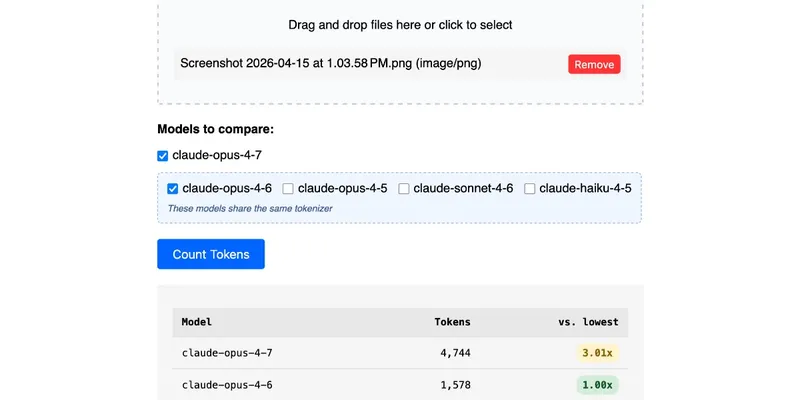
Claude Token Counter now supports model comparisons, allowing users to run token counts against different Claude models. The tool includes options for all four notable models, with a specific focus on comparing Claude Opus 4.7 and 4.6 due to changes in the tokenizer.
Key Takeaways
- The Claude Token Counter tool now allows comparisons of token counts across different Claude models, specifically Opus 4.7 and 4.6.
- Opus 4.7 features an updated tokenizer that increases token counts by approximately 1.0–1.35x for various content types compared to Opus 4.6.
- Opus 4.7 can process images up to 2,576 pixels on the long edge, significantly improving image support compared to previous models.
- The pricing for Opus 4.7 remains the same as Opus 4.6, but the increased token counts may result in approximately 40% higher costs for users.
Coverage & discussions
Hacker News · simonwillison.net
Community discussions
Community Sentiment
Positives
- The new tokenizer may enhance model performance by being more semantically aware, potentially leading to better responses and reduced need for re-prompts.
- Some users report that the updated model is performing better in their benchmarks, indicating a positive impact on overall utility.
- The discussion around tokenization highlights its critical role in model training and performance, suggesting that improvements in this area could lead to more efficient AI applications.
Concerns
- Concerns about the increased token usage suggest that the changes may lead to higher costs for users, raising questions about the sustainability of subscriptions.
- Some users feel that the lack of transparency from Anthropic regarding the tokenizer changes could indicate a money grab rather than genuine improvements.
- There are worries that the model's performance may vary significantly across different languages, potentially disadvantaging non-English users.