Codex starts encrypting prompts, uses ciphertext for inference instead
github.com
July 14, 2026
2 min read
🔥🔥🔥🔥🔥
66/100
Summary
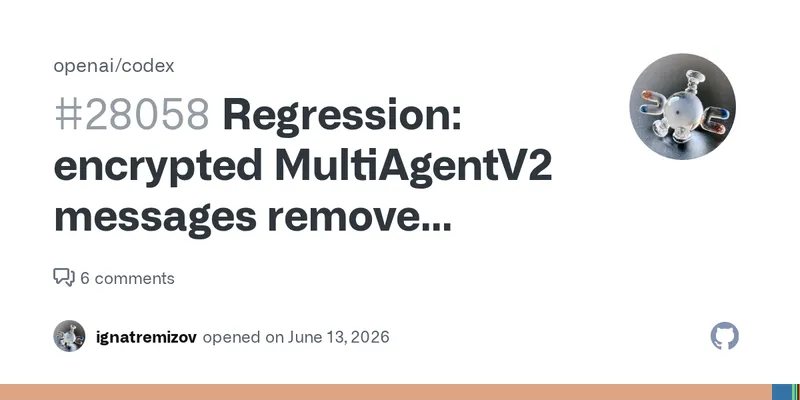
Encrypted MultiAgentV2 messages in Codex CLI versions post-0.137.0 eliminate a readable task audit trail. This change results from the implementation of message payload encryption merged on June 5, 2026.
Key Takeaways
- The implementation of encrypted MultiAgentV2 message payloads has made task and message content opaque, removing human-readable audit trails from local rollout history.
- The regression affects the ability to answer basic questions regarding subagent tasks and messages, complicating audit and debugging processes.
- A proposed solution is to maintain an encrypted message field for model delivery while adding a separate non-encrypted audit field for readable task text.
- The issue is distinct from other reported problems, focusing specifically on the loss of auditability rather than validation failures for encrypted tool schemas.
Community Sentiment
Positives
- The app-server's RPC API makes integration with Codex incredibly easy, which is a game-changer for developers looking to build on top of it.
- Encryption is a smart move to prevent competitors from training their models on user data, ensuring that OpenAI maintains its edge.
Concerns
- The implementation of encryption seems poorly executed, leaving paying users in the dark when something goes wrong with multi-agent management.
- There are concerns that Codex is becoming less flexible, potentially limiting the use of subscriptions in alternative harnesses, which could frustrate users.