Copy Fail – CVE-2026-31431

copy.fail
April 29, 2026
3 min read
79/100
Summary
Copy Fail is a logic flaw that allows for local privilege escalation on Linux systems without the need for a race window or kernel-specific offsets. A 732-byte Python script can exploit this flaw to gain root access on every Linux distribution released since 2017, functioning unmodified across multiple systems.
Key Takeaways
- Copy Fail is a Linux local privilege escalation vulnerability that exploits a logic flaw, allowing unprivileged users to gain root access on any Linux distribution shipped since 2017 using a 732-byte Python script.
- The exploit is silently exploitable for nearly a decade and requires no network access or special kernel debugging features, making it a significant risk for shared environments.
- A patch is available that reverts a specific in-place optimization in the kernel, and users are advised to disable the algif_aead module before applying the patch.
- The vulnerability affects multiple Linux distributions, including Ubuntu, Amazon Linux, RHEL, and SUSE, and can compromise shared systems such as CI/CD environments and multi-user servers.
Coverage & discussions
Hacker News · copy.fail
Community discussions
Community Sentiment
Positives
- The vulnerability appears to be real and poses a high risk, prompting necessary security updates across affected systems.
- The discovery of this vulnerability contributes meaningfully to the open-source software ecosystem, highlighting the importance of security in AI applications.
Concerns
- Claims of the exploit escaping containers lack supporting evidence, raising doubts about its effectiveness in real-world scenarios.
- The assertion that the script roots every Linux distribution since 2017 is misleading, as it has only been tested on a few and fails on others like Alpine.
- The vulnerability is being treated as a medium risk by many distros, despite its potential for local root privilege escalation, which should be prioritized higher.
Related Articles

Big Fish: Exploiting a 37-Year-Old Kernel Bug in OpenBSD
Oct 16, 2026
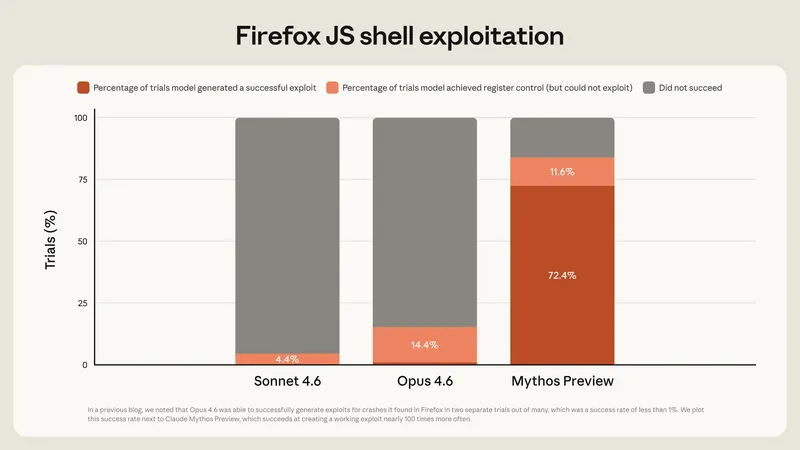
Assessing Claude Mythos Preview's cybersecurity capabilities
Apr 7, 2026

Anonymous GitHub account mass-dropping undisclosed 0-days
Jun 27, 2026

CopyFail was not disclosed to distro developers?
Apr 30, 2026

AI Meets Cryptography 1: What AI Found in Cloudflare's Circl
Jul 7, 2026