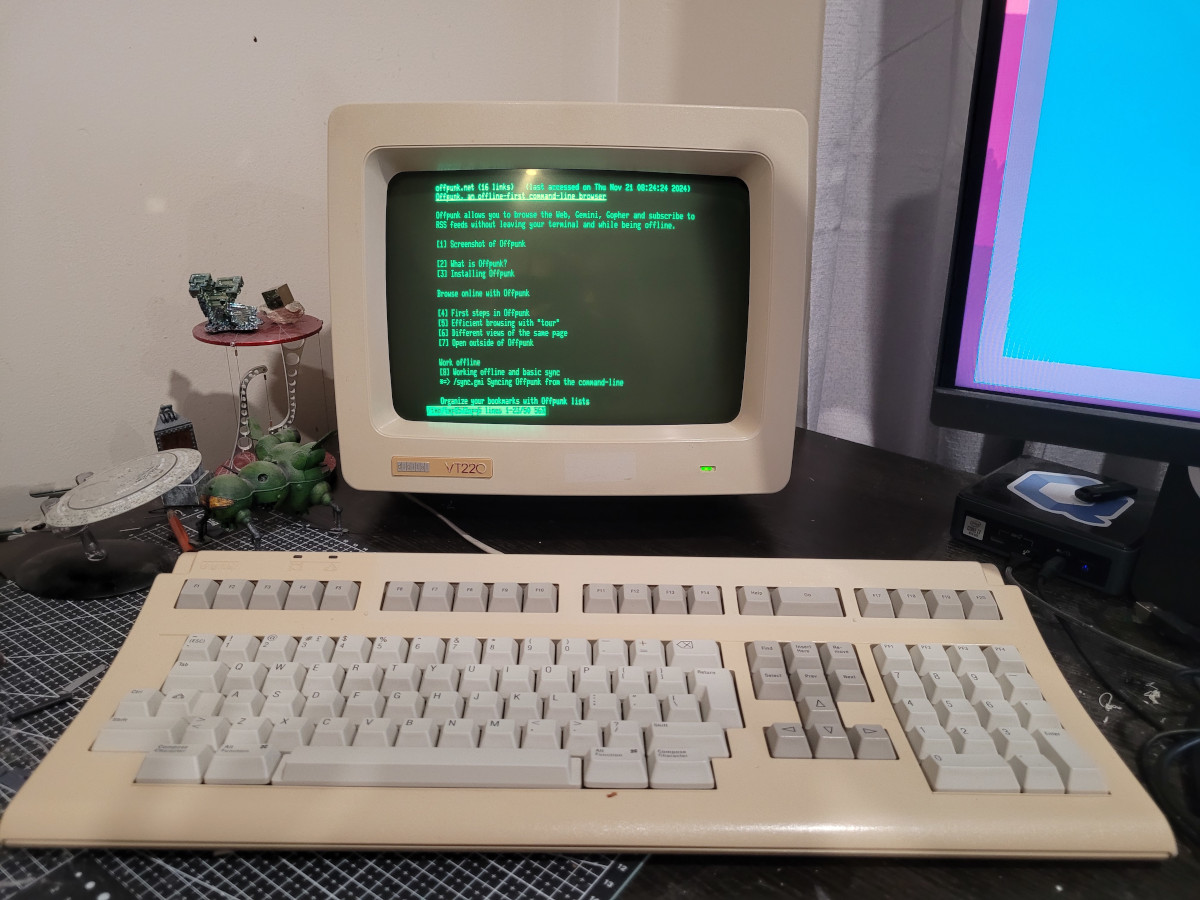
Gemini, Gophers, and Fingers. Oh My Alternative Internets Beyond HTTPS

brennan.day
May 27, 2026
13 min read
🔥🔥🔥🔥🔥
54/100
Summary
Alternative Internet protocols such as Gemini, Gopher, and Finger provide different methods for browsing beyond traditional HTTPS. These protocols utilize Uniform Resource Identifier (URI) schemes to facilitate online communication and content sharing.
Key Takeaways
- The article discusses alternative Internet protocols such as finger://, gopher://, and gemini://, which operate without a graphical user interface and do not require JavaScript.
- Chrome and its derivatives control over 80% of the global desktop browser market, leading to a lack of diversity in web development environments.
- The IndieWeb movement emphasizes decentralization to counteract the dominance of corporate social media platforms.
- The finger protocol, created in 1971, allows users to share basic information about themselves in a human-readable format, serving as an early form of social media profile.
Coverage & discussions
Hacker News · brennan.day
Community discussions
Community Sentiment
Positives
- The Gemini protocol serves as a refreshing alternative to traditional web standards, promoting simplicity and privacy, which could inspire new approaches to web design.
- Gemini's restrictions on content types may help mitigate the overwhelming presence of adtech, allowing for a more user-centric experience.
- The existence of alternative protocols like Gemini and Gopher highlights the potential for diverse internet experiences beyond the dominant HTTP model, fostering innovation.
Concerns
- The lack of inline images and rich text in Gemini limits its informational capacity, making it feel outdated compared to modern web standards.
- Critics argue that Gemini's restrictive nature could hinder its adoption, as users may prefer richer, more interactive content available on traditional platforms.
- The dominance of Chrome in the browser market raises concerns about the future of alternative protocols, as developers may prioritize compatibility with mainstream technologies.