Report · linkedin.com
GitHub just announced a major overhaul of Copilot, 'evolving' to focus on an agentic future
linkedin.com
Source published October 28, 2026
Summary: 1 min read
34/100
Summary
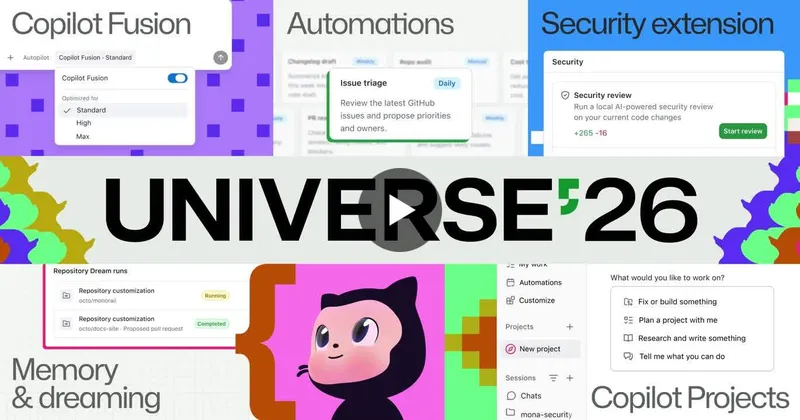
Microsoft and GitHub announced updates aimed at supporting agent-based software development, including GitHub Copilot Fusion, a unified Copilot harness in Foundry, and Copilot Projects. Satya Nadella said Copilot Fusion provides frontier-level quality while operating 40% faster and at up to 77% lower cost. Microsoft describes Foundry as a managed service for building long-running agents that can reason, use tools, and complete work. Copilot Projects is designed to orchestrate multiple agents working across repositories. GitHub is also expanding capacity and strengthening its architecture, Nadella said, to improve resilience for agentic development. A detailed announcement included in the discussion describes Copilot Fusion as multi-model orchestration that selects models for particular tasks, while Copilot Projects runs managed agent sessions across multiple repositories in parallel. The same material says Copilot code review Max is GitHub's deepest code-review tier and that cloud automations can run manually, on events, or on schedules. Commenters raised questions about repository permissions, security, conflicting changes by simultaneous agents, verification workloads, and the effect of AI-driven efficiency on software-development jobs. Nadella said developers will continue to set direction, make decisions, and remain accountable for shipped software.
Key Takeaways
- Satya Nadella said GitHub Copilot Fusion delivers frontier-level quality, runs 40% faster, and can cost up to 77% less.
- Microsoft has made its unified Copilot harness available in Foundry for building long-running agents that reason, use tools, and perform work.
- Copilot Projects coordinates multiple AI agents across repositories and supports parallel agent work.
- GitHub is expanding infrastructure capacity and strengthening its architecture to make agentic development more resilient.
- Commenters identified cross-repository permissions, agent conflicts, security, and human verification as potential challenges for multi-agent development.
What the discussion said
The thread barely debates GitHub’s proposed shift from code completion toward an end-to-end agent platform. One post simply repeats the announcement’s framing: Copilot is being positioned to let agents participate across writing, reviewing, and shipping software. It does not add an opinion on whether those agents are capable, reliable, or useful enough to justify the expansion. The actual reaction is terse and hostile. One commenter dismisses Copilot outright, signaling that the product’s existing reputation is a larger obstacle than any promised agentic future. Another argues that the current GitHub Copilot identity and subscription model will prevent adoption, treating a rebrand and different access arrangement as prerequisites for survival. No one offers evidence about agent performance, code-review quality, autonomy, safety, or developer productivity, and no participant makes the affirmative case that GitHub’s platform overhaul solves a real workflow problem. As a result, the conversation lands less as a substantive verdict on agentic coding than as a small burst of product fatigue and skepticism toward Copilot’s positioning.
Coverage & discussions
Reddit r/artificial · linkedin.com
Community discussions
Community Sentiment
Concerns
- Copilot’s agent-platform ambitions cannot overcome the immediate disgust some developers already feel toward the product.
- The existing Copilot name and paid subscription setup are seen as adoption poison, with one reader arguing the service will fade unless both change.