GitHub Stacked PRs
github.github.com
April 13, 2026
2 min read
🔥🔥🔥🔥🔥
74/100
Summary
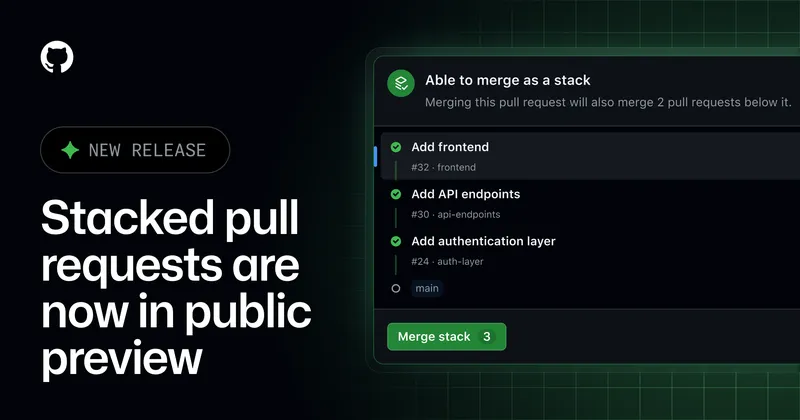
GitHub's Stacked PRs feature allows users to arrange pull requests in an ordered stack, enabling the merging of all stacked PRs with a single click. Each pull request represents a focused layer of changes, which can be reviewed independently before being merged together.
Key Takeaways
- GitHub introduced Stacked PRs, allowing users to arrange pull requests in an ordered stack and merge them all in one click.
- The gh stack CLI simplifies stack management by enabling users to create stacks, perform cascading rebases, and navigate between layers directly from the terminal.
- Stacked PRs enhance review efficiency by breaking large changes into smaller, independently reviewable pull requests, reducing conflicts and improving feedback quality.
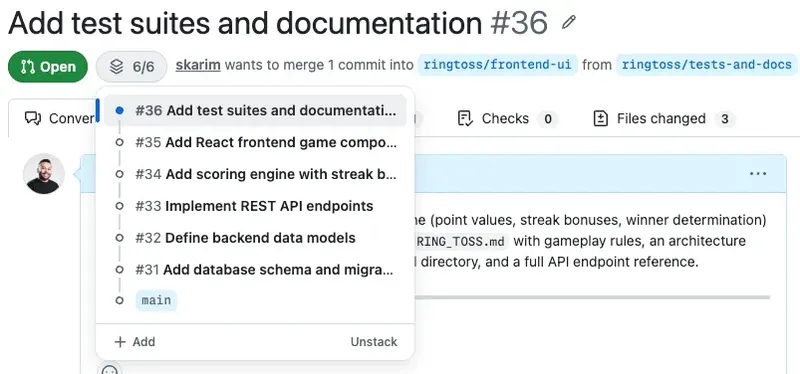
- The GitHub UI provides a stack map for reviewers to easily navigate between layers and enforces branch protection rules for the final target branch.
Coverage & discussions
Hacker News · github.github.com
Community discussions
Community Sentiment
Positives
- The introduction of stacked PRs could significantly enhance the review process by allowing reviewers to evaluate smaller, independent pieces of work, improving overall efficiency.
- Using stacked PRs can encourage developers to break down their work into smaller, more manageable chunks, making it easier to review and integrate changes.
- The potential for AI-assisted workflows with stacked PRs could streamline development processes, allowing agents to manage and organize changes more effectively.
Concerns
- The current GitHub UI for managing stacked PRs is seen as unintuitive, leading to confusion and frustration among users trying to navigate complex merge scenarios.
- Many users express skepticism about whether the new feature will truly resolve existing issues with conflicts and rebasing, indicating a lack of trust in its effectiveness.
- There are concerns that the implementation of stacked PRs may not fully address the underlying complexities of Git workflows, leaving users to manage intricate branch dependencies manually.