How AI text watermarking works
declaude.org
August 13, 2026
5 min read
🔥🔥🔥🔥🔥
53/100
Summary
Google has implemented text watermarking in its Gemini app and web experience since 2024, while Claude models began marking text at the model level in August 2026. These watermarks are designed to be invisible and persist through copying and pasting.
Key Takeaways
- Google has implemented text watermarking in its Gemini app and web experience since 2024, with Claude models following suit in August 2026.
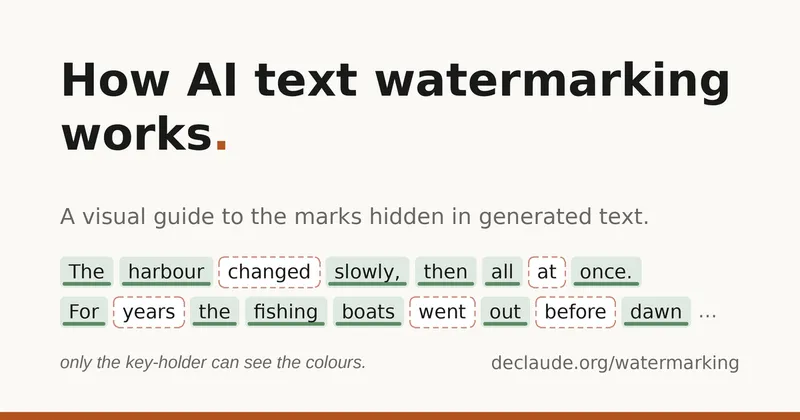
- The watermarking technique operates by subtly influencing word choice during text generation, allowing for undetectable marks that survive copying.
- Detection of watermarked text involves replaying a secret key's coloring over the words and counting how many appear marked, with a threshold indicating the presence of a watermark.
- Editing the text can erase the watermark, as it relies on runs of untouched wording to remain intact for detection.
Coverage & discussions
Hacker News · declaude.org
Community discussions
Community Sentiment
Positives
- The watermarking could spark a new industry where skilled writers reword AI output, potentially reviving jobs lost to automation.
- Some commenters see the potential for watermarking to create unique revenue streams for AI providers, adding a layer of utility to their services.
Concerns
- Many users are frustrated with Claude's writing style, feeling the quirks are being enforced by watermarking, which could hinder overall quality.
- Concerns about creativity loss are rampant; if models are skewed too heavily by watermarking, they might produce less innovative output.
- There's a real fear that watermarking could make text unintelligible, complicating communication and requiring additional tools to decipher AI-generated content.