How Claude marks AI-generated content
support.claude.com
August 10, 2026
5 min read
🔥🔥🔥🔥🔥
66/100
Summary
Anthropic has signed the EU AI Act's Article 50(2) Code of Practice on Transparency of AI-Generated Content. Plans for marking AI-generated content and its limitations will be outlined, with updates and detailed technical guidance to follow.
Key Takeaways
- Anthropic has committed to marking AI-generated content in compliance with the EU AI Act's Code of Practice on Transparency, starting with models launched on or after August 2, 2026.
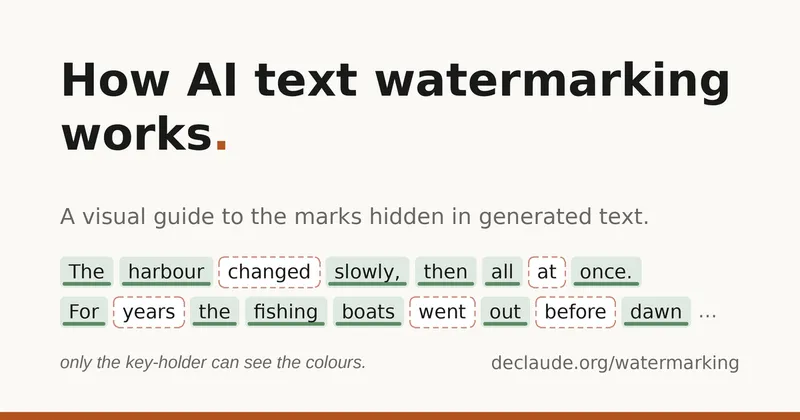
- Claude will embed imperceptible watermarks in generated text and attach signed provenance metadata to supported file types to ensure transparency about content origins.
- Marking will apply to output from Claude models across all platforms and regions where Claude is offered, including API, Claude Code, and Claude Cowork.
- Anthropic is working to add marking support for existing models launched before the August 2026 deadline during a transition period.
Coverage & discussions
Hacker News · support.claude.com
Community discussions
Community Sentiment
Positives
- Claude's watermarking is cleverly woven into the text without affecting meaning or readability, which could make it a game-changer for content integrity.
- The embedding of watermarks directly in generated text could enhance accountability and deter misuse, a step forward in ethical AI deployment.
Concerns
- Concerns loom that this watermarking could introduce weird patterns in text, potentially compromising clarity in specific use cases like code refactoring.
- Skeptics worry that this watermarking might degrade performance, with fears that the model will prioritize constraints over delivering optimal results.