How the Claude Code team does code review
claude.dev
October 16, 2026
13 min read
58/100
Summary
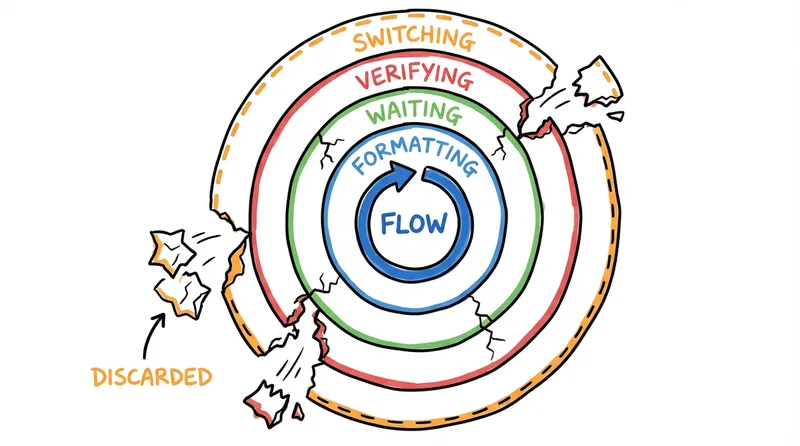
Anthropic’s Claude Code team has shifted most code review work to automated systems as AI agents generate a growing share of its software. Claude writes about 90% of Claude Code’s code, while merged pull requests more than doubled from June to September and the share requiring reverts fell by more than 40%, according to the team. Anthropic’s monorepo rose from roughly 2,500 changes per day in May to more than 30,000 in September. Every Claude Code pull request receives automated bug and security reviews before human review. Agents verify proposed findings, discard style-only or insufficiently supported comments, and rank remaining issues by severity. Automated checks include linting, type checks, builds, cross-platform tests, and merge-queue validation against the main branch. Changes are classified as low, medium, or high risk: low-risk changes can merge without human approval once automated checks pass, medium-risk changes need one human, and high-risk changes need two. Only trusted authors can use lighter review paths, and agent approvals never substitute for required human approvals. The team uses feature flags, staged latest-channel releases, on-call rotations, reverts, and incident reviews to limit damage from missed defects. It also evaluates reviewers daily against past incident-causing pull requests and tracks false-positive noise and review rounds. One pull request underwent more than 50 automated review-and-fix rounds overnight, prompting the team to measure rounds-to-pass and limit repeated review.
Key Takeaways
- Claude Code’s team reports that Claude writes about 90% of the product’s code, while the team moved most routine code review work to automated systems.
- All Claude Code pull requests receive automated bug and security reviews, supported by tests, linting, type checks, builds, and merge-queue validation.
- Risk-based rules allow some low-risk changes to merge with no human approval, while medium-risk changes require one human approval and high-risk changes require two.
- Anthropic reported that merged Claude Code pull requests more than doubled from June to September while the share of reverted pull requests fell by more than 40%.
- Automated findings are verified by separate agents before being posted, and Anthropic tracks both missed bugs and false-positive review comments.
What the discussion said
Commenters spent less time admiring Anthropic’s review process than questioning whether high-volume agent output can still be understood, verified, or meaningfully reviewed by people. The central worry is epistemic: an LLM-generated summary or explainer can retrieve context, but it cannot replace the hands-on familiarity needed to catch unintended behavior, validate tests, and judge a complex diff independently. Several readers see a dangerous feedback loop when the same class of model writes, explains, and approves code. There is real enthusiasm for agent-assisted review in narrower, better-instrumented settings. People described custom CI agents with repository access, seeded databases, ticket context, tests, and cross-model review as more useful than off-the-shelf services. Others argue that reviewing outcomes through tests, logs, real application behavior, incident-driven evals, and sampled human checks is the only plausible way to supervise machine-speed development. But the reported 30,000 daily changes drew broad skepticism: without PR size, churn, cost, defect rates, and product impact, it reads as a vanity metric rather than proof of quality. Some users say Claude’s product has materially improved, while others point to regressions and firsthand cases where generated code passed its own tests yet failed against real APIs.
Where opinion split
The sharp divide is whether AI-mediated oversight can replace deep human code familiarity at agent-scale throughput. Supporters argue that automated tests, production signals, incident-derived evals, and selective human sampling can control quality far better than line-by-line review; skeptics argue that summaries and model-generated tests merely recycle the system’s own assumptions, leaving humans unable to independently detect subtle mistakes.
Community Sentiment
Positives
- Custom review agents wired into real repositories, databases, tickets, and CI are reportedly more effective than generic AI review products because they can evaluate actual runtime context.
- Cross-model review is seen as a practical guardrail: having a different model inspect code reduces the chance that one model’s blind spots approve its own work.
- Several readers favor outcome-focused verification through tests, logs, live application checks, and incident-derived evals, rather than treating every generated line as sacred.
- Power users report that Claude’s product has recently shipped useful features, meaningful interface and performance improvements, and fixes that show up in daily use.
Concerns
- LLM summaries retrieve slices of a codebase but do not create the lived understanding required to spot hidden side effects, weak tests, or misleading diffs.
- Letting the same AI family generate, explain, test, and approve changes risks a closed loop where its initial misunderstanding is amplified instead of challenged.
- Claims of 30,000 merged changes per day look hollow without change size, churn, cost, defect rates, or evidence that the output delivered durable product value.
- Firsthand reports of Claude drifting from API documentation and passing self-authored smoke tests while failing against real APIs make autonomous approval hard to trust.
- Machine-speed releases may optimize reverts and incidents while eroding human design and review capacity, leaving teams dependent on verification they cannot personally audit.