Report · twitter.com
Imagine an AI future where being banned means you are now economically useless
twitter.com
Source published October 25, 2026
Summary: 1 min read
50/100
Summary
An X user posting as boneGPT warned that dependence on fully integrated proprietary AI systems could make people economically excluded after platform terms-of-service violations. The post imagines a future in which AI-enhanced services, including smart glasses and bot-powered work tools, are unavailable to banned users while others retain access to advanced capabilities. boneGPT called this scenario the “real doomer catastrophe” and argued that open-source AI is necessary to preserve freedom, economic viability, and the ability to reject corporate platforms. The post also claimed that OpenAI and Anthropic had sought permission from the U.S. administration to collaborate a few months earlier, warning that collaboration between the companies could allow a violation on either platform to restrict access across both services.
What the discussion said
Commenters treated the premise less as distant AI speculation than as the next escalation of a dependency already built into cloud accounts, phones, banking, and online identity. Their core fear is not merely losing access to a chatbot: an opaque platform decision could cut someone off from the tools, reputation, communications, and services required to earn a living, with no meaningful appeal. A reported case of a family reportedly losing broad Google access after a teenager’s Gemini use gave that worry a concrete shape. The practical split was over whether AI changes the equation. Some argued that local models, self-owned compute, and enterprise accounts leave real escape routes; a capable model running on personal hardware cannot simply revoke its owner. Others replied that those routes are weak if cloud services remain essential for current information, businesses rely on vendor-controlled accounts, or hardware makers eventually restrict which models can run. Several readers also stressed that AI is only frightening here because society is already making digital access effectively mandatory. The thread repeatedly contrasted durable, owner-controlled tools with subscription-based AI services whose rules can change overnight, and framed internet and AI access as approaching the status of infrastructure that needs due-process protections.
Where opinion split
The sharp dispute is whether local models and corporate AI access make AI bans avoidable. Optimists argue that self-hosted models and employer-provided accounts prevent a vendor from excluding someone outright; skeptics argue that terms enforcement can spread to employers, identity linkage can make bans permanent, and controlled hardware or indispensable cloud data can neutralize local compute.
Coverage & discussions
Hacker News · twitter.com
Community discussions
Community Sentiment
Positives
- Local models on personally owned hardware are seen as a real counterweight to AI-platform bans, preserving at least some independent productive capacity outside vendor accounts.
- Self-hosting and separating digital identities give technically capable users a plausible hedge against a single AI provider becoming their economic gatekeeper.
- The discussion pushes a useful infrastructure question: if modern work cannot function without digital and AI access, protections resembling due process may be necessary.
Concerns
- AI account enforcement can turn a vague policy violation into economic exclusion when email, work tools, business services, and identity are all tied to one provider.
- A reported Gemini-related family-wide Google lockout made automated moderation look less like a hypothetical and more like a system with punishing collateral damage.
- Local AI is not a complete escape if useful work depends on fresh web information, cloud services, or hardware vendors willing to restrict what models can run.
- Corporate AI accounts do not guarantee safety: a suspected circumvention or employee violation could threaten an employer’s entire vendor relationship, exporting platform risk to workers.
- Opaque support and appeals processes make AI bans especially alarming because private companies can impose consequences that resemble sanctions without procedural safeguards.
Related Articles

Proton to 'Re-Interview' Staff About AI to See Who Gets to Keep Their Job
Oct 26, 2026
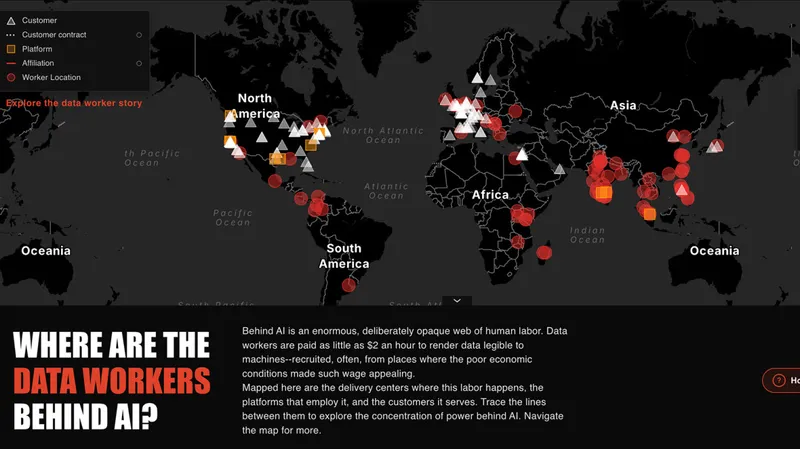
Brown student maps the hidden global labor powering AI
Oct 26, 2026
ChatGPT Lawsuit: OpenAI Accused of Using Kids’ Data
Oct 26, 2026

Cognitive Mercantilism: AI panic resembles fears of early capitalism
Oct 26, 2026

R/open source bans all solo projects and projects using LLMs
Oct 25, 2026