Report · bloomberg.com
Jobless tech workers are being left out of San Francisco's AI boom

bloomberg.com
Source published November 2, 2026
Summary: 1 min read
57/100
Summary
Anthropic and OpenAI’s anticipated initial public offerings are expected to create substantial wealth in San Francisco, while layoffs and an uncertain technology job market continue to affect workers in the region. The contrast was visible across the Golden Gate Bridge at a Monday gathering of more than four dozen laid-off technology workers. The group met at 11 a.m. to hike Mount Tamalpais, a peak overlooking San Francisco Bay. Participants descended a mostly deserted trail in groups of roughly a dozen, led by former Google employee Basem Istanbouli, who wore a bucket hat and toe shoes. The gathering reflected the gap between the AI sector’s projected financial gains and joblessness among some technology workers.
What the discussion said
Commenters largely treated the story as a labor-allocation problem rather than proof that AI has suddenly made engineers obsolete. The strongest explanation was that large technology firms are diverting cash into AI infrastructure and research, while hiring concentrates in a small set of frontier-AI companies. That leaves laid-off generalist engineers competing for fewer conventional roles, especially in San Francisco, where a formerly elite salary can become precarious once a household loses one income. Several readers argued that AI is also making distributed work more viable: tools can lift middling remote workers to an acceptable output level and reduce the coordination burden that once kept jobs local. In that view, AI accelerates offshoring and asynchronous teams, widening the pool of labor that can serve US companies. Others rejected immigration as the cause, noting that visa programs and offshoring predate this cycle and that blaming foreign workers evades the role of corporate spending choices. A more structural critique held that tech workers helped automate their own leverage while better-protected professions use licensing and regulation to retain human control. There was little sympathy for affluent former big-tech employees specifically; commenters stressed that most Bay Area workers have never shared in any tech boom, AI-related or otherwise.
Where opinion split
The sharpest fight was over what is driving tech layoffs: AI investment versus immigrant and offshore labor. One side argued that AI capital spending and automation are the immediate forces shrinking ordinary engineering demand, while the other blamed visa hiring and cheaper foreign teams; critics countered that those labor arrangements are longstanding scapegoats, not the new trigger.
Coverage & discussions
Hacker News · bloomberg.com
Community discussions
Community Sentiment
Positives
- AI is making asynchronous collaboration practical enough that teams can tap capable talent far beyond Silicon Valley, reducing the old dependence on co-located engineers.
- Frontier-AI investment is pulling companies and hiring back toward San Francisco, suggesting the city remains a live center of demand for scarce AI expertise.
- AI-assisted workflows may let less experienced workers deliver usable results, expanding who can participate in technical production rather than reserving it for elite specialists.
Concerns
- Big technology firms appear to be pouring discretionary cash into AI compute and research while cutting broader engineering payrolls, concentrating opportunity in a narrow frontier-AI tier.
- AI lowers the friction of remote, cross-border work, which commenters fear makes generalist US engineering roles easier to replace with cheaper globally distributed labor.
- Automation may have weakened software workers' own bargaining power: once routine output becomes heavily machine-assisted, employers can conclude they need fewer people supervising it.
- The AI boom looks exclusionary even within the Bay Area, with displaced engineers and the far larger non-tech workforce seeing little of the upside captured by AI firms and asset owners.
Related Articles

In San Francisco, even $180k tech salaries are no longer enough
Jun 29, 2026
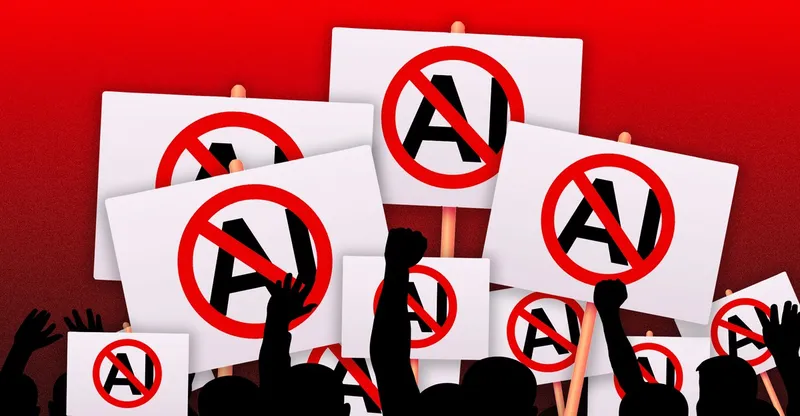
The AI Backlash Could Get Ugly
May 13, 2026

Big Tech Has Suddenly Flipped on the AI Jobs Wipeout Scenario
Jul 6, 2026

AI cracks a 27-year-old pillar of computer science, OpenAI and Anthropic claim
Oct 30, 2026
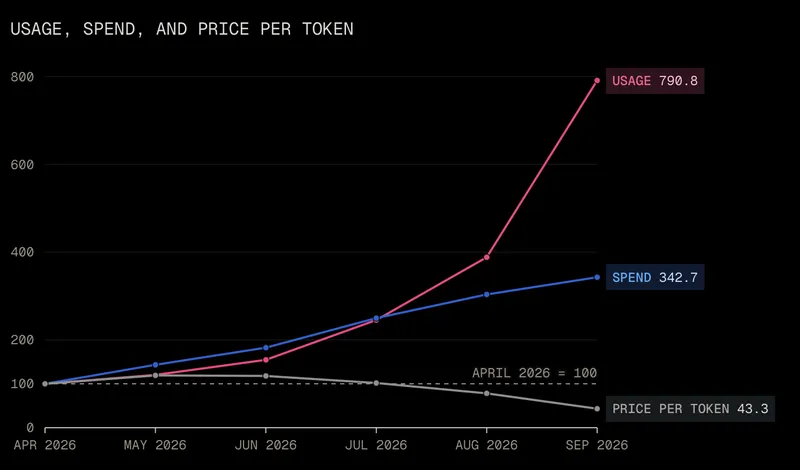
OpenAI and Anthropic cut their LLM prices by up to 80% within a few months. Why?
Oct 25, 2026