LLMs work best when the user defines their acceptance criteria first
blog.katanaquant.com
March 7, 2026
21 min read
🔥🔥🔥🔥🔥
66/100
Summary
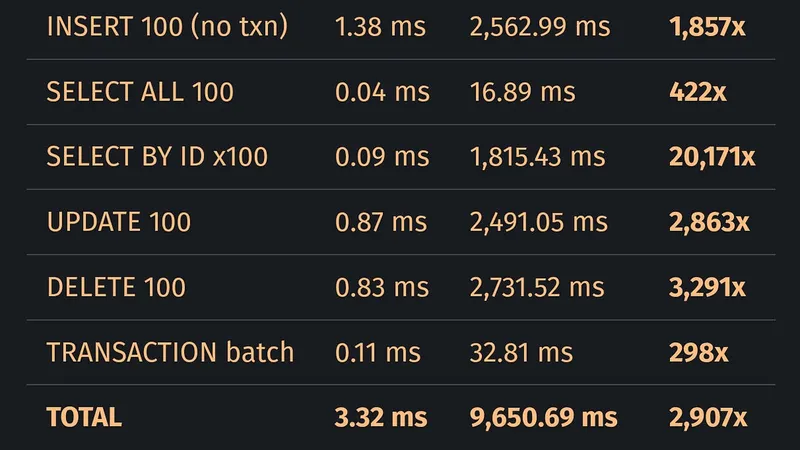
LLM-generated Rust code performs a primary key lookup on 100 rows in 1,815.43 ms, significantly slower than SQLite's 0.09 ms. Although the LLM-generated code compiles and passes tests, it is 20,171 times slower for this basic database operation.
Key Takeaways
- LLM-generated code can be significantly slower than correct implementations, with one example showing a Rust rewrite that is 20,171 times slower than SQLite for a primary key lookup on 100 rows.
- LLMs prioritize plausibility over correctness, leading to code that compiles and passes tests but performs poorly in practice.
- Benchmarking revealed consistent performance gaps in LLM-generated code, particularly in operations requiring database lookups, indicating systemic issues rather than isolated developer errors.
- Two specific bugs in the LLM-generated code were identified, contributing to its inefficiency, including a missing check for the primary key that affects query performance.
Coverage & discussions
Hacker News · blog.katanaquant.com
Community discussions
Community Sentiment
Positives
- Using LLMs for writing queries and generating tests demonstrates their practical application in optimizing complex backend processes, highlighting their utility in real-world scenarios.
- The article prompts a valuable discussion about the importance of defining acceptance criteria, which can lead to more effective use of LLMs in coding tasks.
Concerns
- LLMs often produce plausible code that may not be efficient or correct, leading to a reliance on extensive workarounds and additional code to address limitations.
- The assertion that LLMs write plausible code overlooks the fact that they primarily generate code based on patterns from training data, which may not always meet user expectations.