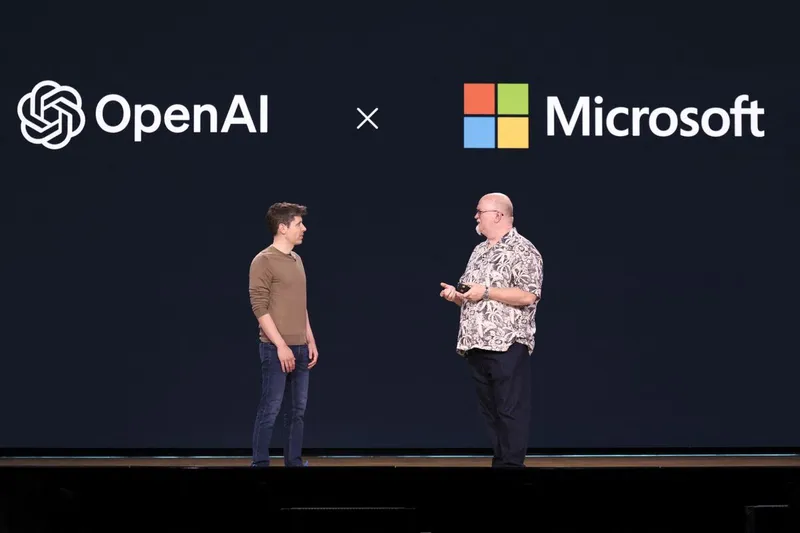
Microsoft and OpenAI end their exclusive and revenue-sharing deal
bloomberg.com
April 27, 2026
1 min read
🔥🔥🔥🔥🔥
75/100
Summary
OpenAI and Microsoft have ended their exclusive partnership, allowing OpenAI to negotiate deals with other cloud-computing companies like Amazon. Microsoft will stop sharing revenue on OpenAI products it resells as part of this agreement.
Key Takeaways
- OpenAI and Microsoft have ended their exclusive agreement that allowed Microsoft to sell OpenAI's AI models.
- OpenAI can now pursue partnerships with other cloud-computing companies, including Amazon.
- Microsoft will no longer share revenue from OpenAI products it resells on its cloud services.
- The revised deal was announced in a joint statement by both companies.
Coverage & discussions
Hacker News · bloomberg.com
Community discussions
Community Sentiment
Positives
- The end of the revenue-sharing deal allows OpenAI to explore partnerships with other cloud providers like AWS, potentially enhancing competition and innovation in AI services.
- As Azure remains the primary cloud provider for OpenAI, improvements in Azure's infrastructure could lead to better performance and reliability for AI applications.
Concerns
- Concerns arise that Microsoft may be losing control over OpenAI, which could jeopardize their investment and strategic direction in the AI space.
- The negotiation process appears to have weakened Microsoft's stake in OpenAI, reducing their influence over a company that is rapidly gaining market hype without clear profitability.
Related Articles
The next phase of the Microsoft OpenAI partnership
Apr 27, 2026
Microsoft's AI Sales Mostly Come from OpenAI, Disclosures Show
Aug 5, 2026
Microsoft's Copilot chatbot is running into problems
Feb 4, 2026

Microsoft turns to AWS as GitHub faces AI capacity crunch
Jun 16, 2026
Azure Linux 4.0 is Microsoft's first general-purpose Linux
Jun 5, 2026