Migrating a production AI agent to GPT-5.6: 2.2x faster, 27% cheaper
ploy.ai
July 12, 2026
10 min read
🔥🔥🔥🔥🔥
60/100
Summary
Ploy's AI agent now operates on GPT-5.6 Sol, the latest model released by OpenAI. This transition follows extensive testing against Claude Opus, leading to GPT-5.6 Sol becoming the default model for all Ploy workspaces, enhancing its capabilities in building and editing marketing websites.
Key Takeaways
- Ploy's agent now operates on GPT-5.6 Sol, which has outperformed Claude Opus in quality assessments for building and editing marketing websites.
- GPT-5.6 Sol reduces wall-clock time for tasks by 2.2 times and costs by 27% compared to Claude Opus 4.8, while maintaining or exceeding quality scores.
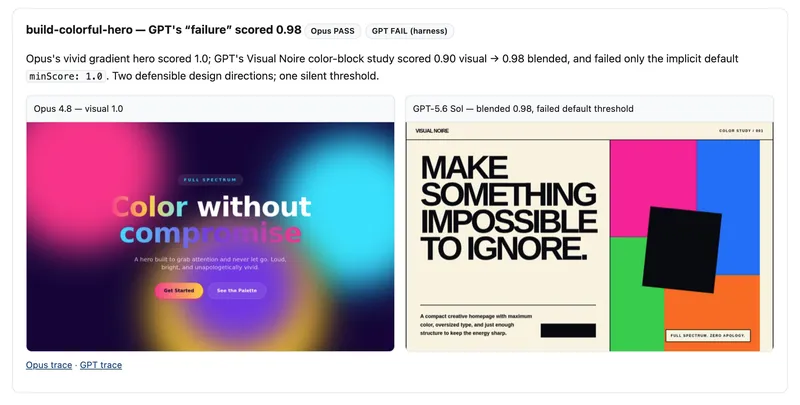
- The transition to GPT-5.6 required adjustments to Ploy's evaluation harness and tool schemas due to differences in model behavior and performance.
- Initial evaluation failures were often due to assumptions based on the previous model, highlighting the need for careful grading when switching models.
Coverage & discussions
Hacker News · ploy.ai
Community discussions
Community Sentiment
Positives
- The migration to GPT-5.6 has delivered a staggering 2.2x speed boost and 27% cost reduction, making it a compelling upgrade for production AI agents.
- Users are reporting significant improvements in classification and overall performance after transitioning to GPT-5.6, which showcases its practical benefits.
- For many companies, upgrading to a new model like GPT-5.6 is a straightforward decision, offering immediate gains without extensive reconfiguration.
Concerns
- Skepticism lingers over the authenticity of the performance stats being shared, raising doubts about whether these improvements are real.
- Concerns about the writing style of AI-generated content detract from the perceived credibility of the information being presented about GPT-5.6.
- Some users point out that while Sol excels in orchestration, it's too costly for widespread use, leading to a preference for cheaper alternatives like Luna.