Report · techspot.com
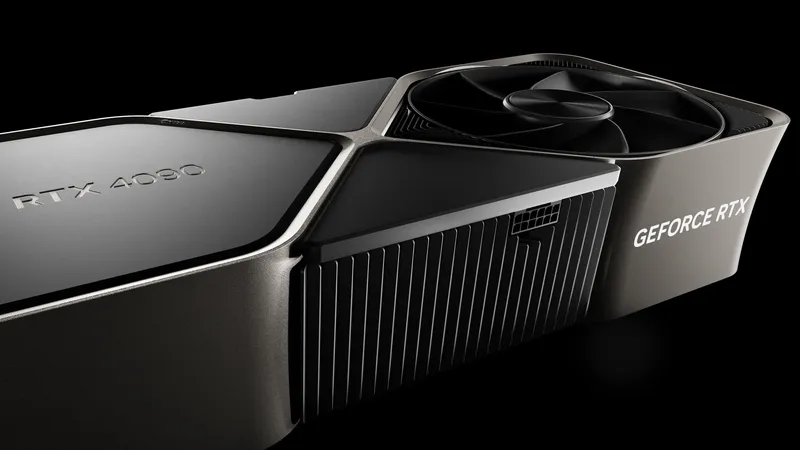
Modders unlock hidden AI power on Nvidia RTX 20, 30, and 40 series GPUs, nearly doubling some benchmarks
techspot.com
Source published October 29, 2026
Summary: 2 min read
33/100
Summary
Open-source tools claim to unlock higher tensor-core throughput on Nvidia GeForce RTX 20-, 30-, and 40-series GPUs by removing a performance limit applied to certain AI calculations. On these cards, FP16 or BF16 operations that accumulate results in FP32 run at half the rate of FP16-accumulate mode, while workstation GPUs using the same chips, such as Nvidia's RTX A6000, run the FP32-accumulate mode at full speed. The changes chiefly target AI training, inference prompt processing, image generation, and fine-tuning rather than games or chatbot token generation. GitHub user Zagitta's Linux kernel module, gpu-unlock, runs before Nvidia's driver loads, rewrites two GPU speed-selection registers, and resets the card without requiring a VBIOS flash or driver patch. On a 450W RTX 3090 Ti, its developer measured BF16 throughput rising from 87.5 to 157.4 TFLOPS and a near doubling in TF32 throughput, while FP16 increased 35%. Related projects include gpu-unlock-ada for RTX 40-series cards and turing-unlock for RTX 2080 Ti cards. gpu-unlock-ada doubled an RTX 4090's raw FP16 instruction rate from 165.6 to 331.6 TFLOPS, although independently tested real workloads gained 12% to 34%. Linux has most support; experimental Windows ports have been validated only on specific hardware. Developers differ on risk, with one warning sustained tensor-core use may damage hardware.
Key Takeaways
- GeForce RTX 20-, 30-, and 40-series GPUs limit some FP16 and BF16 tensor operations that accumulate in FP32 to half speed, unlike comparable Nvidia workstation GPUs.
- The gpu-unlock Linux module modifies GPU speed-selection registers before Nvidia's driver starts, avoiding VBIOS flashing and driver patching.
- A developer measured BF16 throughput on an RTX 3090 Ti rising from 87.5 to 157.4 TFLOPS after applying gpu-unlock.
- On an RTX 4090, gpu-unlock-ada doubled raw FP16 instruction throughput, but independently tested matrix workloads improved by 12% to 34%.
- The modifications are expected to help compute-heavy AI work such as image generation and fine-tuning more than gaming or chatbot token generation.
What the discussion said
The thread is less impressed by the headline benchmark claim than curious about whether the modification changes real local-AI workloads. One commenter draws the key distinction between unquantized models, where the newly exposed capability may deliver a substantial gain, and quantized inference, where the benefit reportedly shrinks. That matters because much consumer local-LLM use relies on quantization to fit models into limited VRAM; a win that disappears there is far less transformative than the title suggests. Skeptics want independent reproduction and workload breadth before treating a near-twofold result as meaningful. Their reasoning is that such a large jump either exposes poor stock software utilization or reflects a benchmark tailored to the unlocked instructions, neither of which guarantees faster day-to-day inference. There is also enthusiasm for extending the effort beyond gaming-branded cards: readers want Nvidia’s workstation restrictions challenged so consumer hardware can access newer tensor-core matrix instructions. But that enthusiasm is tempered by practical exclusions for older GPUs and concern that pushing modified, overclocked behavior could worsen already sensitive power-connector risks. Overall, the conversation sees intriguing evidence of artificial capability segmentation, while withholding judgment until local LLM tests, especially quantized ones, validate it.
Where opinion split
The central dispute is whether the reported near-doubling represents a broadly useful AI-inference breakthrough or a narrow benchmark result. Optimists see hidden tensor capabilities and withheld instructions as proof that consumer GPUs are artificially constrained; skeptics argue that unquantized-only gains and unreproduced tests say little about the quantized local models people actually run.
Coverage & discussions
Reddit r/artificial · techspot.com
Community discussions
Community Sentiment
Positives
- Unlocking dormant tensor functionality could turn already-owned RTX hardware into meaningfully faster unquantized AI inference instead of forcing an expensive GPU upgrade.
- The push to expose newer matrix instructions on consumer cards resonates because Nvidia’s product segmentation may be withholding useful AI compute from developers.
Concerns
- The headline-sized speedup is unconvincing without independent replication and tests on local LLM workloads rather than a favorable synthetic benchmark.
- If quantized inference sees little improvement, the mod misses the consumer use case that most needs it: fitting capable local models into constrained VRAM.
- Modified high-power operation raises concern that chasing AI throughput could add stress to GPU power delivery and connectors.
- Owners of older GTX-era hardware are left out, underscoring how quickly AI acceleration has become tied to newer tensor-core generations.
Related Articles
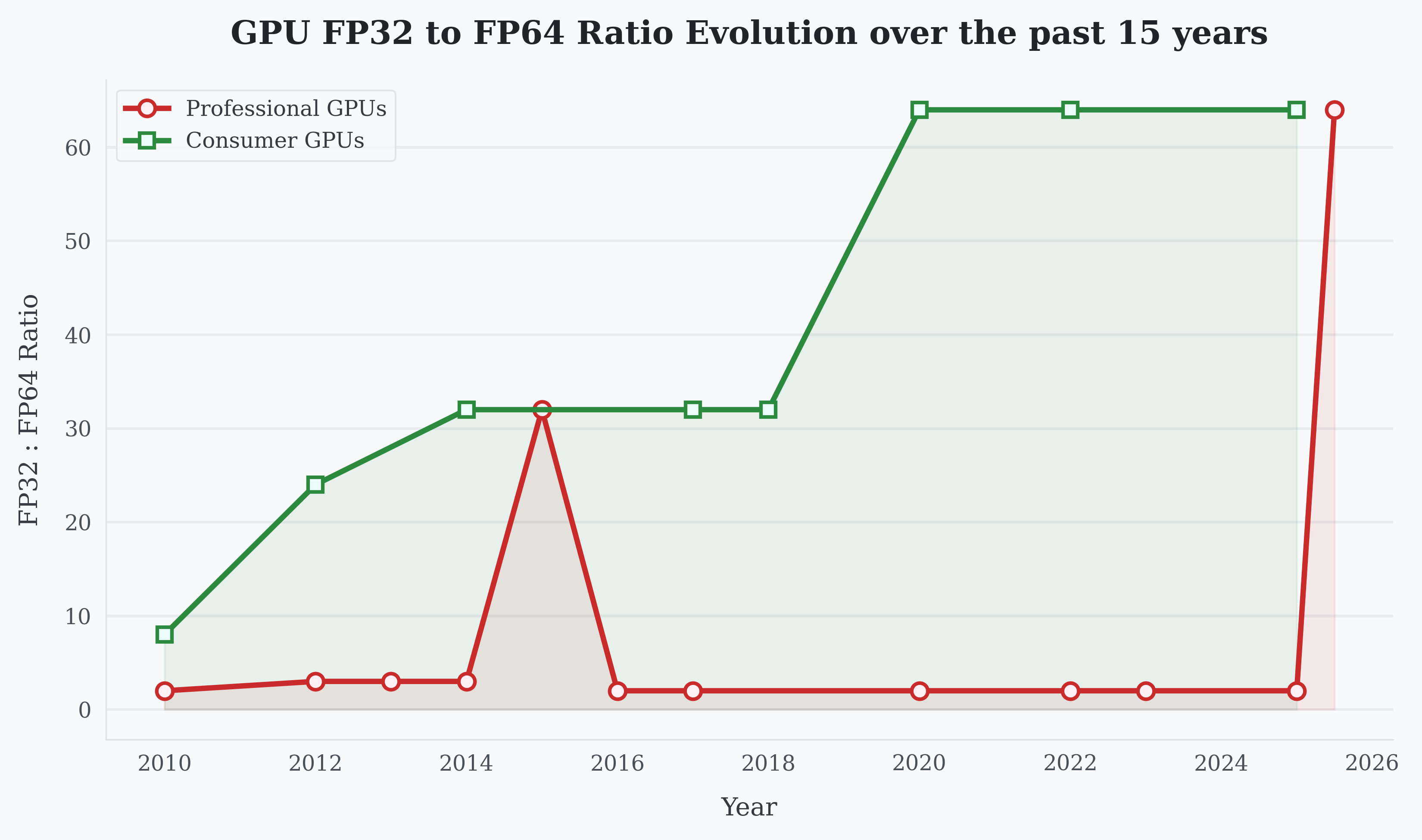
15 years of FP64 segmentation, and why the Blackwell Ultra breaks the pattern
Feb 19, 2026

Nvidia RTX Spark
Jun 1, 2026

Nvidia weighs playing the cosigner for Nscale’s AI data center in West Virginia
Oct 31, 2026

Alleged Chinese spy had 'close relationship' with Nvidia boss Jensen Huang
Oct 29, 2026
US investigated Chinese spy plot aimed at Nvidia CEO
Oct 29, 2026