Report · abcnews.com
Most Americans Say AI Is Bad for Society, Oppose More Data Centers
abcnews.com
Source published October 22, 2026
Summary: 2 min read
49/100
Summary
An ABC News/Washington Post/Ipsos poll conducted Oct. 9-13, 2026 found that 57% of U.S. adults view artificial intelligence as bad for society, while 42% view it as good. Americans were nearly evenly divided on AI’s personal effect, with 50% calling it good for them and 49% calling it bad, although 15% said it was extremely bad compared with 3% who said it was extremely good. Adults under 30 were more negative about AI’s societal effect than older respondents, at 65% versus 53% among those 40 and older. Respondents identified hacking secure systems as AI’s leading risk, with 73% calling it a high risk. Sixty-five percent cited elimination of many jobs, 62% cited people losing the ability to make decisions without AI, and 54% cited greater economic inequality. Only 20% said AI had a big chance of making people more productive, and 13% said it had a big chance of creating many new jobs. Two-thirds said the federal government is not doing enough to regulate AI, and 66% disapproved of President Donald Trump’s handling of the technology. The poll also found 66% opposed building new U.S. data centers, rising to 72% for a proposed facility in their own community. Ipsos surveyed 2,545 adults through its probability-based KnowledgePanel; the overall margin of error was plus or minus 2 percentage points.
Key Takeaways
- Fifty-seven percent of Americans said AI is bad for society, while 42% said it is good, according to the Oct. 9-13, 2026 ABC News/Washington Post/Ipsos poll.
- Seventy-three percent of respondents called AI hacking of secure computer systems a high risk, and 65% saw a high risk that AI will eliminate many jobs.
- Two-thirds of Americans said the federal government is not doing enough to regulate AI, while 66% disapproved of President Donald Trump’s handling of AI.
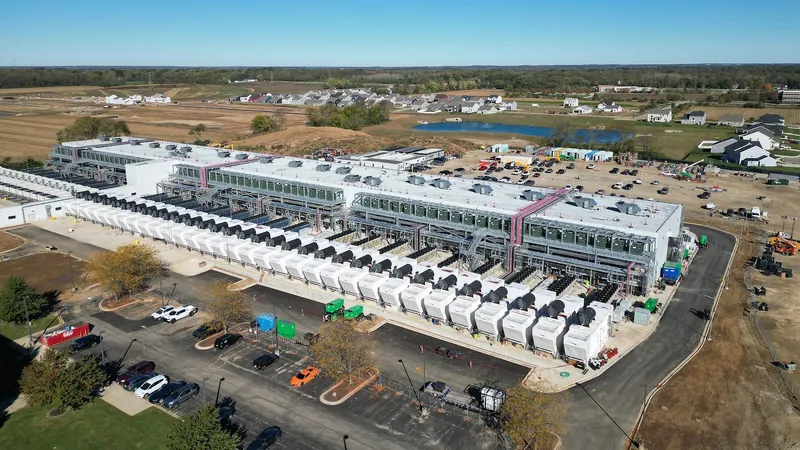
- Sixty-six percent opposed constructing new data centers in the United States, and 72% opposed building one in their own community.
What the discussion said
The thread mostly rejected the idea that widespread AI use proves public approval. Several commenters argued that adoption is a poor proxy for consent when AI features are embedded into search, television interfaces, workplace tools, and other services people need to function. They compared this to relying on environmentally damaging transport or joining an arms race: use can be compelled by circumstances even while people dislike the broader social outcome. One participant described stepping away from consumer AI as a relief, preferring ordinary web search and human-authored material to formulaic, flattering LLM output. The strongest concerns were concrete rather than abstract. Commenters tied hostility toward AI data centers to local electricity costs, water consumption, fossil-fuel backup generation, noise, diesel pollution, and weak local economic returns relative to their footprint. They also argued that AI leaders have helped create the backlash by foregrounding job displacement and catastrophic-risk narratives while appearing to concentrate gains among wealthy technology firms. A smaller group pushed back by treating rapid AI adoption and the public’s reliance on data-center-backed services as evidence that the technology delivers real value. Others said the debate is saturated with misinformation and political manipulation, but that dismissal drew criticism as an excuse for ignoring legitimate objections. Overall, the discussion leaned sharply skeptical of AI’s social governance and infrastructure costs, not necessarily of every useful AI application.
Where opinion split
The central dispute is whether people’s heavy use of AI and data-center-backed services reveals genuine approval. One side says rapid adoption demonstrates that AI is useful enough to win real consumer preference; the other says dependence on tools that are bundled into essential work and online life is not meaningful consent, especially when communities bear pollution, resource, and cost burdens they did not choose.
Coverage & discussions
Hacker News · abcnews.com
Community discussions
Community Sentiment
Positives
- Rapid AI adoption is cited as evidence that the technology offers enough immediate utility for people to keep choosing it despite vocal social unease.
- AI’s practical value is implicit in its workplace use and in the online services people depend on, making a blanket rejection of all AI applications hard to sustain.
Concerns
- AI use is increasingly treated as coerced adoption: features are pushed into everyday products and work, so usage figures cannot be mistaken for public endorsement.
- Data centers are portrayed as imposing local electricity, water, noise, diesel-exhaust, and fossil-generation costs while delivering little employment or tax value to affected communities.
- Public trust is damaged when prominent AI companies frame their products around replacing jobs or creating existential dangers while concentrating upside among a small technology elite.
- Some users find consumer LLMs actively degrade information seeking, replacing human writing with generic prose and excessive agreement rather than useful, trustworthy answers.
Related Articles

Bernie Sanders: "AI Is a Threat to Everything the American People Hold Dear"
Apr 6, 2026
Americans Recognize AI as a Wealth Inequality Machine, Polls Find
Mar 18, 2026
Stanford report highlights growing disconnect between AI insiders and everyone
Apr 13, 2026

Only 16 Percent of Americans Think AI Will Have a Positive Impact on Society
Jun 17, 2026

Young People Hate AI CEOs So Passionately That It's Almost Hard to Believe
Aug 16, 2026