My old job feels distant now
pinecoder.dev
October 16, 2026
10 min read
47/100
Summary
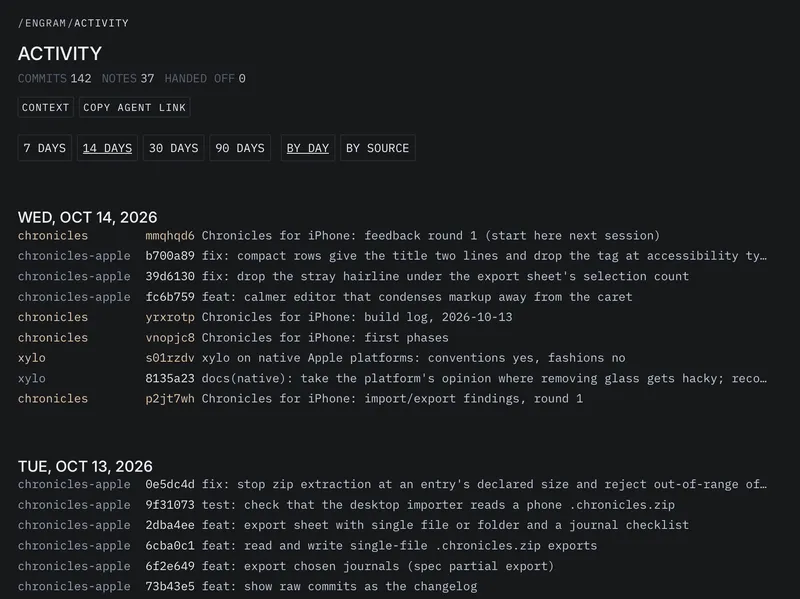
A software developer describes moving from using ChatGPT as a search and code-generation aid to making AI agents central to daily programming work. Early uses included generating Ruby tests, finding APIs for a computer-vision project, and iterating on Python code in Jupyter notebooks. The developer says hallucinations were usually detectable at the edges of the model’s knowledge and required human investigation. Cursor-style tab completion initially provided limited pattern matching, while Claude-based agents later handled explicitly scoped tasks. The developer continued to hold the codebase context, review generated changes, and take over difficult work. They estimate that Anthropic’s Opus 4.5/6 increased their productivity to about three times its prior level over several months of merged pull requests, while also raising the importance of reviewing business logic, customer-data handling, database changes, encryption, and other irreversible operations. With Opus 5.5, the developer shifted from directing individual code changes toward defining QA goals, performance constraints, plans, dashboards, and tools for agents. They report using subagents and supervisory agents, generating multiple UI alternatives, batching vulnerability fixes, and monitoring performance. In one experiment, an AI agent produced a basic native Swift iPhone version of an Electron notes app and installed it for QA within hours, consuming 40% of a five-hour allowance on a $20 subscription.
Key Takeaways
- The developer says AI coding tools evolved in their workflow from search, snippets, and tab completion into agents that can carry out larger programming tasks.
- The developer estimates that Opus 4.5/6 raised their productivity to roughly three times its previous level across several months of merged pull requests.
- Human review remains focused on unique business logic, customer data, access controls, database changes, encryption, and other changes that could cause irreversible damage.
- The developer increasingly defines outcomes, QA checks, performance targets, and monitoring tools rather than specifying every implementation step to AI agents.
- An AI agent reportedly created and network-installed a basic native Swift iPhone notes app for QA within hours, using 40% of a five-hour limit on a $20 subscription.
What the discussion said
The thread is less interested in the article’s personal workflow than in what agentic coding does to the profession. Several commenters recognize the immediate thrill: models remove long debugging dead ends, make ambitious prototypes cheap, and let developers state performance goals or product ideas instead of painstakingly implementing every step. For builders who care more about products, UX, and strategy than typing code, that shift feels liberating; one reader sees agents as buying back time away from the screen. But the dominant mood is uneasy. Readers argue that automating the intellectually playful part of programming leaves people with stakeholder management, reviews, and accountability, while generated code can quietly accumulate brittle rules and needless complexity. The deepest fear is economic rather than technical: a strong developer armed with AI may replace a team, pushing wages down even if demand for software expands. Others reject the assumption that cheaper code means fewer jobs, arguing that lower costs unlock more software and raise the value of people who can direct increasingly capable tools. A small minority dismisses AI as hype or sees professional programming as having been tedious long before models arrived. Even enthusiasts concede that testing, judgment, and responsibility remain bottlenecks—for now.
Where opinion split
The sharp dispute is whether coding agents commoditize software labor or unleash enough new demand to preserve developer careers. Pessimists argue that as models absorb implementation, few people will retain leverage and code itself becomes nearly valueless; optimists counter that cheaper construction expands the frontier of worthwhile software and rewards those who can frame, steer, and validate bigger projects.
Community Sentiment
Positives
- Agents eliminate hours of unproductive debugging, freeing developers to explore concepts and make progress without being chained to the editor.
- Low-cost code generation gives independent builders a realistic shot at bespoke products that previously required funding and a full engineering team.
- Natural-language constraints can make ambitious performance and implementation experiments cheap enough to try rather than reject upfront.
- Shifting effort from syntax toward product strategy, UX, and system judgment appeals to developers who always treated coding as a means to build things.
Concerns
- Automating the enjoyable puzzle-solving portion of coding risks leaving engineers with the organizational drudgery they once tolerated only to get to the craft.
- Generated code is accused of piling on complexity, fossilizing tiny exceptions into sweeping rules, and creating cleanup work that masks its apparent speed.
- The feared end state is not a cheap junior replacement but one experienced developer plus AI displacing several peers and crushing labor-market leverage.
- Readers worry that developers may stop learning through difficult debugging just as AI makes the underlying judgment needed to audit its output harder to cultivate.