Report · aikido.dev
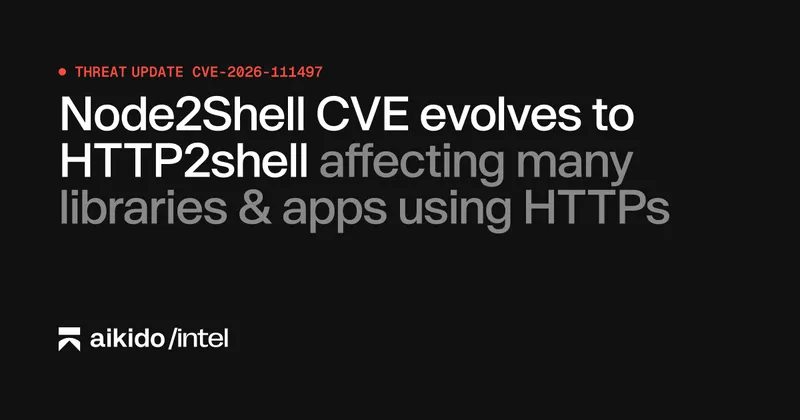
Node2Shell evolves to HTTP2Shell, blast radius affects many HTTP libs and apps
aikido.dev
Source published October 24, 2026
Summary: 1 min read
65/100
Summary
CVE-2026-111497, also called Node2Shell and HTTP2Shell, is a critical out-of-bounds write in Google’s Brotli decoder affecting versions 1.0.3 through 1.2.0 on all platforms. A remote unauthenticated attacker can send a crafted Brotli-compressed stream to corrupt process memory, expose sensitive data, crash software, or potentially execute code. The flaw has a CVSS v4.0 score of 9.2 and can affect both servers that decode Brotli-compressed requests and clients that automatically decode Brotli-compressed responses. OpenAI said it discovered the issue in February; the underlying source fix was not initially recognized as a security vulnerability. Brotli is widely used for HTTP compression, extending exposure beyond Node.js to Python packages, HTTP clients, proxies, gateways, and applications that bundle the decoder. Python environments using Brotli 1.2.0 or earlier or brotlicffi 1.2.0.x are affected, including when urllib3, requests, httpx, aiohttp, or Scrapy load those packages automatically. Fixed releases include Brotli 1.2.1, brotlicffi 1.2.1.0, Node.js 22.23.4, 24.22.1, or 26.12.1, Bun 1.4.4, and specified Envoy and Istio updates. Organizations should update dependencies, rebuild images and bundled applications, redeploy services, and verify running versions. Until patching is possible, disabling Brotli decoding, rejecting incoming Content-Encoding: br requests, and preventing response decoding can reduce exposure.
Key Takeaways
- CVE-2026-111497 is a Brotli decoder memory-corruption flaw affecting versions 1.0.3 through 1.2.0 and carrying a CVSS v4.0 score of 9.2.
- Malicious Brotli data can target either an unpatched server that accepts compressed requests or an unpatched client that accepts compressed responses.
- Python applications can be exposed through installed Brotli bindings even when their own code does not import them, because common HTTP clients may automatically enable Brotli decoding.
- Brotli 1.2.1 and brotlicffi 1.2.1.0 fix the affected Python bindings; container images and other bundled builds also require rebuilding.
- As of October 23, pip-audit, Dependabot, and Safety did not map this CVE to the affected PyPI packages, requiring manual dependency checks.
What the discussion said
The AI-relevant slice of the thread is narrow but sour: commenters used the muddled vulnerability branding and disputed attribution to take a swing at automated writing and review. Several readers suspected an LLM had generated an early, overly broad label and then never revised it as the scope became clearer. Their complaint was not merely that the name was ugly; it was that machine-written summaries can fossilize a half-understood diagnosis, turning a Brotli decoder flaw into an alarmist story about HTTP as a whole. There was broad agreement that the title overstated the affected surface and that a precise vulnerability identifier or Brotli-focused name would better help teams assess exposure. The sharper criticism targeted organizational reliance on AI-produced text without a human checking technical accuracy. One participant pushed the point further, arguing that AI can sound fluent while producing poor technical prose. The comments did not offer a defense of LLM-written security communications, nor did they establish that an LLM actually authored the article. Mentions of AI coding tools were incidental: bundled runtimes in such tools may inherit the same dependency exposure, but readers treated that as a patching concern rather than evidence of an AI-model flaw.
Where opinion split
The main dispute is whether the misleading name reflects AI-generated copy left unreviewed or ordinary security-industry sensationalism. Critics argue automated drafting is especially prone to preserving an initial misunderstanding with polished confidence; the opposing view is that the branding was likely a deliberate attention-grabbing choice, and no evidence proves AI wrote it.
Coverage & discussions
Hacker News · aikido.dev
Community discussions
Community Sentiment
Concerns
- Commenters see the broad HTTP2Shell label as exactly the kind of technically stale, overconfident framing an LLM can produce when nobody forces it to revisit its first interpretation.
- AI-assisted writing drew contempt for fluency without judgment: a security announcement can sound polished while obscuring the actual vulnerable component and wasting responders' time.