Nvidia partners with LG robotics to build humanoid robots in South Korea
blogs.nvidia.com
June 8, 2026
5 min read
44/100
Summary
NVIDIA and LG Group are collaborating to build an AI factory aimed at enhancing AI-driven businesses in robotics, autonomous driving, data center technologies, and GPU cloud services. This facility will provide accelerated computing infrastructure to train, simulate, validate, and deploy AI applications across LG Group's key sectors.
Key Takeaways
- NVIDIA and LG Group are collaborating to build an AI factory aimed at enhancing AI-driven businesses in robotics, autonomous driving, and data center technologies.
- The AI factory will integrate NVIDIA’s AI infrastructure with LG's manufacturing expertise to create a real-time connected autonomous manufacturing ecosystem.
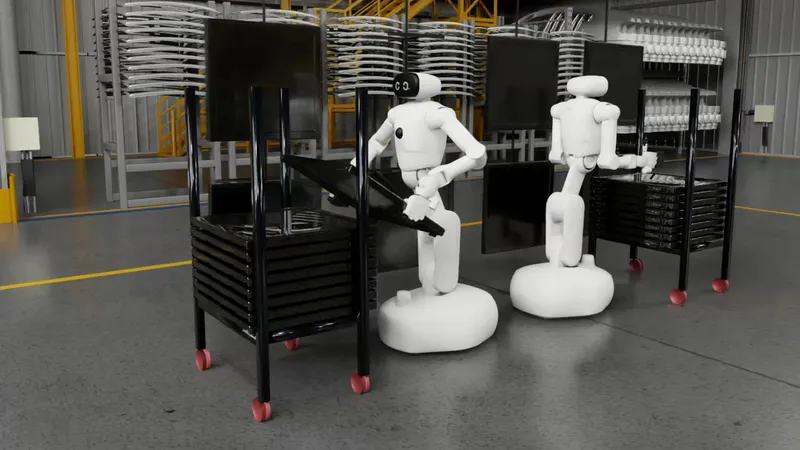
- LG Electronics is developing home robots using NVIDIA's Isaac Sim and GR00T model to improve household tasks and enhance robot reasoning capabilities.
- LG CNS is creating an ecosystem for easy adoption of AI robots in manufacturing and logistics by integrating NVIDIA's robotics technologies into its PhysicalWorks platform.
Coverage & discussions
Hacker News · blogs.nvidia.com
Community discussions
Community Sentiment
Positives
- The potential for humanoid robots to integrate into human environments suggests they could enhance domestic efficiency by performing tasks tailored to human needs.
- If humanoid robots can provide similar utility to cars, their high price could be justified, making them a valuable investment for many households.
- The excitement around early home robotics suggests a vibrant community could emerge, fostering innovation and user-driven enhancements.
Concerns
- Concerns about the practicality of humanoid robots arise, as traditional industrial systems outperform them in efficiency and speed.
- The idea of humanoid robots raises ethical questions about dependency on technology for basic tasks, potentially leading to societal laziness.
- The fear of continuous maintenance and planned obsolescence highlights skepticism about the long-term viability of humanoid robots in real-world conditions.
Related Articles

Tesla 'Robotaxi' adds 5 more crashes in Austin in a month – 4x worse than humans
Feb 17, 2026
Beginning fully autonomous operations with the 6th-generation Waymo driver
Feb 12, 2026

The Waymo World Model: A New Frontier for Autonomous Driving Simulation
Feb 6, 2026
Waymo seeking about $16B near $110B valuation
Feb 2, 2026

Autonomous cars, drones cheerfully obey prompt injection by road sign
Jan 31, 2026