Parametron: 50s Japanese computer that uses neither transistors nor vacuum tubes
ethw.org
August 10, 2026
112 min read
🔥🔥🔥🔥🔥
60/100
Summary
The Parametron, invented by Eiichi Goto in 1954, is a logic element that utilizes ferrite cores and parametric oscillation. It was used in the PC-1, Japan's first university-built stored-program computer, which became the fastest computer in Japan in 1958, significantly influencing the country's early computer development and scientific research.
Key Takeaways
- The parametron, invented by Eiichi Goto in 1954, is a logic element that utilizes ferrite cores and parametric oscillation, providing remarkable stability and low cost compared to vacuum tubes and early transistors.
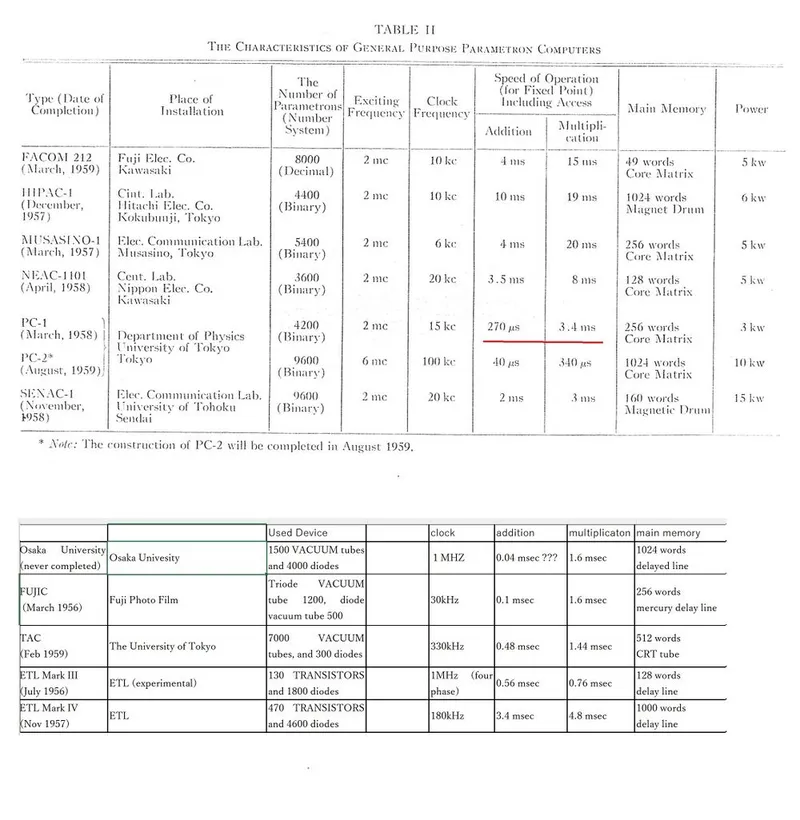
- The PC-1, developed by Goto in 1958, was Japan's first fully programmable stored-program computer and utilized 4,200 parametrons, making it the fastest computer in Japan at that time.
- The parametron's reliability and simplicity significantly influenced Japan's early computer development and contributed to the training of the country's first generation of computer engineers.
- Goto's innovations in parametron technology played a crucial role in advancing Japan's post-war computer industry and enhancing scientific research capabilities.
Coverage & discussions
Hacker News · ethw.org
Community discussions
Community Sentiment
Positives
- The quantum flux parametron is a fascinating design that could surpass current quantum computers, especially in creating complex circuits with Josephson-junctions.
- Parametrons offered remarkable stability and required minimal maintenance, making them a reliable and cost-effective alternative to vacuum tubes and transistors.
- Early applications of parametrons showcased superior fault tolerance, which is a huge advantage in computing reliability.
Concerns
- Some commenters find it puzzling that the quantum flux parametron isn't discussed more, hinting at a broader oversight in the tech community.

