Report · lucaskostka.com
Product Managers aren't safe either
lucaskostka.com
Source published October 30, 2026
Summary: 1 min read
44/100
Summary
A programmer who worked on data-marketing products and later joined Cloudflare through its acquisition of YC company Zaraz argues that generative AI threatens a far broader range of jobs than software development. He says routine “code spitter” work is especially vulnerable as highly capable developers use AI to produce software faster, while AI agents and eventually coordinated agent systems could further displace developers. He distinguishes software architecture from routine implementation, arguing that architecture still requires private organizational data, interpersonal work, and trade-offs among security, compliance, technical capability, and budgets. He compares generative AI’s effect on developers with smartphone photography’s effect on professional photographers: in his view, it erodes the advantage held by most practitioners while increasing the value of a smaller group with difficult-to-copy expertise. He also argues that product managers face similar pressure because developers can use LLMs to prototype or build features and spend more time understanding customer problems, company context, assumptions, and design trade-offs. He expects technical and product roles to increasingly merge into one function, and says product managers should develop durable technical skills, particularly architecture and practical programming, such as text-file analysis in concise code.
Key Takeaways
- The writer argues that generative AI threatens routine work across many professions, not only software development.
- He considers software architecture harder to automate because it involves organizational context and trade-offs involving security, compliance, technology, budgets, and interpersonal coordination.
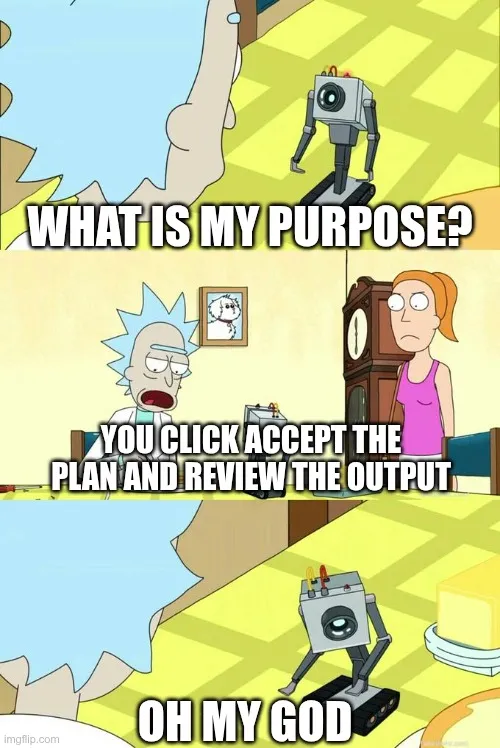
- He argues that AI-enabled developers can increasingly perform product work by building features while developing customer and business context.
- The writer expects software-development and product-management responsibilities to converge and says product managers should build technical and architectural skills.
What the discussion said
The thread mostly rejected the idea that AI makes product management categorically obsolete, but it did not treat PMs as insulated either. Commenters agreed that generative tools can turn requirements into code far faster, automate routine planning work, and put pressure on people whose role is merely maintaining schedules or relaying instructions. Several readers also described jobs already widening: engineers are being asked to handle operations, stakeholder conversations, and product choices as AI accelerates implementation. The dividing line was judgment. Defenders of product work argued that shipping code is not the same as identifying a real customer problem, choosing among incomplete options, coordinating go-to-market work, and owning the consequences of risky bets. They pointed to AI-assisted teams that launched quickly but produced buggy products customers disliked; speed forced a return to careful code review and human prioritization. Critics countered that an AI-equipped organization can distribute dashboards, planning, and feature advocacy across engineers, hollowing out traditional middle-management PM roles. The sharpest skeptical voices also questioned the article’s sweeping labor-market claims because it supplied no evidence. Even optimistic readers saw AI as a force that changes roles rather than preserving job titles: routine coordination looks vulnerable, while people who combine technical depth, customer understanding, and decision-making may become more valuable.
Where opinion split
The central dispute is whether AI eliminates product management or strips out only its administrative shell. The replacement case says AI lets engineers and teams inspect metrics, plan work, and ship directly, making dedicated PM layers redundant. The opposing case says current models still cannot reliably make high-stakes tradeoffs under ambiguity, discover what customers truly need, or turn rapid output into a coherent, marketable product.
Coverage & discussions
Hacker News · lucaskostka.com
Community discussions
Community Sentiment
Positives
- AI can compress implementation so dramatically that small groups with strategically capable engineers can move from idea to working product at remarkable speed.
- Product leaders who identify customer needs, place asymmetric bets, and connect engineering to market reality remain valuable because faster code generation does not create product judgment.
- AI may let strong PMs become founders more easily, turning their customer insight and prioritization skills into direct product-building leverage.
- As routine coding and coordination automate, technically fluent workers who can also handle product decisions gain a broader, more resilient role.
Concerns
- AI-driven feature velocity can produce brittle, customer-angering software when teams mistake generated code for a finished product and skip deliberate engineering judgment.
- Schedule-focused PM work and other coordination-heavy middle layers look especially exposed because AI makes planning information and execution tools available to everyone.
- Current language models remain weak at choosing among ambiguous, value-laden tradeoffs, so delegating product decisions to them risks consistently mediocre outcomes.
- The article’s prediction of widespread professional displacement struck several readers as unsupported alarmism, with no labor data to distinguish disruption from speculation.