Schema Harness Achieves ~99% on Arc‑AGI‑3 Public

schema-harness.github.io
July 16, 2026
17 min read
🔥🔥🔥🔥🔥
52/100
Summary
Schema enables frontier models to function like physicists by allowing them to write executable programs for game mechanisms, test these programs against reality, and plan within them. This method has achieved approximately 99% accuracy on the ARC-AGI-3 public benchmark.
Key Takeaways
- The Schema harness enables frontier models to operate like physicists by formalizing game mechanisms as executable programs and testing them against reality.
- The ARC-AGI-3 environment presents challenges to agents by providing no explicit rules, requiring them to hypothesize and revise their understanding based on observations.
- Performance on the ARC-AGI-3 public set improved from 0.51% to 13.33% with the use of GPT-5.6 Sol, indicating significant advancements in model reasoning capabilities.
- Schema integrates state grounding and mechanism discovery, allowing agents to jointly encode state representations and transition rules for more effective learning and adaptation.
Coverage & discussions
Hacker News · schema-harness.github.io
Community discussions
Community Sentiment
Positives
- Achieving ~99% on Arc-AGI-3 in under six months is a major milestone, showcasing rapid advancements in frontier AI capabilities.
- The idea that models could eventually self-engineer tools indicates a future where AI becomes more autonomous and efficient in problem-solving.
- Improvements in harness engineering could lead to dramatic extensions in AI capabilities, which is exciting for the future of AI applications.
Concerns
- Skeptics argue that relying on models to create custom harnesses from scratch is wasteful and inefficient, raising concerns about practicality and costs.
- Some commenters believe that the current measures of success might be misleading, as the harness might not reflect true advancements in AI intelligence.
- There's a worry that using a simulator to achieve high scores could be seen as 'cheating' rather than a genuine reflection of AI capabilities.
Related Articles
Agent swarms and the new model economics
Jul 20, 2026
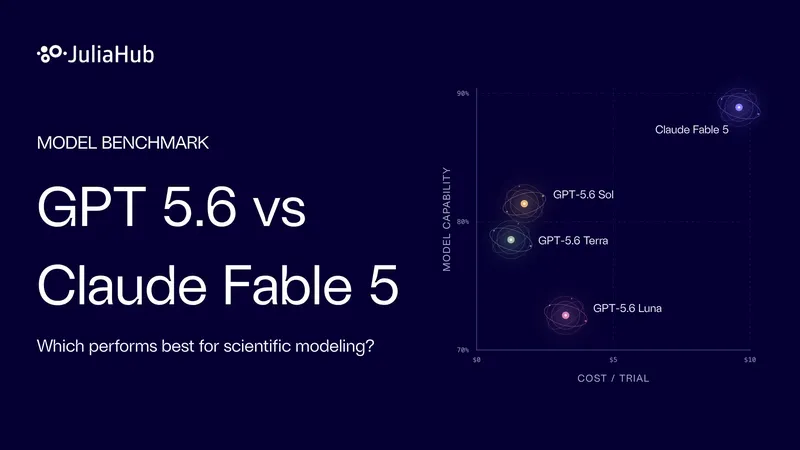
GPT-5.6 vs. Claude Fable 5 for Physical AI, which performs best?
Jul 29, 2026

Patterns and problems in emerging multi-agent systems
Aug 16, 2026
When AI Builds Itself: Our progress toward recursive self-improvement
Jun 4, 2026
Prime Agent: A self-improving RLM agent
Aug 5, 2026