Report · brangus.io
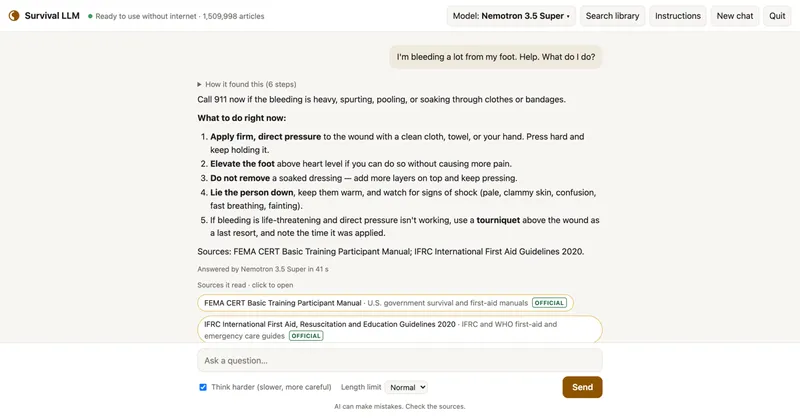
Survival LLM: AI assistant and emergency library that runs on your own computer
brangus.io
Source published October 27, 2026
Summary: 1 min read
68/100
Summary
Survival LLM is a free AI assistant and survival library designed to run locally on a computer without an internet connection. It includes 1.5 million offline articles and displays the source for every answer it provides. The software is available for Mac and Windows, allowing users to access its AI assistance and stored survival information on their own devices when internet access is unavailable.
What the discussion said
Commenters spent far less time on apocalypse branding than on whether an offline LLM improves a survival library at all. The dominant concern is reliability: the showcased small Granite model reportedly misses a large share of tested questions, while the project documentation admits fabricated citations can occur. For medical, repair, or navigation advice, readers argue that a confident but wrong answer is worse than a plain searchable archive. Several therefore prefer downloaded books, Wikipedia, Kiwix-style collections, or a compact indexed database that preserves the authority of its source material and runs on modest hardware. The more sympathetic camp does not treat the model as an oracle. They see chat as a powerful discovery layer over local documents, especially when a stressed or inexperienced user cannot formulate precise search terms. Grounded retrieval, mandatory citations, and human verification could turn it into a conversational index rather than a source of instructions. That framing also makes it useful for education and for converting a brief period of generator or solar power into printable or reusable guidance. Still, practical objections remain: laptops, model downloads, and power supplies are fragile assumptions in an emergency, phones are conspicuously unsupported, and local models remain poor at tasks requiring deterministic reasoning such as offline routing. The broad conclusion is that an offline library is valuable; the LLM is optional and must earn its energy and reliability cost.
Where opinion split
The central fight is whether a local LLM adds indispensable intelligence to an offline knowledge base or merely makes a survival tool heavier and less trustworthy. Supporters argue that retrieval-grounded chat helps people explore unfamiliar material and recover from vague, misspelled questions, provided it exposes sources for verification. Critics counter that weak local models hallucinate both answers and references, so conventional search over downloaded primary material is smaller, safer, and more appropriate when mistakes carry real consequences.
Coverage & discussions
Hacker News · brangus.io
Community discussions
Community Sentiment
Positives
- A citation-backed conversational layer could make a huge offline library usable when panic, poor literacy, or an imprecise question would defeat ordinary keyword search.
- Local retrieval can help users uncover causal connections and practical context that simple semantic matching or a bare search box may miss.
- Pairing a survival guide with offline reference material is seen as genuinely valuable for outages, disaster recovery, and air-gapped education.
- Solar or battery-powered local inference could turn limited electricity into reusable schedules and step-by-step material, rather than requiring continuous connectivity.
Concerns
- A small local model that fails a substantial fraction of tests is a dangerous adviser for medical or emergency decisions, where plausible nonsense can do real harm.
- The system's ability to invent citations undercuts the proposed safety mechanism; source links only help if they are authentic and actually support the claim.
- Downloaded books and indexed archives preserve source authority while using far less storage, compute, and power than hauling a language model into the loop.
- Offline local models remain notably weak at deterministic tasks such as navigation, and emergency hardware assumptions become brittle when power, fuel, or a capable laptop disappear.
Related Articles
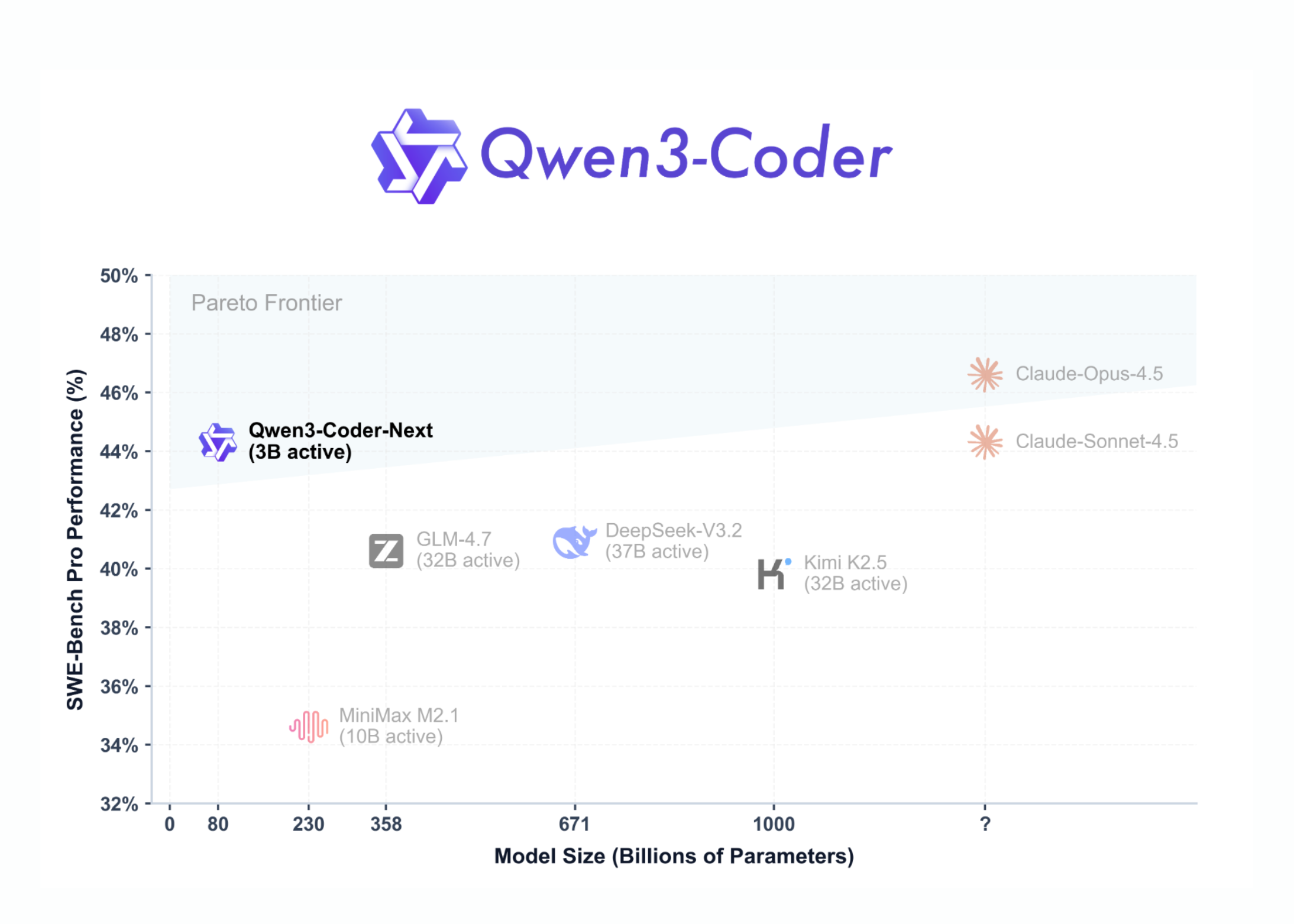
Alibaba releases Qwen3-Coder-Next to rival OpenAI, Anthropic
Feb 4, 2026
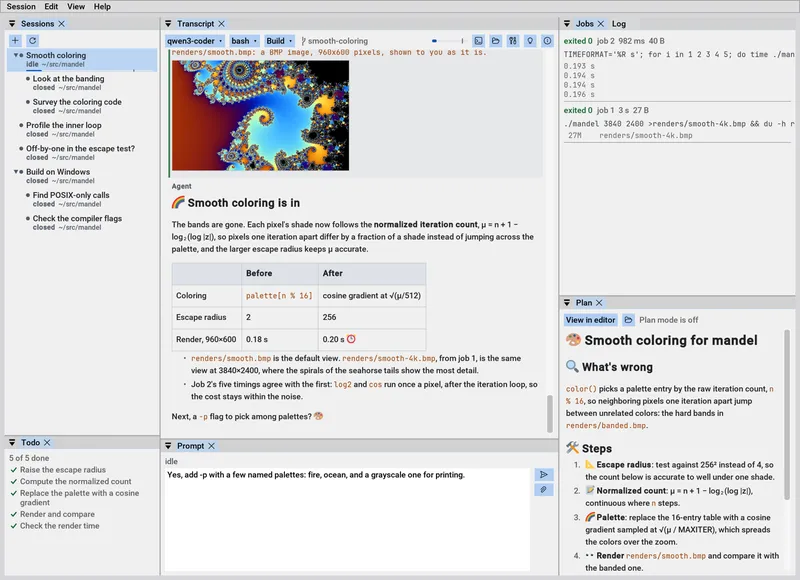
Prospero: A new coding harness for a more civilized age
Oct 31, 2026
There are now 5 inference providers for abliterated DeepSeek
Oct 27, 2026

Anthropic S-1
Oct 26, 2026
Harness Engineering 101: The LLM is the brain, the harness is the body
Oct 19, 2026