Text AI watermarks will always be trivial to remove

seangoedecke.com
August 13, 2026
11 min read
🔥🔥🔥🔥🔥
54/100
Summary
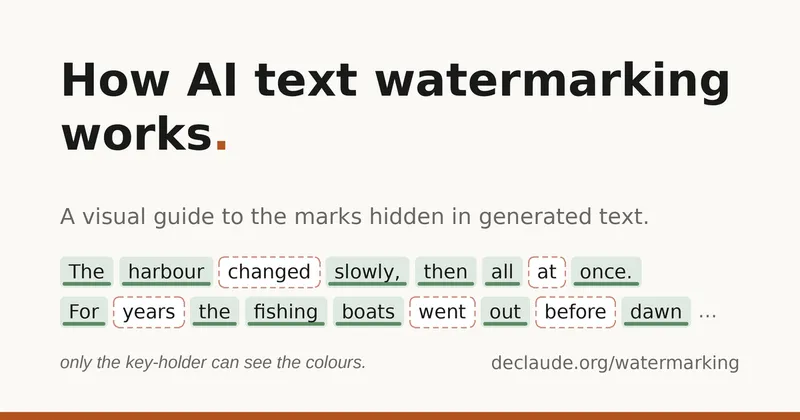
The European Union AI Act, enforceable in August 2026, mandates that AI outputs must be detectable as artificially generated through watermarking. LLM providers will need to implement a hidden signature to identify AI-generated content to comply with this requirement.
Key Takeaways
- The European Union AI Act, enforceable from August 2026, requires all AI outputs to be detectable as artificially generated, mandating watermarking of AI content.
- Text watermarking is challenging due to the compressed nature of text, making it difficult to manipulate without compromising output quality.
- Google’s SynthID is currently the only known tool that implements watermarking for text outputs generated by large language models (LLMs).
- Running AI models to verify text authenticity is impractical due to the high likelihood of false positives and the cost of processing each model against a text sample.
Coverage & discussions
Hacker News · seangoedecke.com
Community discussions
Community Sentiment
Positives
- Watermarking might not be foolproof, but it provides a layer of accountability that could help distinguish AI content from human-generated text — a necessary safeguard as AI use escalates.
- Some commenters see watermarking as a step in the right direction, arguing that any rule is better than no rule at all, especially when it comes to mitigating malicious use.
Concerns
- Many skeptics argue that AI watermarks will be trivial to bypass, with users easily rephrasing text to strip the marks while maintaining meaning — undermining the entire purpose.
- The consensus among several commenters is that watermarking feels more like political theater, with little real-world benefit to users or society at large, echoing frustrations about ineffective regulations.