The AI Layoff Trap

arxiv.org
April 13, 2026
2 min read
🔥🔥🔥🔥🔥
45/100
Summary
Rapid AI displacement of human workers can reduce consumer demand, negatively impacting firms. Competitive pressures lead firms to continue automating, resulting in excessive worker displacement beyond optimal levels.
Key Takeaways
- Rapid AI displacement of human workers can erode consumer demand, negatively impacting both workers and firm owners.
- Competitive pressures lead firms into an automation arms race, resulting in excessive worker displacement beyond optimal levels.
- Traditional solutions like wage adjustments, universal basic income, and upskilling do not effectively mitigate the issues caused by AI labor displacement.
- A Pigouvian automation tax is proposed as the only effective policy to address the competitive incentives driving excessive automation.
Coverage & discussions
Hacker News · arxiv.org
Community discussions
Community Sentiment
Positives
- The discussion highlights the potential for automation to drive efficiency, which could lead to economic growth if managed correctly.
- Some commenters recognize the need for a balanced approach to AI implementation that considers both technological advancement and societal impact.
Concerns
- There are significant concerns about mass layoffs attributed to AI, suggesting that the technology may exacerbate unemployment and economic inequality.
- The idea of a purely machine economy raises ethical questions about the future of human labor and consumer needs, indicating a troubling direction for society.
- Critics argue that taxing automation could stifle innovation and efficiency, potentially leading to economic stagnation rather than progress.
Related Articles

AI Self-preferencing in Algorithmic Hiring: Empirical Evidence and Insights
May 2, 2026

The Tragedy of the Cognitive Commons
Aug 10, 2026
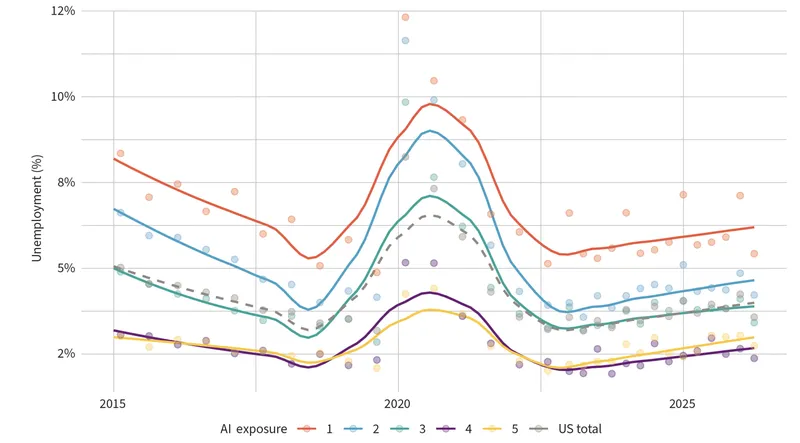
What is happening to jobs? Separating AI hype from reality
Jul 25, 2026
Mathematical methods and human thought in the age of AI
Mar 30, 2026
Automation Without Understanding
Jul 12, 2026