The End of an Era
hughhowey.com
July 31, 2026
13 min read
🔥🔥🔥🔥🔥
66/100
Summary
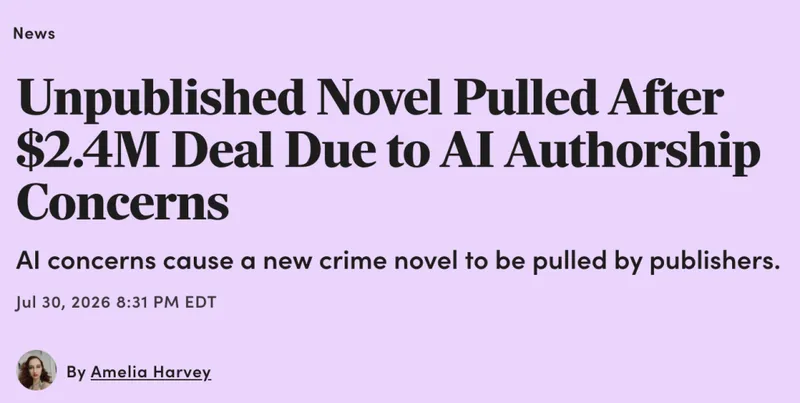
Artificial Intelligence is now capable of writing at a level comparable to humans, leading to confusion among readers and an existential crisis for authors. This development has sparked legal actions within the publishing industry.
Key Takeaways
- Artificial Intelligence is now capable of writing at a level that can confuse readers and raise existential concerns among authors.
- A $2.4 million advance for a debut author was rescinded due to concerns about the use of AI in writing the book.
- The emergence of AI-generated books is leading to bidding wars and significant advances in the publishing industry.
- The landscape of publishing has drastically changed, with every new book facing scrutiny regarding its authenticity and authorship.
Coverage & discussions
Hacker News · hughhowey.com
Community discussions
Community Sentiment
Positives
- LLMs are proving their worth in specific applications like cybersecurity, where they can tirelessly review code and catch silly mistakes.
- Some commenters see LLMs as valuable tools for data expansion, turning inputs into longer, informative texts, which can aid in content production.
- The excitement around AI-generated content is growing, with examples of AI-created works sparking bidding wars, suggesting a shift in the literary landscape.
Concerns
- There's a clear skepticism about the depth of AI-generated writing, with many arguing that it lacks the higher cognitive abilities humans possess.
- Readers in niche literary communities are reacting negatively to AI involvement in writing, often preferring human authors and showing allergic reactions to AI-generated texts.
- Concerns are raised about the quality control in publishing, with some editors prioritizing interesting premises over the actual quality of writing, raising alarms about the future of literature.