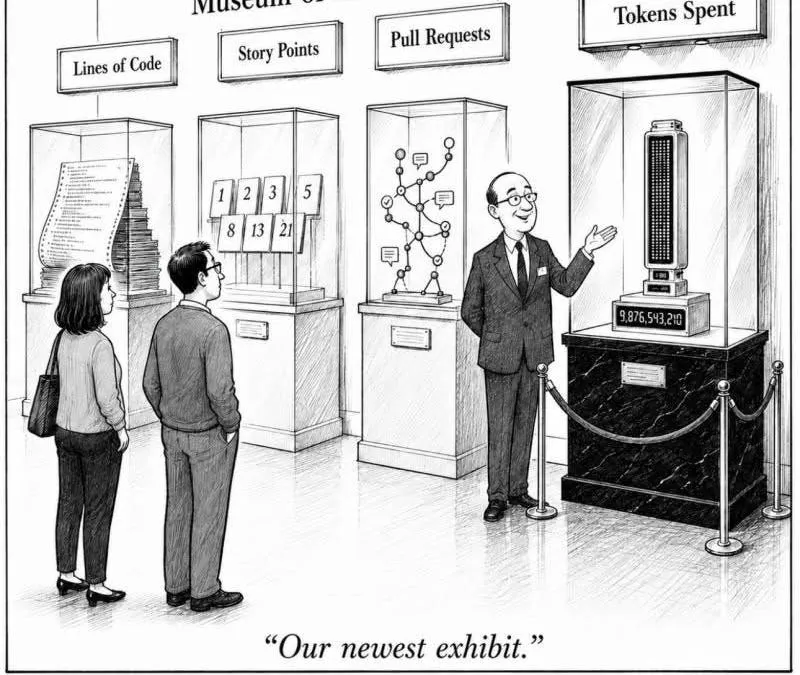
The End of Programming

pauldix.com
August 26, 2026
10 min read
48/100
Summary
Bun 1.4 includes a rewrite of Bun from Zig to Rust, adding more than 1 million lines of Rust code. Bun creator Jarred Sumner reportedly used a pre-release model called Fable 5, an agent framework that could work in parallel, and an effectively unlimited token budget to complete the initial translation in 11 days. The effort generated 6,778 commits and would have cost about $165,000 at API pricing, according to the account. Agents then continued refining the code for months before the supported release, which Paul Dix says is running on millions of developer machines. Dix argues that AI agents will increasingly write, test and improve software while people specify requirements, build verification systems and assess end results rather than review every line of code. He reports using Fable to build unshipped InfluxDB prototypes: an Iceberg integration in 14 hours and an edge-data replication system in 28 hours, followed by testing and bug fixes. Dix says neither project is production-ready or supported, but both reached end-to-end working implementations. Dix predicts that cheaper, faster frontier models and larger token budgets could make this workflow widely accessible by the end of the following year. He expects organizational inertia to preserve manual programming and code review at many companies, while more productive teams rely on AI-directed software factories and automated verification.
Key Takeaways
- Bun 1.4 rewrote Bun from Zig to Rust with more than 1 million new lines of Rust code, using parallel AI-agent work directed by Jarred Sumner.
- The Bun rewrite reportedly produced 6,778 commits in 11 days and consumed tokens estimated to cost roughly $165,000 through APIs.
- Paul Dix says AI-built software can be improved through execution, testing and verification loops rather than detailed human review of every code change.
- Dix predicts that developers will increasingly direct AI agents and design validation systems instead of manually writing most production code.
What the discussion said
The thread mostly rejected the headline while taking the underlying capability jump seriously. The Bun Zig-to-Rust rewrite impressed many readers as evidence that LLMs can now translate large codebases, exploit strong test harnesses, and grind through enormous volumes of already-understood implementation work. Several commenters argued that this is exactly where a large share of programming lives: reimplementation, adaptation, and translation rather than pristine invention. But the dominant qualification was that the rewrite depended on years of human engineering embedded in its architecture, tests, oracle, and technical objective. Readers argued that turning a vague business need into a correct specification, deciding what tradeoffs matter, and detecting subtle bad decisions remains the work. Current agents can produce a convincing prototype, yet commenters repeatedly distinguished that from maintaining a safe, reliable production system. Limited context, excessive confidence, language-idiomatic mistakes, and buggy AI tooling itself all undercut claims of imminent replacement. The more plausible future, in the thread's view, is a shift from manually typing implementations toward orchestrating models, designing verification environments, and expressing intent precisely. Some see that as democratizing bespoke software; others fear it erodes expertise, narrows junior training paths, and gives executives an excuse to reduce engineering headcount before the technology is dependable.
Where opinion split
The central dispute is whether powerful AI-assisted rewrites show programming is ending or merely changing levels of abstraction. Optimists say well-specified tasks plus automated verification let models do vast amounts of useful work, making intent, evaluation, and rapid iteration the new scarce skills. Skeptics answer that constructing the specification and oracle, making architectural calls, and productionizing unreliable output are programming and engineering—not evidence that either has disappeared.
Community Sentiment
Positives
- LLMs look genuinely formidable at cross-language translation and reimplementing proven behavior, making million-line migrations far less dependent on hand-written boilerplate.
- A rigorous test suite and behavioral oracle let AI iterate toward reliable results, hinting at a workflow where verification amplifies model output rather than human code review alone.
- Cheaper implementation could make custom software economically viable for customers previously forced into one-size-fits-all SaaS products.
- The emerging premium skill is not typing syntax but framing intent, building evaluators, and orchestrating models around explicit architectural constraints.
Concerns
- Treating code delivery speed as the only metric risks hollowing out architectural judgment, leaving teams unable to recognize when a fluent model has made a costly mistake.
- The celebrated rewrite rests on a human-built target, years of tests, and a sharply defined migration goal; without that scaffolding, the alleged end of programming evaporates.
- Agents can make prototypes look nearly finished while the difficult work—edge cases, operability, maintenance, and production reliability—has barely begun.
- Current coding models remain bug-prone, overconfident, and constrained by partial codebase context, while even their own development tools ship with disruptive instability.
- If AI handles routine work too early, new engineers may lose the apprenticeship path that creates the experts needed to supervise and repair automated systems.