The ladder is missing rungs – Engineering Progression When AI Ate the Middle

negroniventurestudios.com
March 30, 2026
29 min read
🔥🔥🔥🔥🔥
50/100
Summary
AI is achieving high levels of proficiency in tasks traditionally performed by early-career engineers, which were essential for developing judgment and intuition. The absence of these foundational experiences may hinder the growth of future engineers who would build and supervise advanced AI systems.
Key Takeaways
- AI is currently writing approximately 50% of code committed to repositories, contrary to earlier predictions of 90% by Dario Amodei.
- Internal data from Anthropic shows engineers using AI tools like Claude in 59% of their daily work, resulting in reported productivity gains of 50%.
- A METR study found that experienced developers using AI tools took 19% longer to complete tasks, despite believing they were faster.
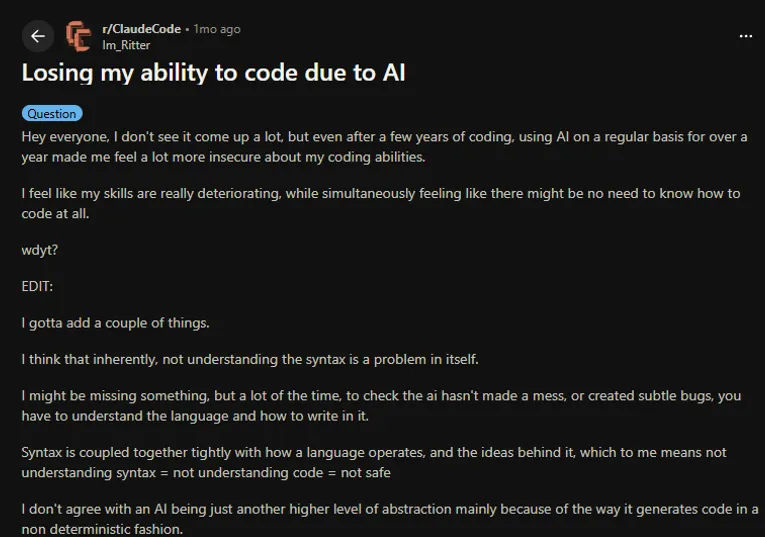
- Developers increasingly refuse to participate in studies that require completing tasks without AI assistance, indicating a growing dependency on AI tools.
Coverage & discussions
Hacker News · negroniventurestudios.com
Community discussions
Community Sentiment
Positives
- The demand for software is increasing, and as costs decrease, there will be a greater need for training new engineers, which is essential for sustaining innovation.
- The evolution of AI tools should ideally lead to more efficient development processes, allowing experienced developers to leverage their skills more effectively.
Concerns
- The article's perspective on the necessity of low-level engineering tasks for training judgment is misguided, as many of these tasks were simply undesirable busywork.
- There is a significant disconnect in the article regarding the current capabilities of AI models, as experienced developers report faster workflows with modern tools.