U.S. gov't moves to suppress pushback on data centers
tomshardware.com
August 26, 2026
4 min read
56/100
Summary
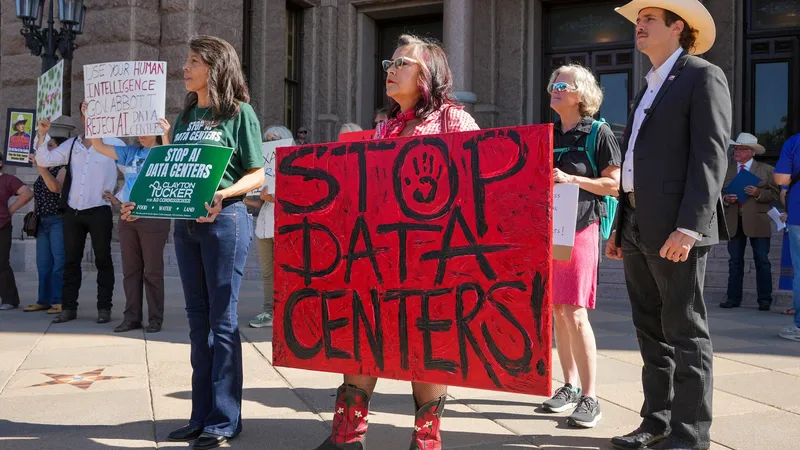
The Environmental Protection Agency has proposed removing a federal requirement for states to publicize certain air-pollution permit applications and provide a 30-day public comment period. The change would cover permits for “minor sources” of pollution, a category that includes data centers, landfills, laundromats and steel mills. States could still seek public feedback or impose stricter standards, but they could also eliminate the comment period because it would no longer be federally required. The proposal could take effect within the next year. The change comes as communities challenge AI data-center projects over their environmental effects. Harvard School of Public Health researchers estimated that a Vantage data center in Loudoun County, Virginia, caused between $53 million and $99 million in annual health damages, the largest estimate for a single facility in the cited analysis. Research by Michael Cork informed public debate before Fluvanna County, Virginia, denied an expansion of a fossil-fuel plant. Attorneys general from 14 states and three cities opposed the proposal, saying that even sources classified as minor can have significant health and environmental effects. Their letter said removing application notices and the 30-day comment period would weaken transparency safeguards while accelerating data-center and AI-infrastructure construction. In Gilroy, California, Amazon began building a data center after a public-comment period that had ended two years earlier, while Festus, Missouri, residents sued their city over time allowed to review a proposed data center.
Key Takeaways
- The EPA proposal would allow states to stop publicizing some minor-source air-pollution permit applications and to eliminate the currently required 30-day public comment period.
- Data centers fall within the minor-source permit category covered by the proposed change, alongside facilities such as landfills, laundromats and steel mills.
- Attorneys general from 14 states and three cities opposed the proposal, arguing that it would reduce transparency over projects with potentially significant environmental and health effects.
- A Harvard School of Public Health estimate placed annual health damages from a Vantage data center in Loudoun County, Virginia, at $53 million to $99 million.
What the discussion said
The thread treated the fight less as a generic permitting dispute than as a backlash to AI-scale infrastructure being imposed on communities. Most commenters rejected the idea that opposition is simply anti-technology or manufactured online. They pointed to concrete local costs: data centers can secure favorable utility and tax terms, strain already limited power and water systems, run noisy equipment, and rely on gas turbines and diesel generators whose pollution burden falls on nearby residents. The label of minor pollution source drew particular scorn when the cited facility’s estimated health damages were among the highest ever calculated for one site, though readers also corrected an overstated claim that it was definitively the highest. A smaller but meaningful strand focused on whether AI compute needs to be concentrated near populated areas at all. Since much LLM work is not latency-critical, commenters suggested remote, colder regions with renewable power; others answered that transmission, grid interconnection, fiber, and workforce needs make remote deployment far less simple. Local inference and open-weight models were presented as a possible pressure valve, with one practical example of an organization moving workloads onto its own hardware as SaaS token bills mounted. Overall, readers saw federal pressure to override local resistance as likely to deepen distrust, especially where public disclosure and representative decision-making appear weak.
Where opinion split
The sharpest dispute was whether resistance to AI data centers is reflexive anti-technology activism or a rational response to concentrated local harms. Defenders of the buildout framed opponents as hostile to growth and AI, while critics argued that the real objection is private AI infrastructure receiving opaque deals while communities absorb higher utility costs, pollution, and resource risk.
Community Sentiment
Positives
- Running open-weight models on company-owned hardware can become cheaper than recurring hosted-LLM token spending, giving organizations more control over their AI workloads.
- Latency-tolerant AI workloads could be steered toward colder, remote regions with abundant hydro or wind power, reducing pressure on dense communities.
- Local AI inference is attracting interest because it weakens dependence on cloud-hosted models and the centralized data-center footprint behind them.
Concerns
- AI data centers are seen as privatizing the upside while neighbors inherit stressed grids, water demand, noise, and potentially higher household utility bills.
- Gas-turbine and diesel-backed facilities undermine the harmless-computer framing: the AI compute may be digital, but its backup power can carry serious local air-pollution costs.
- Secret agreements, preferential tax or utility treatment, and officials withholding details make AI infrastructure look like a deal imposed on residents rather than development they consented to.
- Federal efforts to mute local opposition are expected to intensify anti-AI backlash, not solve the legitimacy problem around where compute gets built.
Related Articles

Maryland citizens hit with $2B power grid upgrade for out-of-state AI
May 10, 2026
Amazon circumvents Gilroy community vote for AI data center
Aug 9, 2026

Americans don't know how to fight AI so they're fighting data centers
Jun 2, 2026
No Data Centers in My Backyard
Aug 5, 2026

Data centers trigger voter backlash
Jun 26, 2026