Using coding assistance tools to revive projects you never were going to finish
blog.matthewbrunelle.com
April 25, 2026
7 min read
🔥🔥🔥🔥🔥
64/100
Summary
Coding assistance tools can help developers revive unfinished personal projects. Utilizing these tools allows for more efficient coding and project completion despite previous time constraints.
Key Takeaways
- Coding assistance tools can be effectively used to revive unfinished personal projects that may not have been completed otherwise.
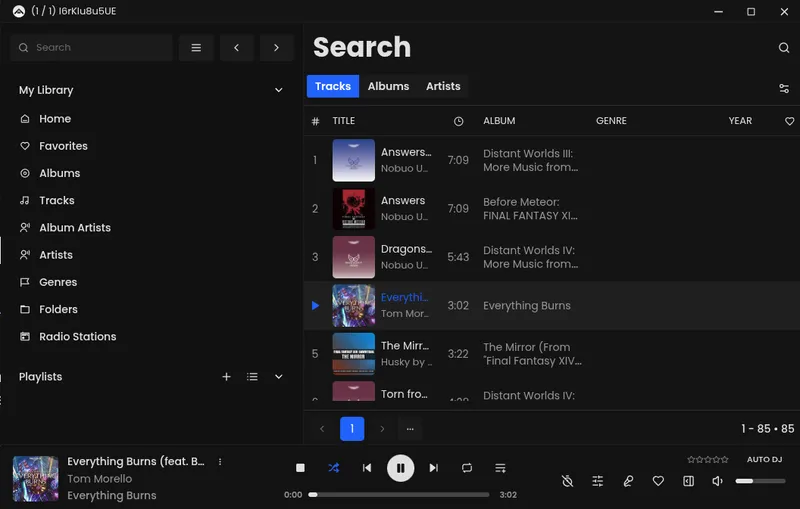
- The author tested Claude Code to implement a project that acts as a shim between YouTube Music and the OpenSubsonic API, utilizing FastAPI and other dependencies.
- A structured setup with clear specifications and guidelines was created to guide the coding assistance tool in the implementation process.
- The workflow involved iterative planning, prompting for specific tasks, and refining the output through follow-up questions and resource links.
Coverage & discussions
Hacker News · blog.matthewbrunelle.com
Community discussions
Community Sentiment
Positives
- Using Claude for game development has transformed abandoned projects into engaging experiments, showcasing the model's ability to generate working code and design ideas effectively.
- LLM assistance allows for rapid development of personal tools, significantly reducing the time required to bring ideas to fruition, which enhances productivity and creativity.
- Claude's capability to create a graphical interface for an app based on user specifications demonstrates its potential to simplify complex coding tasks for non-experts.
- The ease of building applications with LLMs encourages more individuals to pursue their creative projects, potentially leading to a surge in innovative personal applications.
Concerns
- Some users express concerns about the reliability of LLM-generated code, citing issues like incorrect files and fragile ID generation, which can hinder development.
- Local models are perceived as slow and weak, limiting their effectiveness in real-time applications and procedural generation tasks.