Using thousands of AI agents to uncover new leads in biological data
openai.com
October 21, 2026
5 min read
48/100
Summary
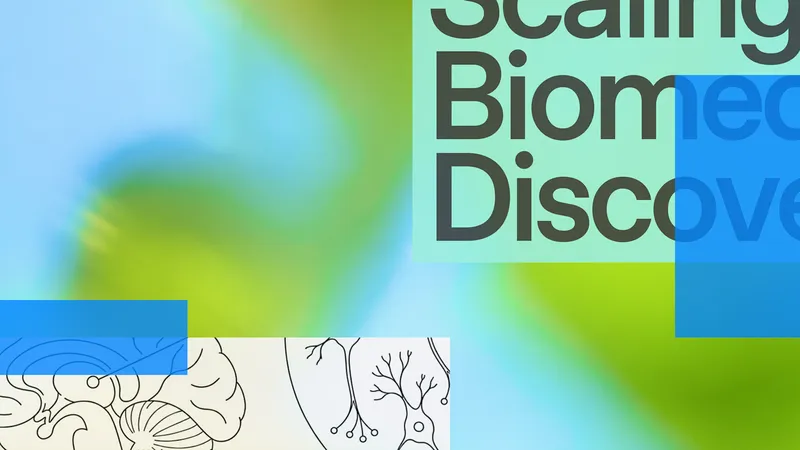
OpenAI, PerturbAI, and Scripps Research used thousands of GPT-Rosalind-powered AI agents to analyze a whole-brain CRISPR atlas containing data from millions of mouse brain cells. The agents examined individual gene disruptions, measured cellular responses, searched scientific literature, and combined their findings into a reasoning atlas linking genes, cell effects, publications, and possible biological mechanisms. The analysis took 32 minutes; the research team estimated comparable sequential human analysis and literature review would take months to a year. The distributed-agent system reproduced findings from human analyses and generated additional research leads. Its novelty and scientific-value assessments aligned with blinded human experts, according to the team. At the largest tested workload, a single agent cited 11 references, while distributed agents cited more than 700, and human experts preferred the distributed interpretations. The agents found that disrupting Tsc2, but not Tsc1, altered dozens of neuronal-communication genes in cerebellar cells, despite both genes regulating mTOR. They also identified a potential link between DCTN1 disruption, increased expression of cholesterol-production genes, and altered cholesterol transport in neurons. DCTN1 mutations cause Perry syndrome, a neurodegenerative disorder with Parkinson-like symptoms. The publicly available reasoning atlas is intended to help researchers prioritize laboratory experiments that can test these proposed mechanisms.
Key Takeaways
- Thousands of GPT-Rosalind-powered agents analyzed millions of mouse brain-cell records from a whole-brain CRISPR atlas in 32 minutes.
- Each agent investigated a gene disruption, connected cellular effects with scientific literature, and contributed to a reasoning atlas of possible biological mechanisms.
- Distributed agents cited more than 700 references at the largest workload, compared with 11 references from a single agent using the same model and resources.
- The system identified different cerebellar effects from Tsc1 and Tsc2 disruptions and proposed a cholesterol-related mechanism for neurodegeneration following DCTN1 disruption.
- The reasoning atlas is publicly available for scientists to compare genes, investigate cellular responses, and select hypotheses for experimental testing.
What the discussion said
The thread barely treated the agent swarm as a biological breakthrough. Most readers fixated on the gap between producing an attractive mechanistic story and proving that it changes outcomes for patients. Clinical research already has no shortage of plausible targets, they argued; the expensive, failure-prone work is validating causality, surviving human trials, and making any resulting treatment affordable. Several readers found the showcased Alzheimer’s angle especially unconvincing because it connected an already disease-linked gene to a broad, unsurprising neurodegeneration mechanism without establishing why its proposed cholesterol link deserves priority over countless alternatives. A smaller group saw a real role for AI, but not as a substitute for experimental science. Better in-silico and animal models could filter false leads before costly trials, while AI could help researchers navigate trial design and regulatory complexity. Others defended ambitious scientific automation on principle: if it accelerates cures or fundamental discovery, protecting the satisfaction scientists get from doing the work is a poor objection. Yet even that camp did not offer evidence that this multi-agent exercise has cleared the crucial validation bar. The sharpest skepticism was aimed at presentation. Commenters read the emphasis on experts preferring distributed-agent reports as a benchmark for polished summaries, not proof that the system can discover medically actionable biology. To them, the release felt like valuation-driven AI hype wrapped around hypotheses that competent researchers generate routinely.
Where opinion split
The core fight is whether swarms of AI agents meaningfully accelerate drug discovery or merely manufacture more plausible-looking leads. Supporters argue that higher-fidelity models and AI assistance with trial and regulatory complexity can reduce false starts and speed work toward cures; skeptics counter that hypotheses are already abundant, while causal validation and human clinical trials remain the hard, expensive bottleneck.
Coverage & discussions
Hacker News · openai.com
Community discussions
Community Sentiment
Positives
- Higher-fidelity computational and preclinical models could kill false leads before they consume years of experiments and scarce trial budgets.
- AI that untangles study design and regulatory paperwork could attack clinical development's operational drag, where promising biology often stalls.
- If automated science genuinely delivers cures or fundamental discoveries faster, several readers see little value in preserving research as an exclusive source of human professional fulfillment.
Concerns
- The system appears to generate another layer of plausible targets in a field already drowning in them, while human efficacy trials remain the brutal constraint.
- The featured neurodegeneration hypothesis struck readers as routine: an established disease gene plus a broad waste-clearance story is not evidence that one mechanism deserves a drug program.
- A chart showing experts prefer multi-agent writeups looks like evaluation of report polish, not validation that the agents found actionable biology.
- Launching an agent per gene was seen as an expensive, inefficient use of API capacity unless it demonstrably improves experimental prioritization.
- The release was widely read as hype designed to defend frontier-AI valuations before the technology has cured or materially changed disease outcomes.
Related Articles
Using AI to improve a challenging reaction in medicinal chemistry
Jun 17, 2026

The circuit that lets your brain think and see
Jul 3, 2026

AI Boosts Research Careers but Flattens Scientific Discovery
Jul 12, 2026
AI in drug discovery – what it is, where we stand and the path forward
Aug 15, 2026
OpenAI acquires startup Orchestra Bio to beef up its biotech business
Oct 20, 2026