Web Components: The Framework-Free Renaissance
caimito.net
February 20, 2026
7 min read
🔥🔥🔥🔥🔥
58/100
Summary
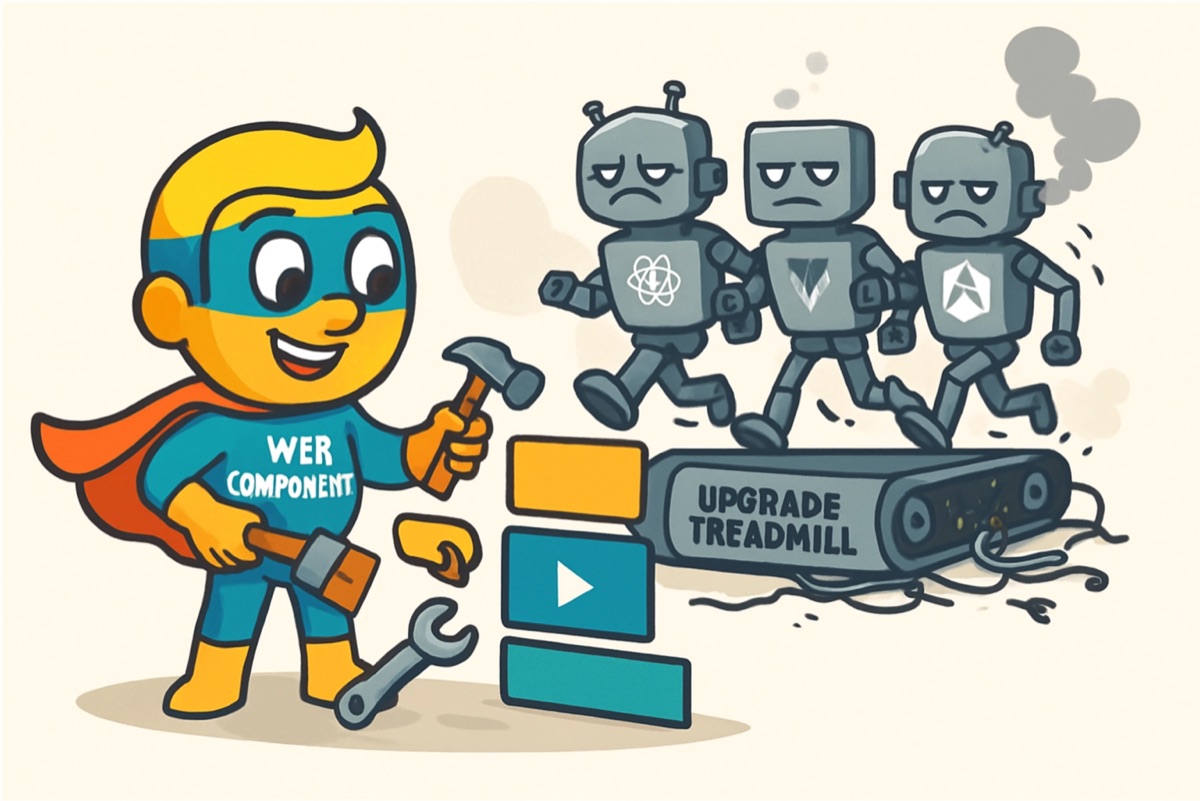
Modern browsers support web components, allowing developers to build sophisticated, reactive web interfaces without relying on frameworks like React, Vue, or Angular. This technology enables the creation of modular, reusable UI elements through custom elements, shadow DOM, and native event systems.
Key Takeaways
- Modern browsers support web components, allowing developers to create modular, reusable UI elements without relying on frameworks like React, Vue, or Angular.
- Web components utilize features such as Custom Elements, Shadow DOM, and a native event system to provide encapsulation and facilitate communication between components.
- Code written using web standards for web components remains compatible over time, reducing maintenance burdens and security vulnerabilities compared to code tied to specific frameworks.
- The native Custom Events system in web components allows for efficient communication between components without the need for global state management or complex data flow patterns.
Coverage & discussions
Hacker News · caimito.net
Community discussions
Community Sentiment
Positives
- Home Assistant's use of web components has allowed for gradual updates without full rewrites, showcasing flexibility and long-term maintainability in frontend development.
- The ability to use Lit on top of web components enables developers to manage state effectively, facilitating community contributions and customizations.
Concerns
- Web components are criticized for their complexity and numerous edge cases, making them challenging to use for anything beyond simple applications.
- The lack of built-in reactivity in web components is a significant drawback, as developers must implement this feature themselves, which undermines their appeal.