Why Write Code in 2026

softwaredoug.com
July 12, 2026
4 min read
🔥🔥🔥🔥🔥
45/100
Summary
Software engineers are responsible for creating and maintaining the infrastructure that enables rapid software development and deployment. Proactive measures such as prompts and knowledge bases, along with reactive protections like automated evaluations and testing, keep AI agents effective and on track.
Key Takeaways
- Software engineers are responsible for building the software infrastructure that enables immediate changes and shipping through prompts and automated evaluations.
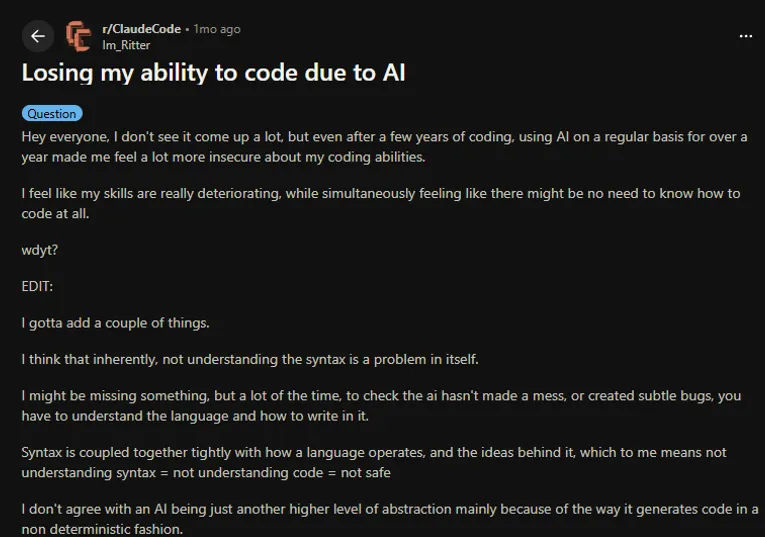
- Writing code remains valuable for software engineers as it enhances understanding and attention to the system's architecture, preventing fragility in the codebase.
- Coding agents should not be viewed as compilers; they require precise input and context to generate effective changes, similar to newly onboarded interns.
- Engaging directly with code allows engineers to maintain ownership and improve the quality of the software, countering the tendency to ship poorly written code.
Coverage & discussions
Hacker News · softwaredoug.com
Community discussions
Community Sentiment
Positives
- LLMs are supercharging systems thinkers and auditors by exposing the flaws in architecture design — it's a wake-up call for better coding practices.
- The time saved with LLMs is undeniable; generating decent code in seconds is a game changer compared to hours spent debugging.
- Writers appreciate that they can focus on core abstractions and high-judgment code rather than drowning in boilerplate — that’s where the real creativity happens.
Concerns
- Many commenters argue that LLM-generated code often lacks quality, leading to a frustrating cycle of debugging that negates any time savings.
- There's a fear that relying too much on LLMs could result in bloated, inefficient code — like generating 10k lines for a simple task.
- Some users feel that the LLMs' output can be too generic, with a lack of understanding of the intricate needs of specific coding tasks.