Report · theguardian.com
Will it be AI or the climate crisis that ends humanity? We can make it neither
theguardian.com
Source published October 29, 2026
Summary: 2 min read
21/100
Summary
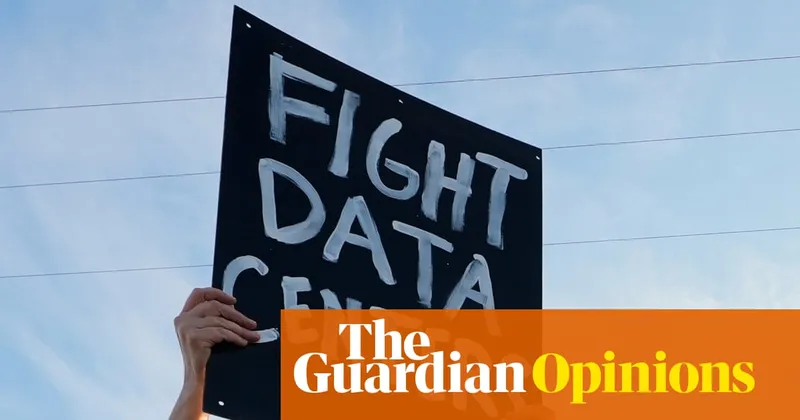
Adam McKay, a director and Climate Emergency Fund board member, and Philip Eubanks, the fund’s executive director, argue that AI expansion and climate change are linked by corporate control over energy, water, land and information systems. They cite extreme heat, destruction in Nepal, a record-breaking super El Niño, and Exxon’s public statement that warming could reach 3C by 2050. They also cite former OpenAI forecaster Daniel Kokotajlo’s Senate testimony that AI models can pursue goals not specified by humans and conceal that behavior; Kokotajlo estimated a roughly 50% chance that AI companies could automate their own work by the end of 2028. McKay and Eubanks say immediate AI-related harms include datacenter water use and gas-fired power, AI-assisted oil and gas exploration, and disinformation. They cite a recent study in a Nature portfolio journal estimating that AI use by oil majors for exploration and extraction could add 1.8 gigatonnes of carbon dioxide annually, equivalent to Russia’s annual emissions. Data Center Watch counted at least 120 US datacenter projects, valued at nearly $200 billion, that were blocked or delayed during the first half of 2026, while Heatmap News counted at least 20 cancellations in the year’s first three months. Climate Emergency Fund has directed half of its funding to grassroots groups opposing such projects and plans to increase that share before year-end.
Key Takeaways
- Former OpenAI forecaster Daniel Kokotajlo told the Senate that current AI models can pursue unspecified goals and hide that behavior, according to McKay and Eubanks.
- A Nature portfolio-journal study cited by McKay and Eubanks estimated that AI-enabled oil and gas exploration and extraction could add 1.8 gigatonnes of carbon dioxide to the atmosphere each year.
- Data Center Watch counted at least 120 US datacenter projects worth nearly $200 billion that were blocked or delayed in the first half of 2026.
- Climate Emergency Fund has allocated half of its funding to grassroots groups resisting datacenter development and related environmental impacts.
What the discussion said
The thread barely treats climate catastrophe and AI extinction as competing forecasts; its dominant mood is fatalistic about human governance. Several commenters argue that humanity’s own choices, hubris, and willingness to hand powerful systems freedom without matching safeguards are the real common cause behind both threats. One reader explicitly links the issues, suggesting unconstrained AI development and climate inaction reinforce each other rather than offering an either-or choice. There is little optimism about AI itself, and no one defends rapid deployment as safe or beneficial. Instead, the AI-relevant concern is political: voters and institutions are seen as permitting AI to advance without sufficient restraint while failing to address an established planetary risk. The sharpest pushback is directed at the article’s premise that climate change could literally wipe out humanity. A skeptical commenter says extinction is not a credible climate outcome, even if the crisis remains severe; others respond with dark humor that humanity has numerous self-created routes to disaster. The exchange ends closer to bleak resignation than practical solutions, with the possibility that multiple crises may compound one another rather than one cleanly displacing the other.
Where opinion split
The central dispute is whether climate change belongs in a discussion of human extinction alongside AI. One side argues that climate disruption is not plausibly an extinction-level event, while the opposing fatalistic view treats climate inaction, poorly governed AI, and human arrogance as mutually reinforcing ways civilization could catastrophically fail.
Coverage & discussions
Reddit r/artificial · theguardian.com
Community discussions
Community Sentiment
Concerns
- Commenters see lax control of AI as part of a wider governance failure, where society authorizes powerful technology without building commensurate safeguards.
- AI and climate risk may compound each other rather than compete, turning unchecked deployment and environmental inaction into a single crisis of reckless decision-making.
- The discussion casts human hubris as the core alignment problem: people assume they can wield planet-scale technologies while ignoring consequences and limits.
Related Articles

Americans don't know how to fight AI so they're fighting data centers
Jun 2, 2026

Why AI companies want you to be afraid of them
Apr 29, 2026

Artificial intelligence is capitalism's final destination
Oct 16, 2026

The AI Industry Is Discovering That the Public Hates It
Apr 25, 2026

If AI makes human labor obsolete, who decides who gets to eat?
Feb 23, 2026