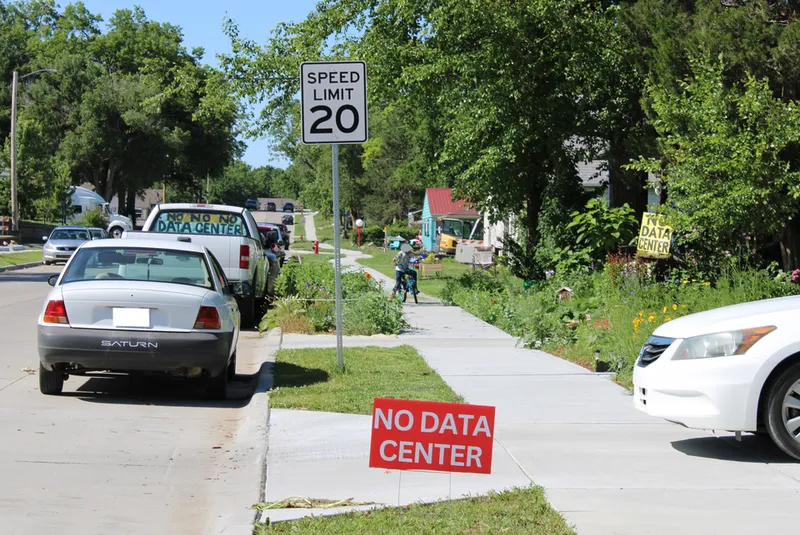
GOP urges top AI firms to do something about the toxic image of data centers
The National Republican Senatorial Committee has privately urged major AI companies to address growing public opposition to data centers, warning that the issue could affect Republican Sen. Jon Husted’s Ohio reelection campaign and future projects nationwide. A memo titled “Ohio Data Center Risk” calls on companies to explain who benefits from data centers, who pays for them and why communities should want them. Former Democratic Sen. Sherrod Brown is eight points ahead of Husted, according to the reported campaign polling, after spending millions to portray Husted as “the face of data centers in Ohio.” The NRSC said data centers are “the anchor hanging around Husted’s neck” and warned that a loss blamed on the facilities could deter politicians in other states from supporting new projects. Ohio has one of the largest shares of completed U.S. data-center projects, with dozens more planned. Reuters reported in 2026 that 77% of 4,531 poll respondents were concerned AI development could raise electricity bills; 64% opposed rapid AI data-center construction and 33% supported it. The United States has about 4,000 operating data centers and nearly 3,000 more in planning, while concerns have grown over their energy consumption and AI’s potential effects on jobs.
siliconangle.com
3 min
8/22/2026
Denmark Requires Oral Defenses for Students' Written Work to Counter AI Cheating
Danish high school students must now defend their written assignments orally to combat AI cheating. This policy is implemented immediately, with educators noting the need for ongoing adaptation as AI tools evolve.
mezha.net
2 min
8/8/2026

GCC steering committee announces AI policy
The GCC steering committee has accepted an AI contributions policy that prohibits "legally significant contributions" derived from LLM-generated content. The definition of "legally significant" is based on the GNU Project maintainer guidelines, specifying a threshold of approximately 15 lines.
lwn.net
1 min
7/30/2026
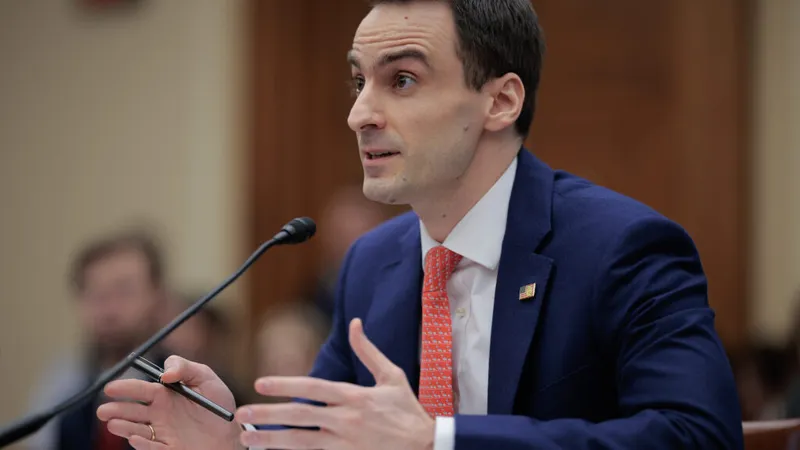
White House offers its science blueprint: More AI, less life sciences. ‘Science: A New Golden Age’ report calls for shifting billions from universities to tech companies
The Trump administration proposes a new science blueprint focusing on increased AI research while reducing emphasis on life sciences. This initiative draws inspiration from the 1945 manifesto "Science — The Endless Frontier," aiming to rebuild the relationship between academic researchers and the federal government.
statnews.com
1 min
7/24/2026
Startup founders urge U.S. government not to shut off Chinese open weight AI
Nearly 200 Silicon Valley companies, including Proton and Y Combinator, are urging the Trump administration to maintain access to Chinese open-weight AI models. They warn that blocking these models could jeopardize the development of the next generation of AI technologies.
politico.com
4 min
7/23/2026

Americans are angry about data centers. Politicians are feeling the pressure
Public opposition to data centers in the U.S. is growing due to concerns over environmental impacts and local disruption. Politicians are responding to this backlash by reevaluating regulations and policies related to data center development.
reuters.com
1 min
7/19/2026


OpenAI ‘in early talks to give 5% stake to US government’
OpenAI is in early discussions to offer a 5% stake in the company to the US government. CEO Sam Altman believes that providing the public with a financial stake would help share the benefits of artificial intelligence.
theguardian.com
2 min
7/2/2026


Austria Lobbies EU to Host Anthropic After US Access Curbs
Austria is advocating for the European Union to host Anthropic PBC in response to US restrictions on access to advanced AI models for foreigners. Austrian State Secretary for Digitalization Alexander Pröll emphasized the need for member states to consider the strategic establishment of Anthropic within the EU.
bloomberg.com
1 min
6/28/2026
GOP urges top AI firms to do something about the toxic image of data centers
The National Republican Senatorial Committee has privately urged major AI companies to address growing public opposition to data centers, warning that the issue could affect Republican Sen. Jon Husted’s Ohio reelection campaign and future projects nationwide. A memo titled “Ohio Data Center Risk” calls on companies to explain who benefits from data centers, who pays for them and why communities should want them. Former Democratic Sen. Sherrod Brown is eight points ahead of Husted, according to the reported campaign polling, after spending millions to portray Husted as “the face of data centers in Ohio.” The NRSC said data centers are “the anchor hanging around Husted’s neck” and warned that a loss blamed on the facilities could deter politicians in other states from supporting new projects. Ohio has one of the largest shares of completed U.S. data-center projects, with dozens more planned. Reuters reported in 2026 that 77% of 4,531 poll respondents were concerned AI development could raise electricity bills; 64% opposed rapid AI data-center construction and 33% supported it. The United States has about 4,000 operating data centers and nearly 3,000 more in planning, while concerns have grown over their energy consumption and AI’s potential effects on jobs.
siliconangle.com
3 min
8/22/2026
GCC steering committee announces AI policy
The GCC steering committee has accepted an AI contributions policy that prohibits "legally significant contributions" derived from LLM-generated content. The definition of "legally significant" is based on the GNU Project maintainer guidelines, specifying a threshold of approximately 15 lines.
lwn.net
1 min
7/30/2026
Startup founders urge U.S. government not to shut off Chinese open weight AI
Nearly 200 Silicon Valley companies, including Proton and Y Combinator, are urging the Trump administration to maintain access to Chinese open-weight AI models. They warn that blocking these models could jeopardize the development of the next generation of AI technologies.
politico.com
4 min
7/23/2026
OpenAI loses trademark dispute at EU court
OpenAI has lost a trademark dispute at the European Union court regarding its name. The court ruled that OpenAI's trademark application did not meet the necessary requirements for registration.
dpa-international.com
1 min
7/15/2026
Denmark Requires Oral Defenses for Students' Written Work to Counter AI Cheating
Danish high school students must now defend their written assignments orally to combat AI cheating. This policy is implemented immediately, with educators noting the need for ongoing adaptation as AI tools evolve.
mezha.net
2 min
8/8/2026
White House offers its science blueprint: More AI, less life sciences. ‘Science: A New Golden Age’ report calls for shifting billions from universities to tech companies
The Trump administration proposes a new science blueprint focusing on increased AI research while reducing emphasis on life sciences. This initiative draws inspiration from the 1945 manifesto "Science — The Endless Frontier," aiming to rebuild the relationship between academic researchers and the federal government.
statnews.com
1 min
7/24/2026
Americans are angry about data centers. Politicians are feeling the pressure
Public opposition to data centers in the U.S. is growing due to concerns over environmental impacts and local disruption. Politicians are responding to this backlash by reevaluating regulations and policies related to data center development.
reuters.com
1 min
7/19/2026
OpenAI ‘in early talks to give 5% stake to US government’
OpenAI is in early discussions to offer a 5% stake in the company to the US government. CEO Sam Altman believes that providing the public with a financial stake would help share the benefits of artificial intelligence.
theguardian.com
2 min
7/2/2026
Austria Lobbies EU to Host Anthropic After US Access Curbs
Austria is advocating for the European Union to host Anthropic PBC in response to US restrictions on access to advanced AI models for foreigners. Austrian State Secretary for Digitalization Alexander Pröll emphasized the need for member states to consider the strategic establishment of Anthropic within the EU.
bloomberg.com
1 min
6/28/2026
GOP urges top AI firms to do something about the toxic image of data centers
The National Republican Senatorial Committee has privately urged major AI companies to address growing public opposition to data centers, warning that the issue could affect Republican Sen. Jon Husted’s Ohio reelection campaign and future projects nationwide. A memo titled “Ohio Data Center Risk” calls on companies to explain who benefits from data centers, who pays for them and why communities should want them. Former Democratic Sen. Sherrod Brown is eight points ahead of Husted, according to the reported campaign polling, after spending millions to portray Husted as “the face of data centers in Ohio.” The NRSC said data centers are “the anchor hanging around Husted’s neck” and warned that a loss blamed on the facilities could deter politicians in other states from supporting new projects. Ohio has one of the largest shares of completed U.S. data-center projects, with dozens more planned. Reuters reported in 2026 that 77% of 4,531 poll respondents were concerned AI development could raise electricity bills; 64% opposed rapid AI data-center construction and 33% supported it. The United States has about 4,000 operating data centers and nearly 3,000 more in planning, while concerns have grown over their energy consumption and AI’s potential effects on jobs.
siliconangle.com
3 min
8/22/2026
White House offers its science blueprint: More AI, less life sciences. ‘Science: A New Golden Age’ report calls for shifting billions from universities to tech companies
The Trump administration proposes a new science blueprint focusing on increased AI research while reducing emphasis on life sciences. This initiative draws inspiration from the 1945 manifesto "Science — The Endless Frontier," aiming to rebuild the relationship between academic researchers and the federal government.
statnews.com
1 min
7/24/2026
OpenAI loses trademark dispute at EU court
OpenAI has lost a trademark dispute at the European Union court regarding its name. The court ruled that OpenAI's trademark application did not meet the necessary requirements for registration.
dpa-international.com
1 min
7/15/2026
Austria Lobbies EU to Host Anthropic After US Access Curbs
Austria is advocating for the European Union to host Anthropic PBC in response to US restrictions on access to advanced AI models for foreigners. Austrian State Secretary for Digitalization Alexander Pröll emphasized the need for member states to consider the strategic establishment of Anthropic within the EU.
bloomberg.com
1 min
6/28/2026
Denmark Requires Oral Defenses for Students' Written Work to Counter AI Cheating
Danish high school students must now defend their written assignments orally to combat AI cheating. This policy is implemented immediately, with educators noting the need for ongoing adaptation as AI tools evolve.
mezha.net
2 min
8/8/2026
Startup founders urge U.S. government not to shut off Chinese open weight AI
Nearly 200 Silicon Valley companies, including Proton and Y Combinator, are urging the Trump administration to maintain access to Chinese open-weight AI models. They warn that blocking these models could jeopardize the development of the next generation of AI technologies.
politico.com
4 min
7/23/2026
OpenAI ‘in early talks to give 5% stake to US government’
OpenAI is in early discussions to offer a 5% stake in the company to the US government. CEO Sam Altman believes that providing the public with a financial stake would help share the benefits of artificial intelligence.
theguardian.com
2 min
7/2/2026
GCC steering committee announces AI policy
The GCC steering committee has accepted an AI contributions policy that prohibits "legally significant contributions" derived from LLM-generated content. The definition of "legally significant" is based on the GNU Project maintainer guidelines, specifying a threshold of approximately 15 lines.
lwn.net
1 min
7/30/2026
Americans are angry about data centers. Politicians are feeling the pressure
Public opposition to data centers in the U.S. is growing due to concerns over environmental impacts and local disruption. Politicians are responding to this backlash by reevaluating regulations and policies related to data center development.
reuters.com
1 min
7/19/2026